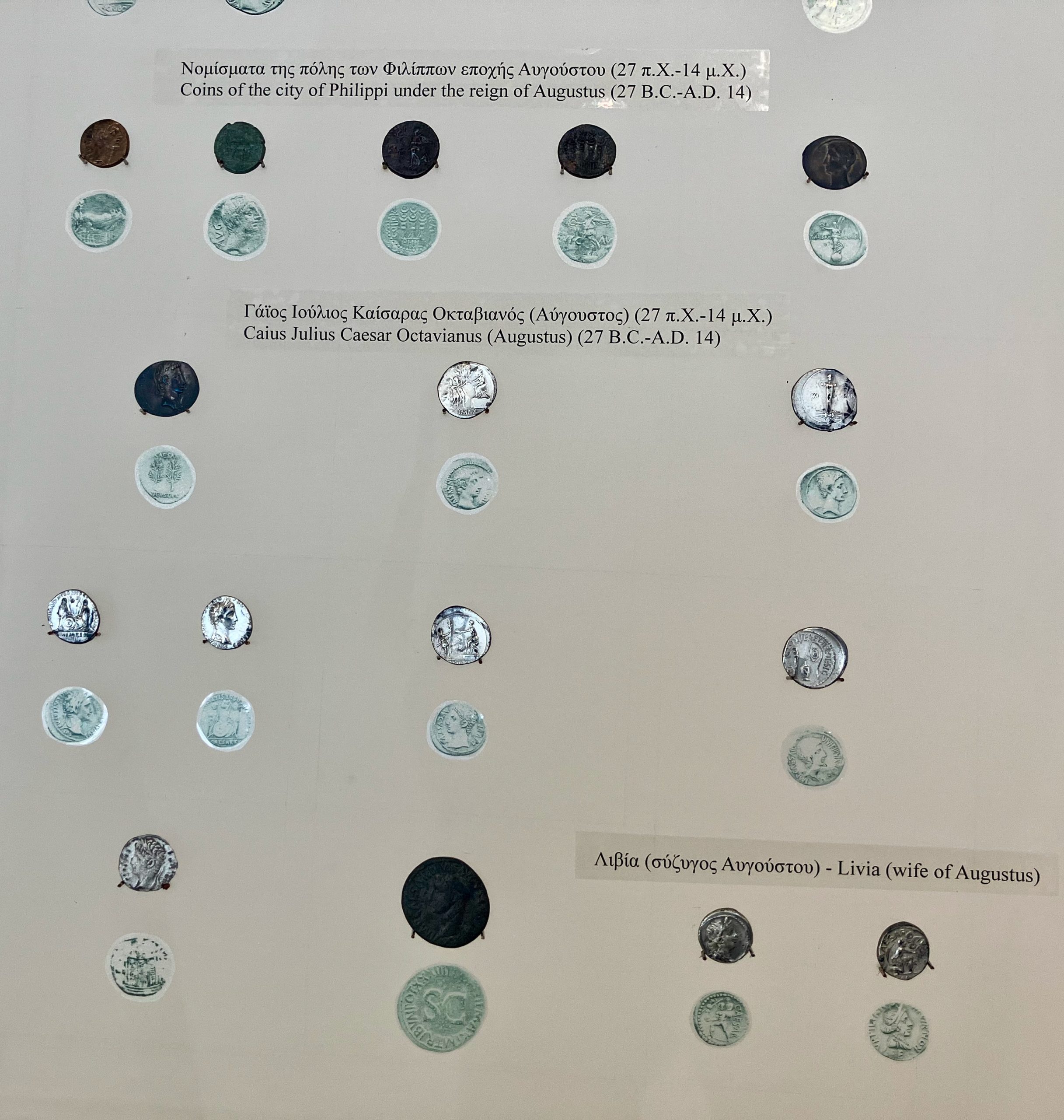
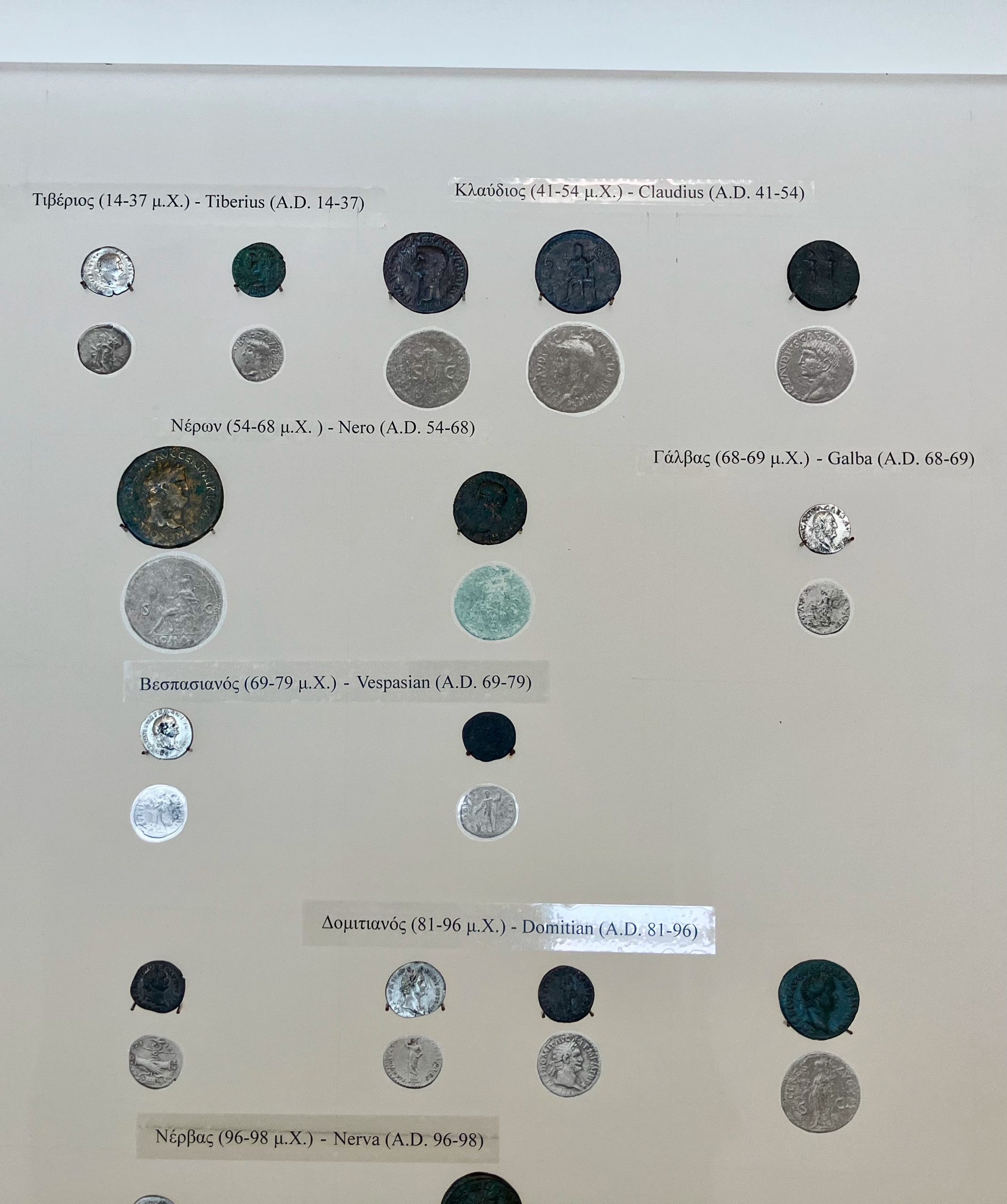
In August 2025, I visited the archaeological site of ancient Philippi. I was accompanied by my wife Bron and daughter Ellie. We also toured the museum.
Here are some photos of the site and museum exhibits. They help to provide context for New Testament texts associated with Philippi. Enjoy!
Neapolis (Kavala)
Paul entered Macedonia (and thus entered Europe) through the port of Neapolis:
And a vision appeared to Paul in the night: a man of Macedonia was standing there, urging him and saying, “Come over to Macedonia and help us.” And when Paul had seen the vision, immediately we sought to go on into Macedonia, concluding that God had called us to preach the gospel to them. So, setting sail from Troas, we made a direct voyage to Samothrace, and the following day to Neapolis, …
(Acts 16:9–11 ESV)
We stopped in Neapolis (modern day Kavala) for a coffee, overlooking the harbour where Paul would have entered:
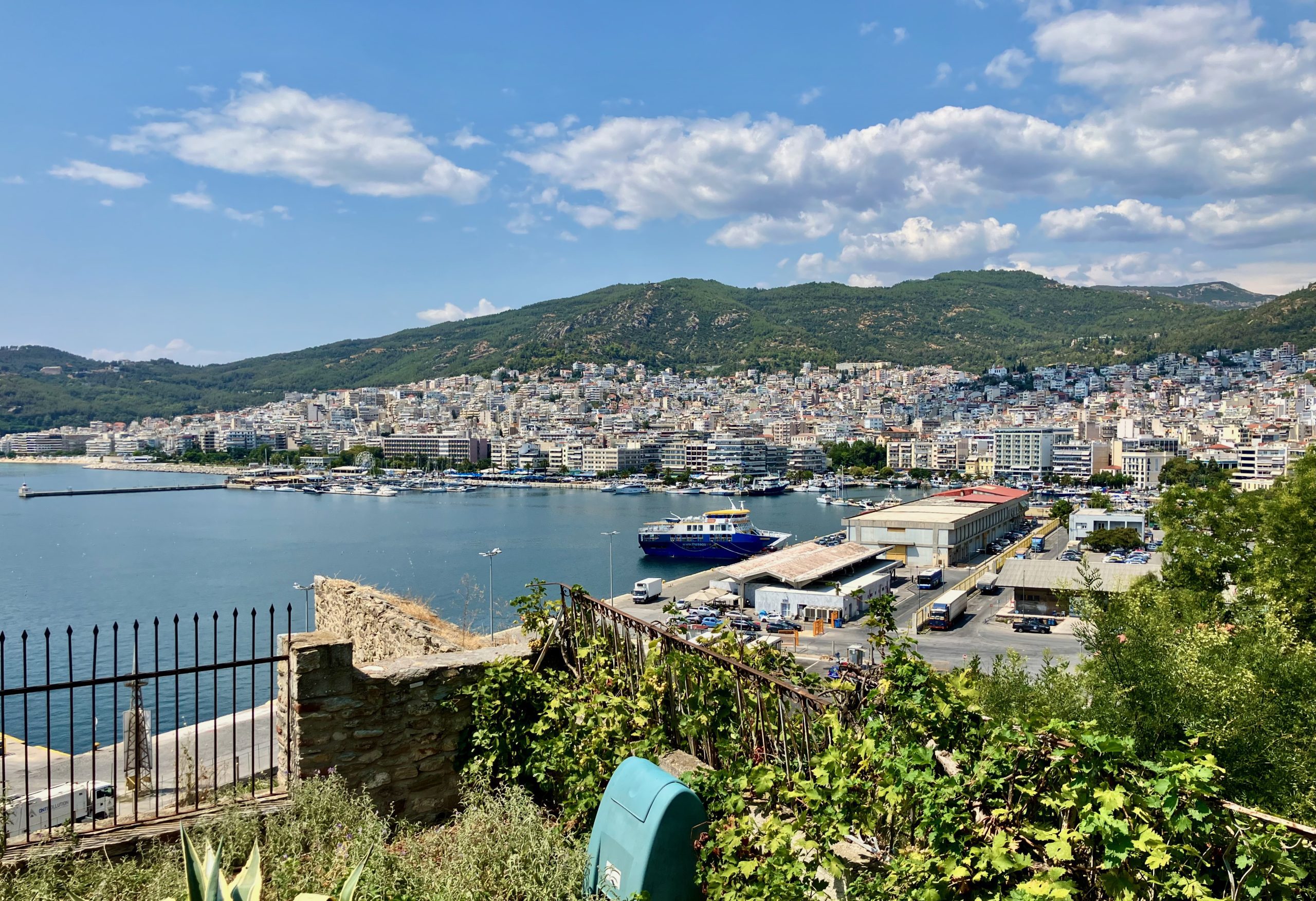
Neapolis literally means “Newtown”. It was nice to be drinking a coffee directly overlooking the place where Paul first brought the gospel of Jesus Christ to Europe–in a place called “Newtown”–since I lecture at Moore College in Newtown, Sydney, Australia.
Via Egnatia
From Neapolis, Paul went to Philippi:
… and from there to Philippi, which is a leading city of the district of Macedonia and a Roman colony. We remained in this city some days.
(Acts 16:12 ESV)
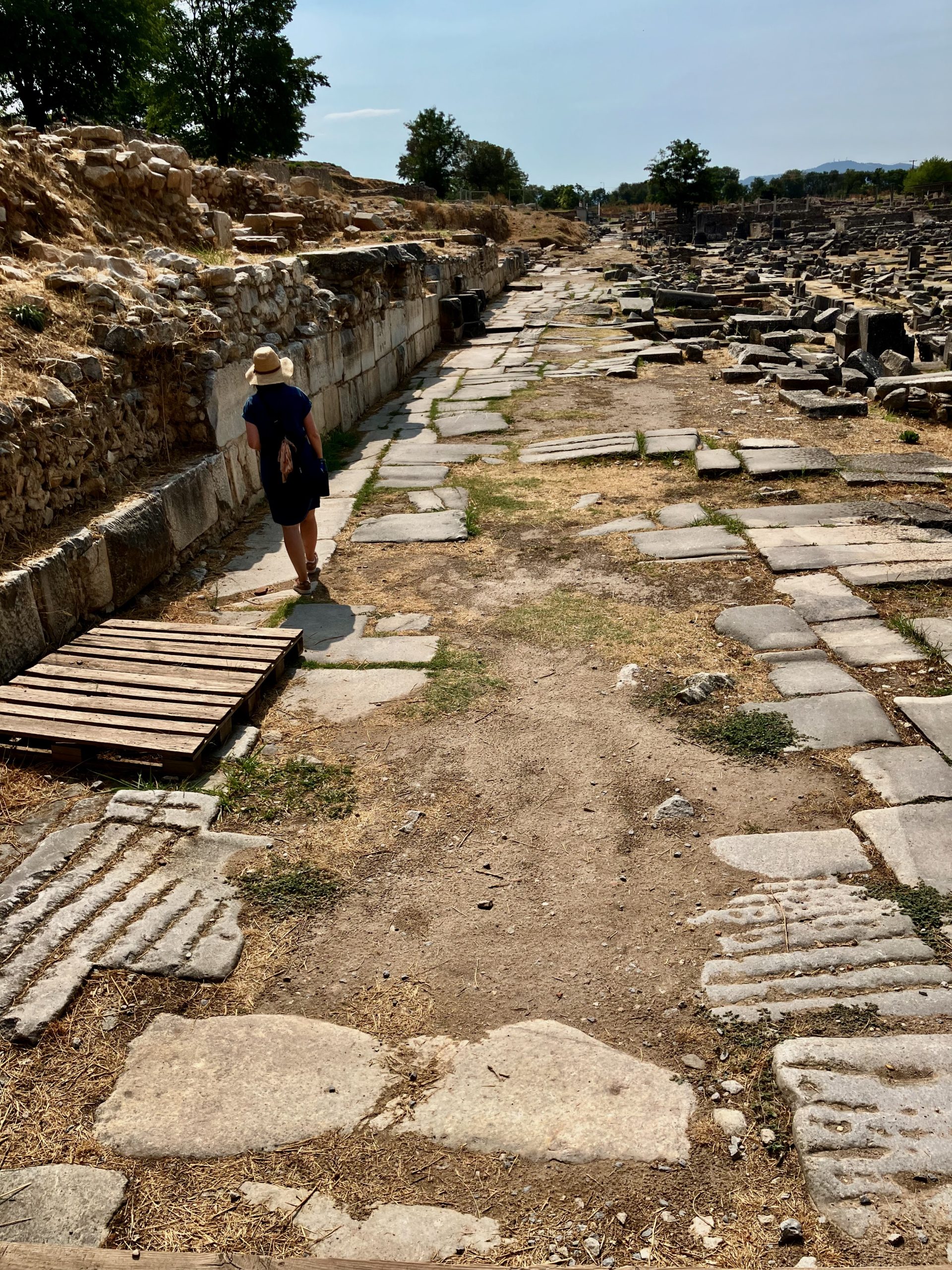
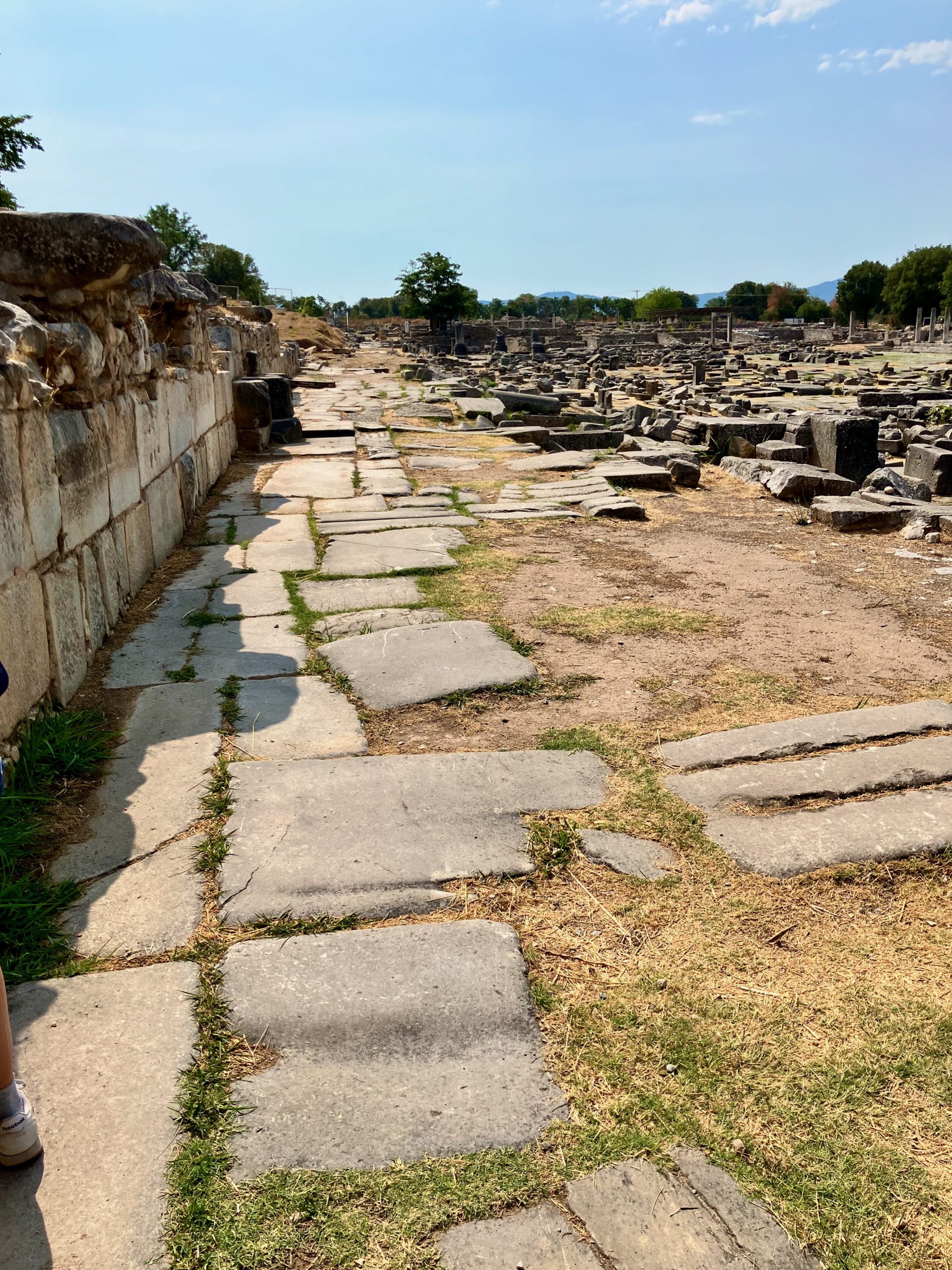
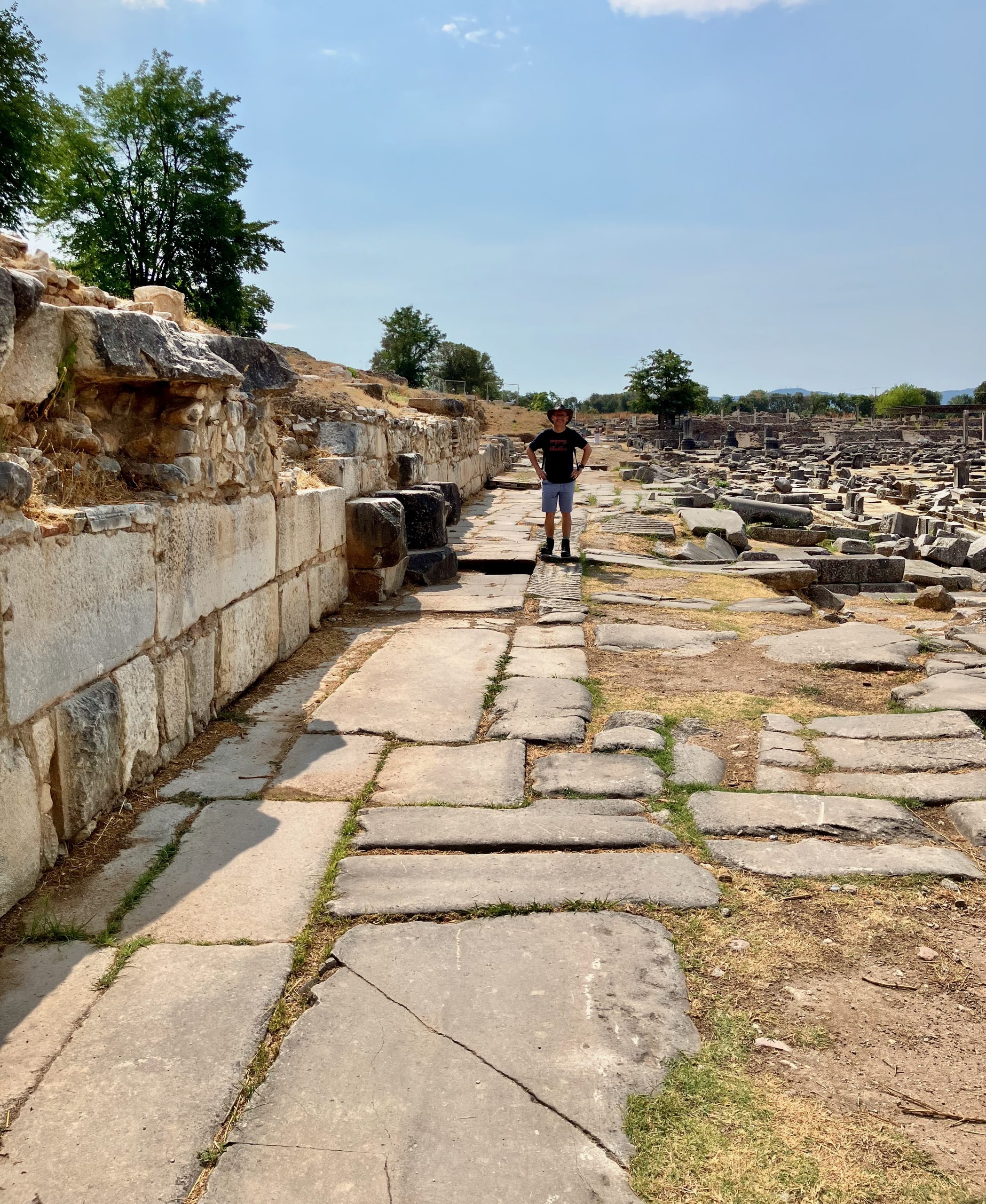
The Via Egnatia was the main Roman Road through northern Europe. This road came up from Neapolis and passed along the North side of the Forum in Philippi. Here it is:
Lydia’s Baptism
Acts continues to speak of the first converts in the vicinity of Philippi, most prominent of whom was Lydia:
And on the Sabbath day we went outside the gate to the riverside, where we supposed there was a place of prayer, and we sat down and spoke to the women who had come together. One who heard us was a woman named Lydia, from the city of Thyatira, a seller of purple goods, who was a worshiper of God. The Lord opened her heart to pay attention to what was said by Paul. And after she was baptized, and her household as well, she urged us, saying, “If you have judged me to be faithful to the Lord, come to my house and stay.” And she prevailed upon us.
(Acts 16:13–15)
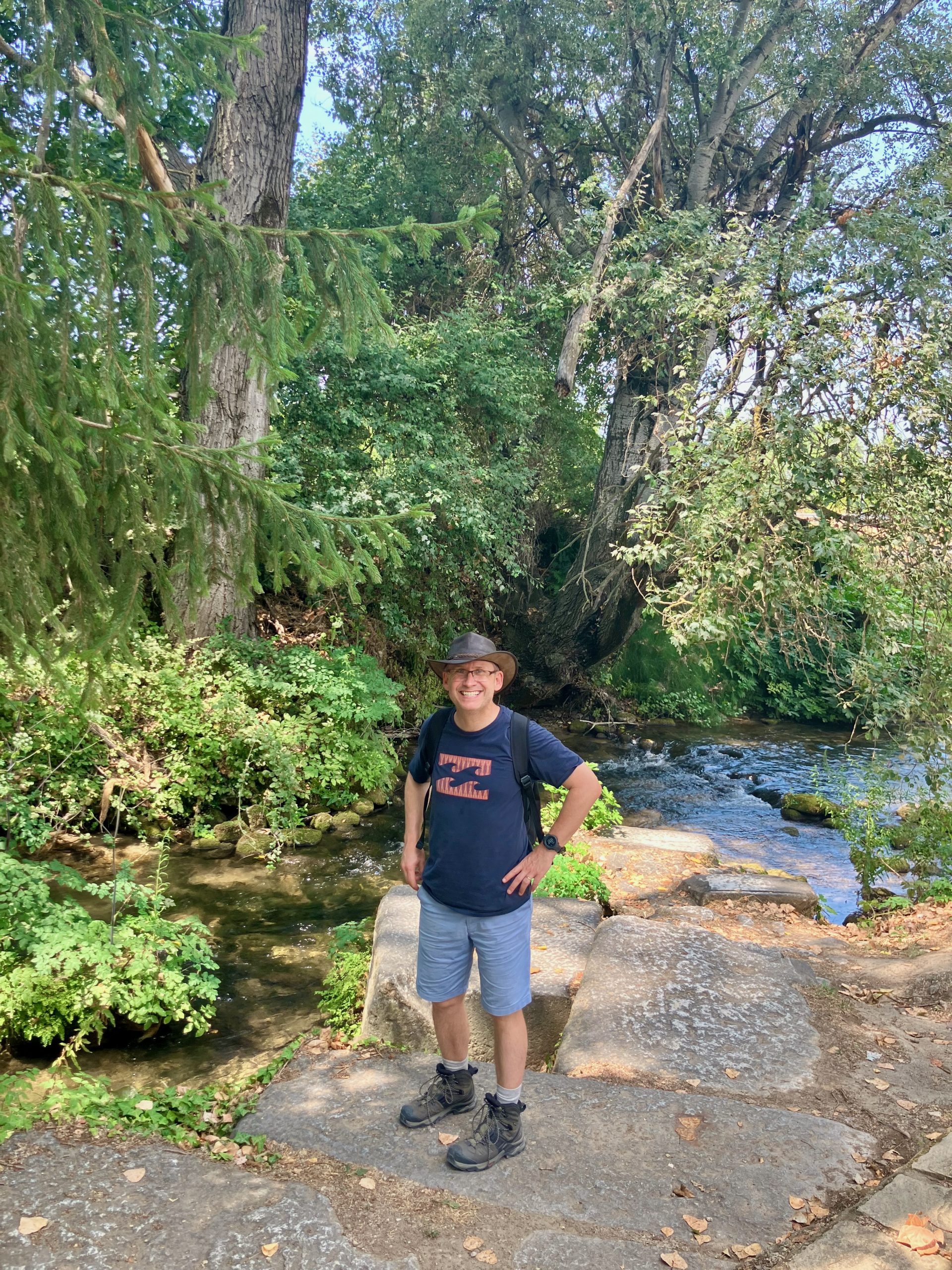
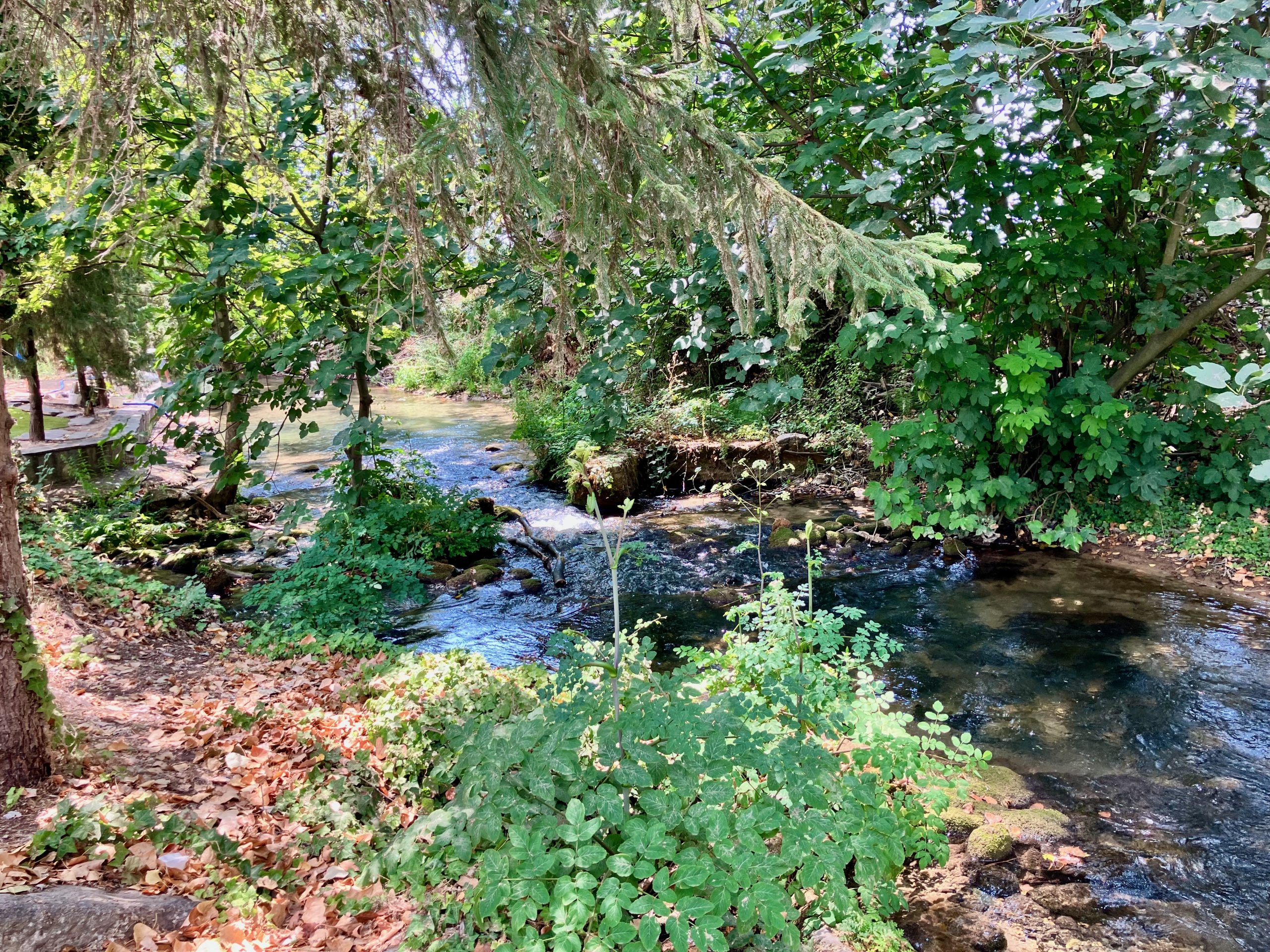
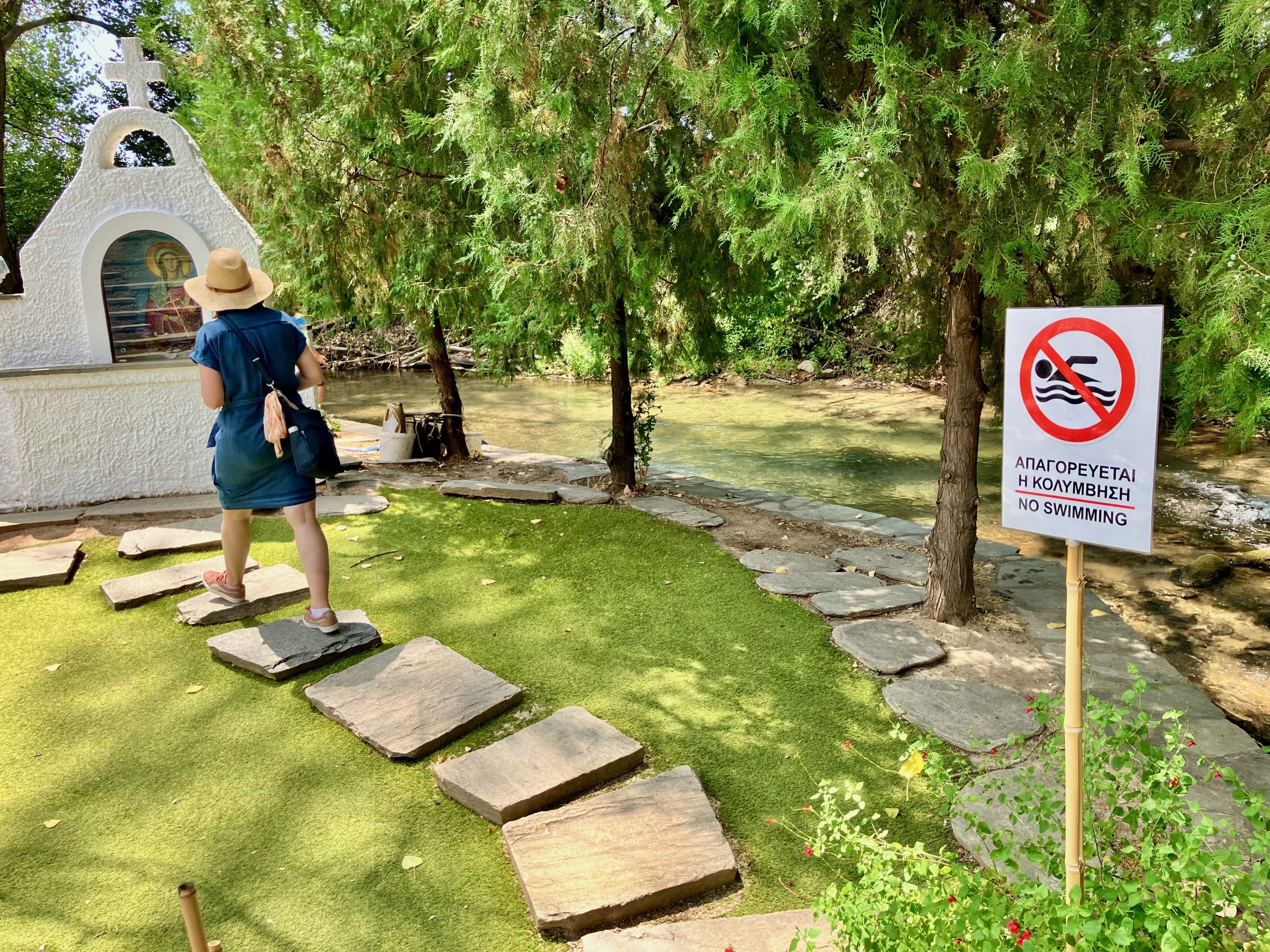
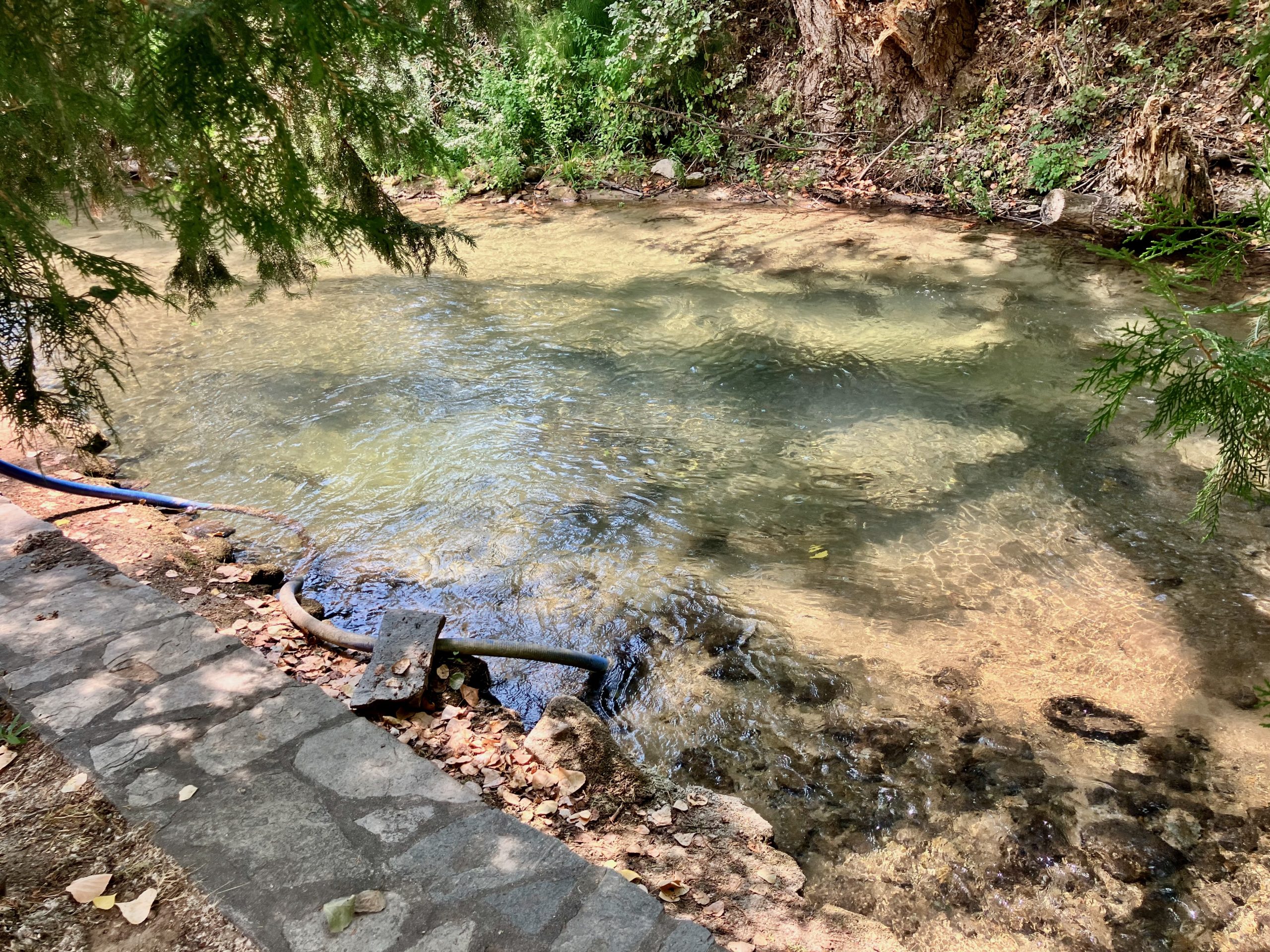
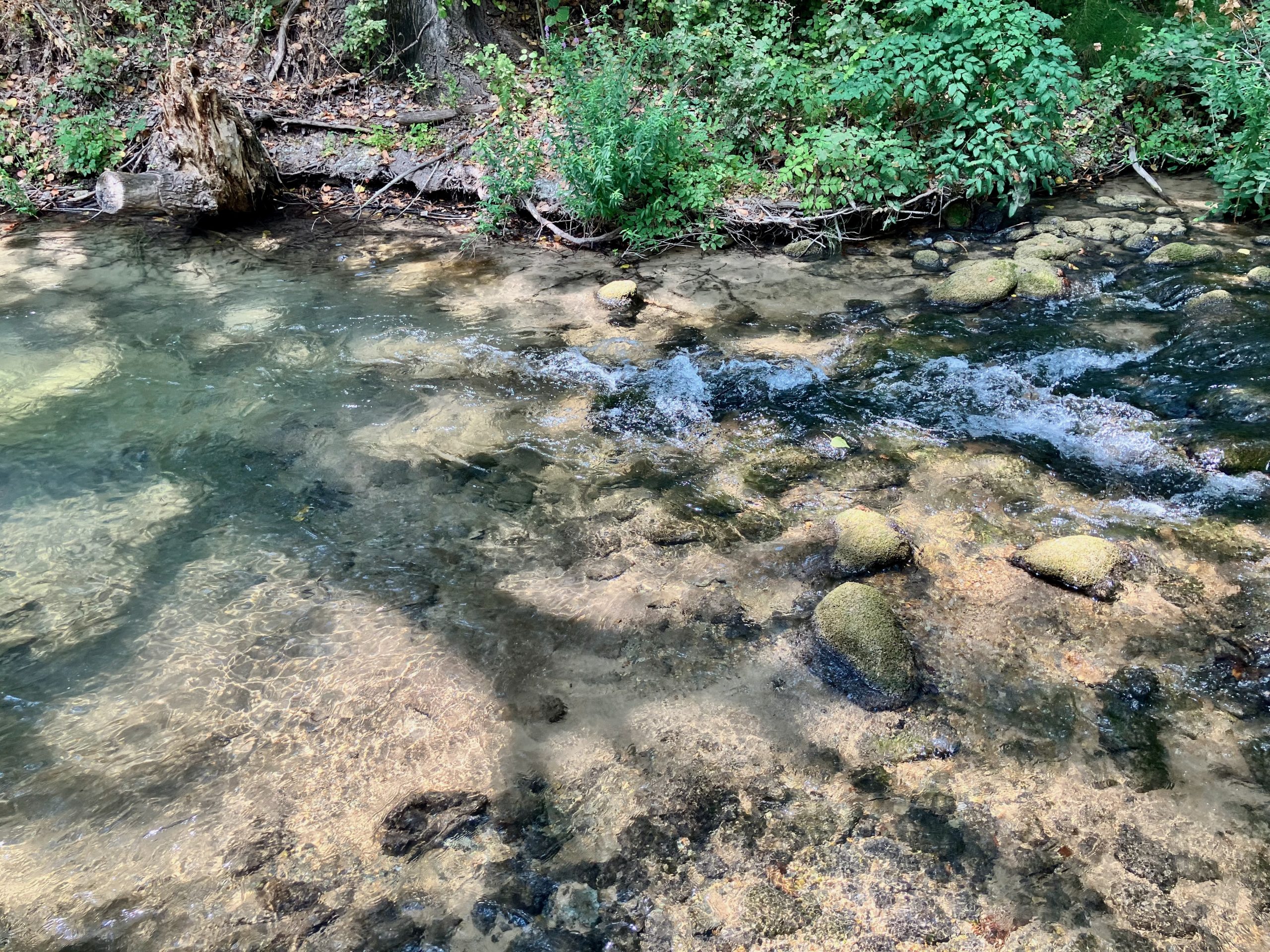
It’s impossible to say for certain where this baptism happened since there are various options. But the traditional spot is plausible. The Baptistery of Saint Lydia is just under a kilometre away from the gate of ancient Philippi (and just down the road from the modern town of Lydia) and next to a small river:
Paul in the marketplace before the rulers
After Paul casts a spirit out of a slave girl, he and Silas were dragged into the marketplace before the rulers of the city:
But when her owners saw that their hope of gain was gone, they seized Paul and Silas and dragged them into the marketplace before the rulers. And when they had brought them to the magistrates, they said, “These men are Jews, and they are disturbing our city. They advocate customs that are not lawful for us as Romans to accept or practice.” The crowd joined in attacking them, and the magistrates tore the garments off them and gave orders to beat them with rods.
(Acts 16:19–22)
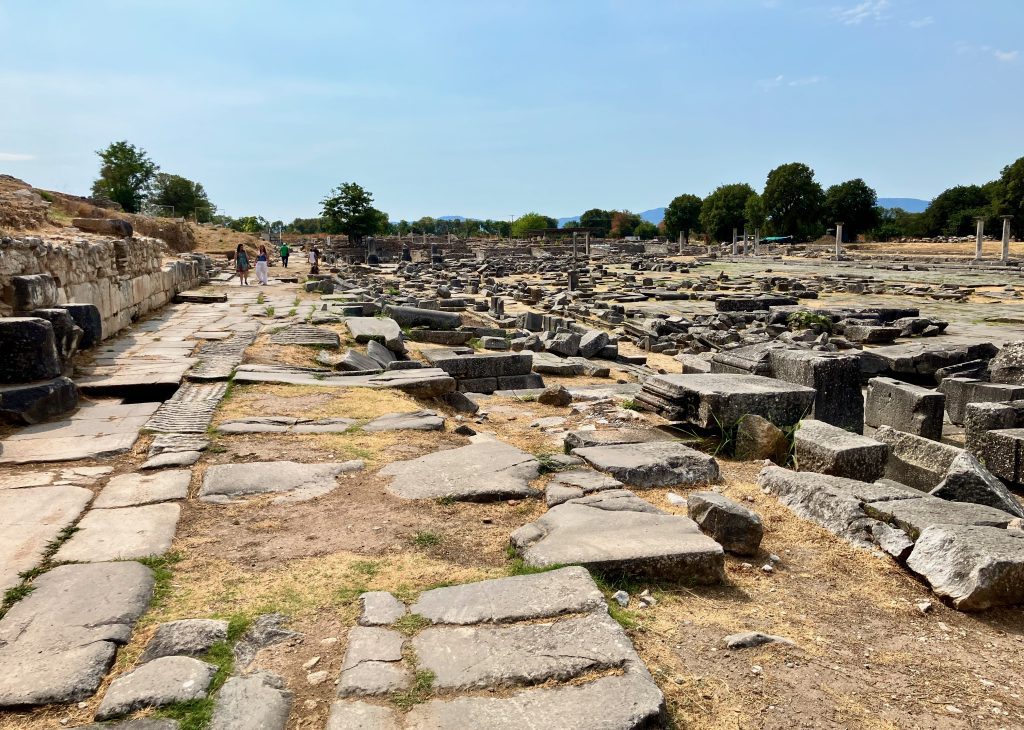
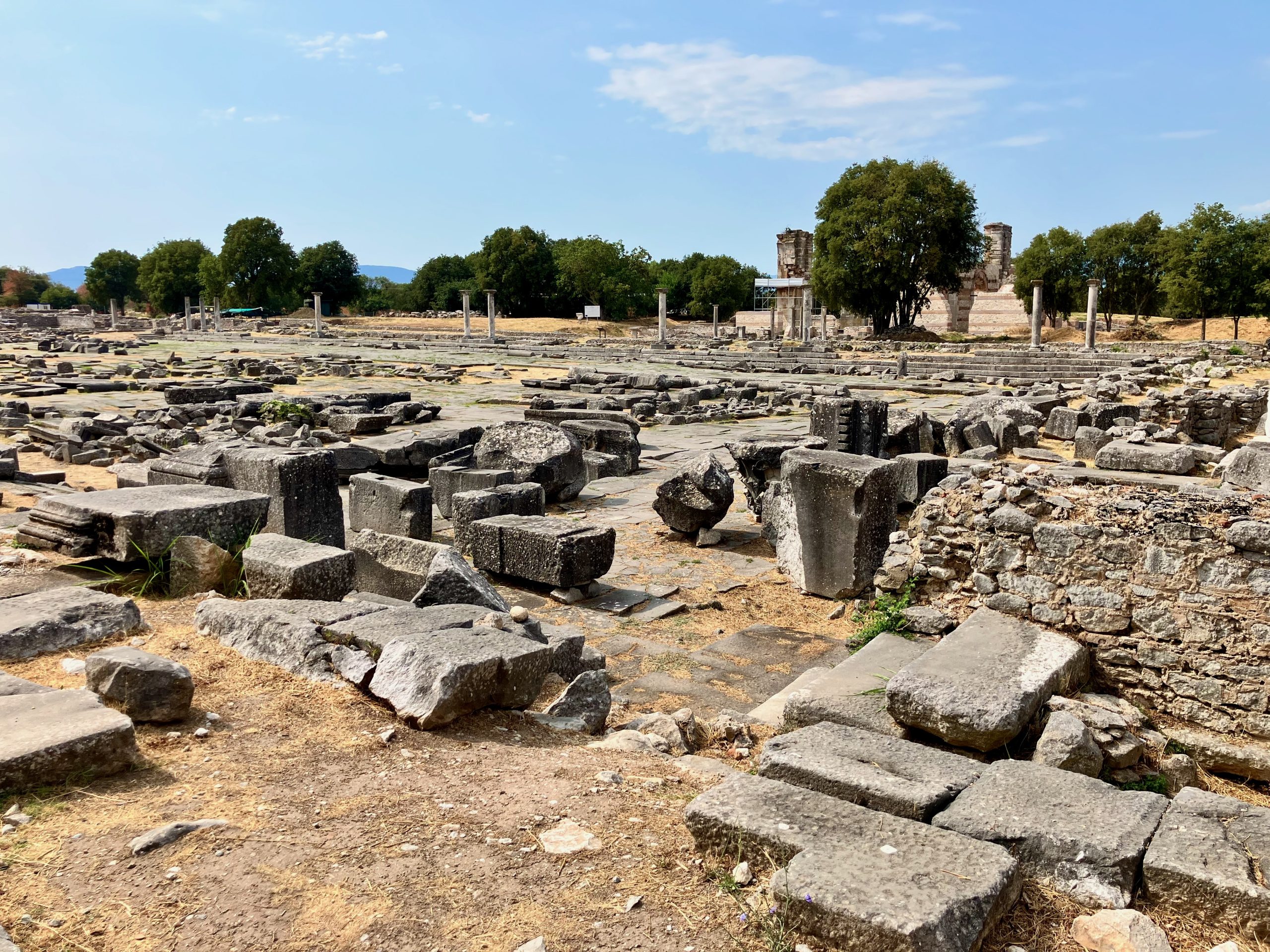
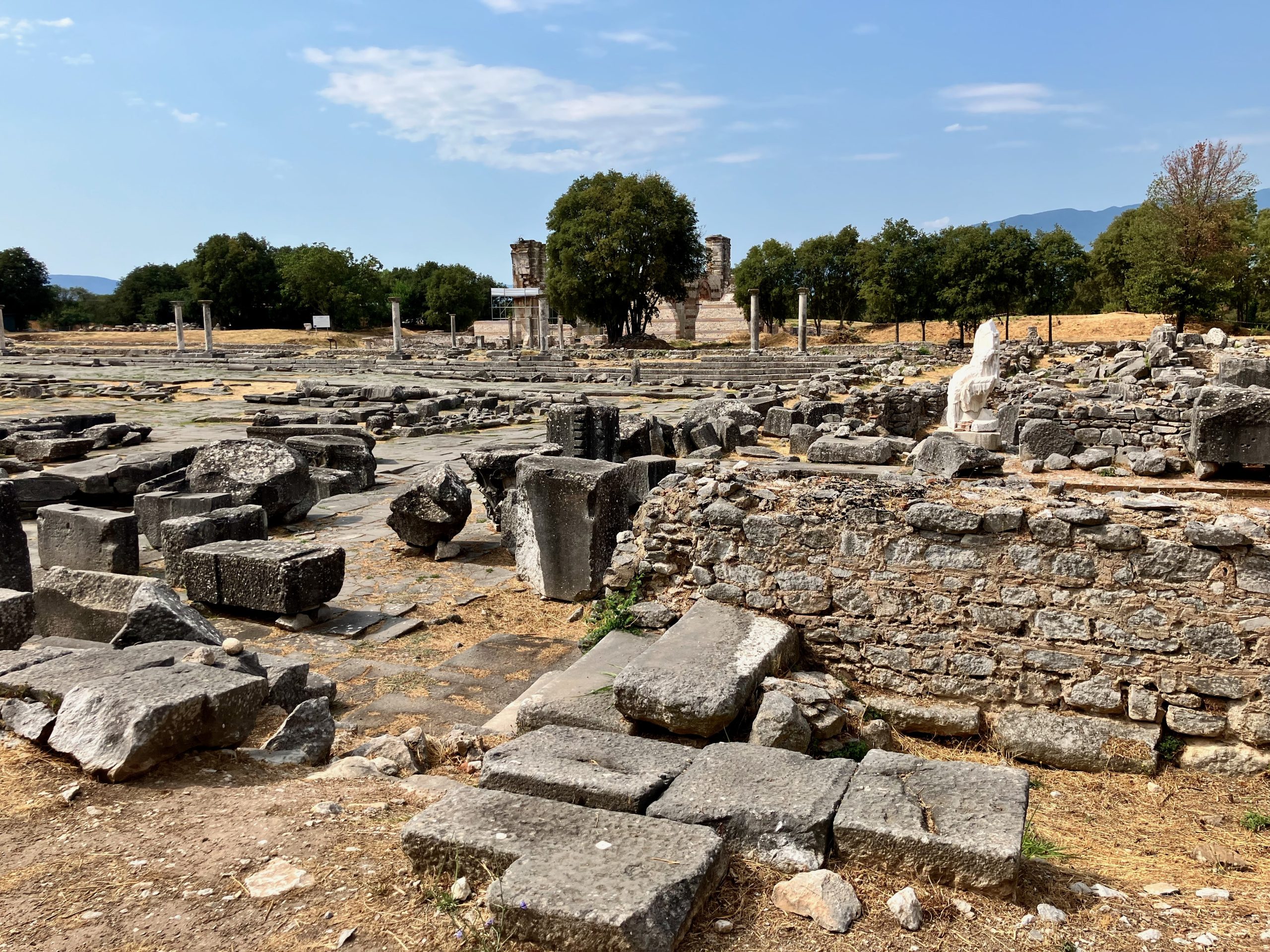
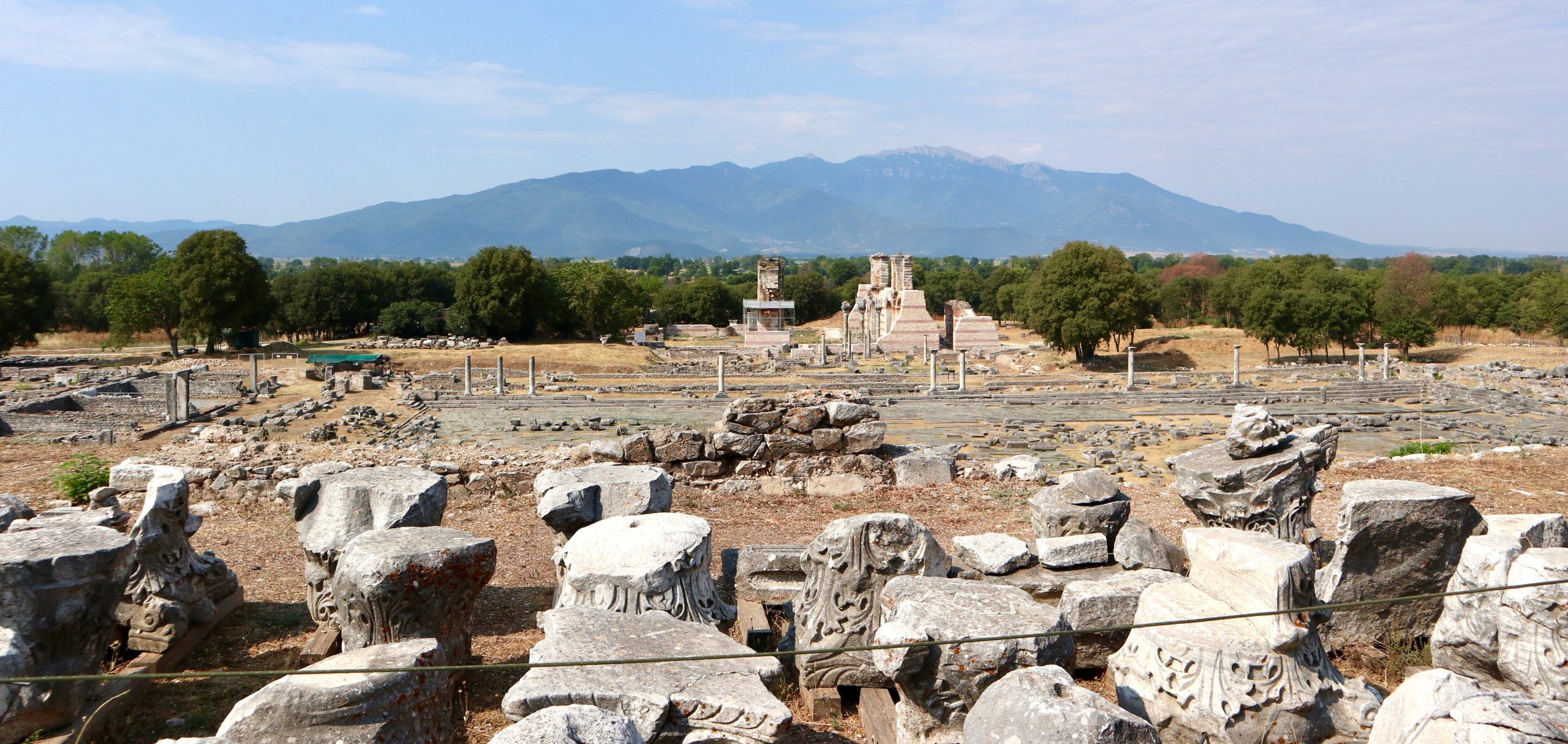
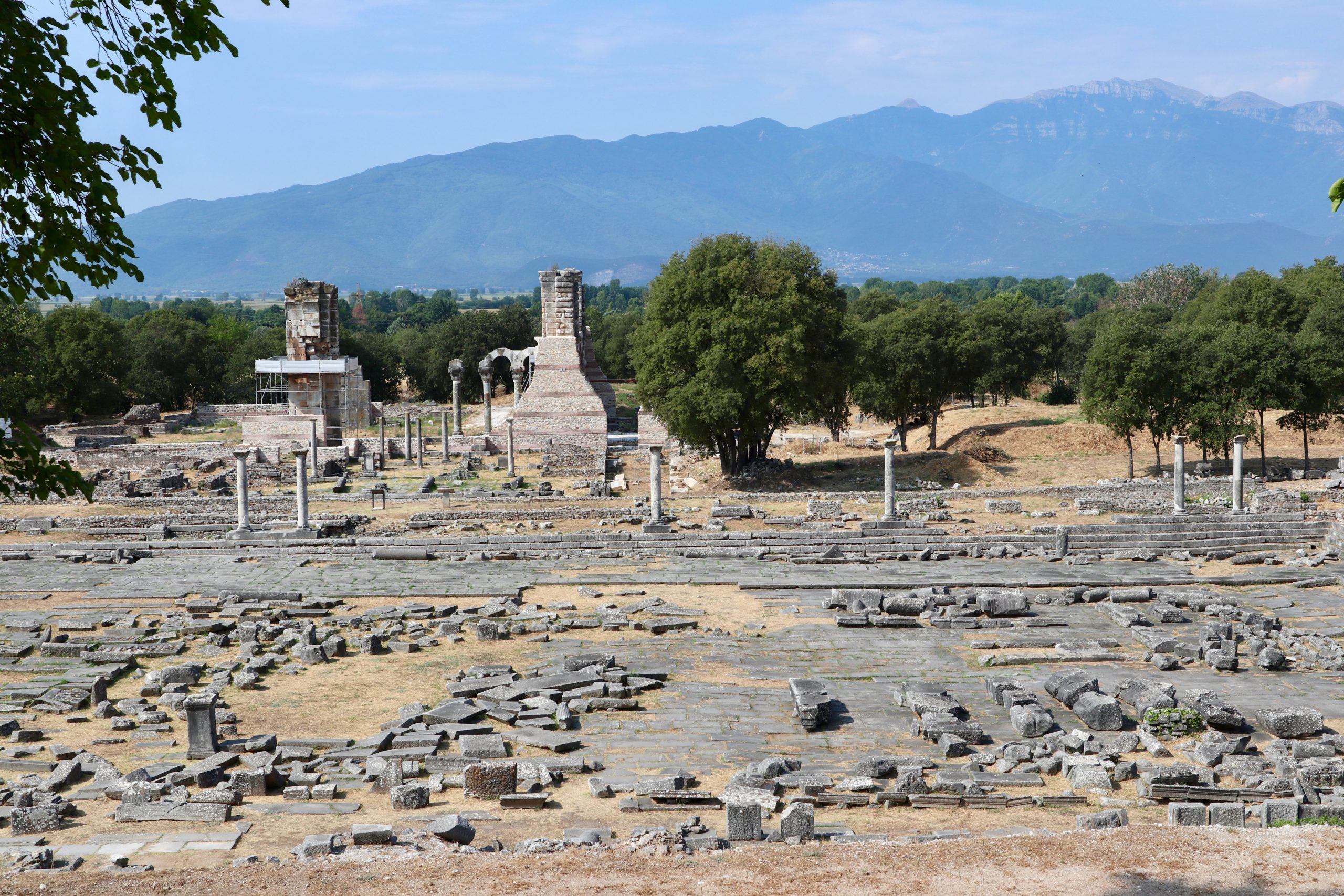
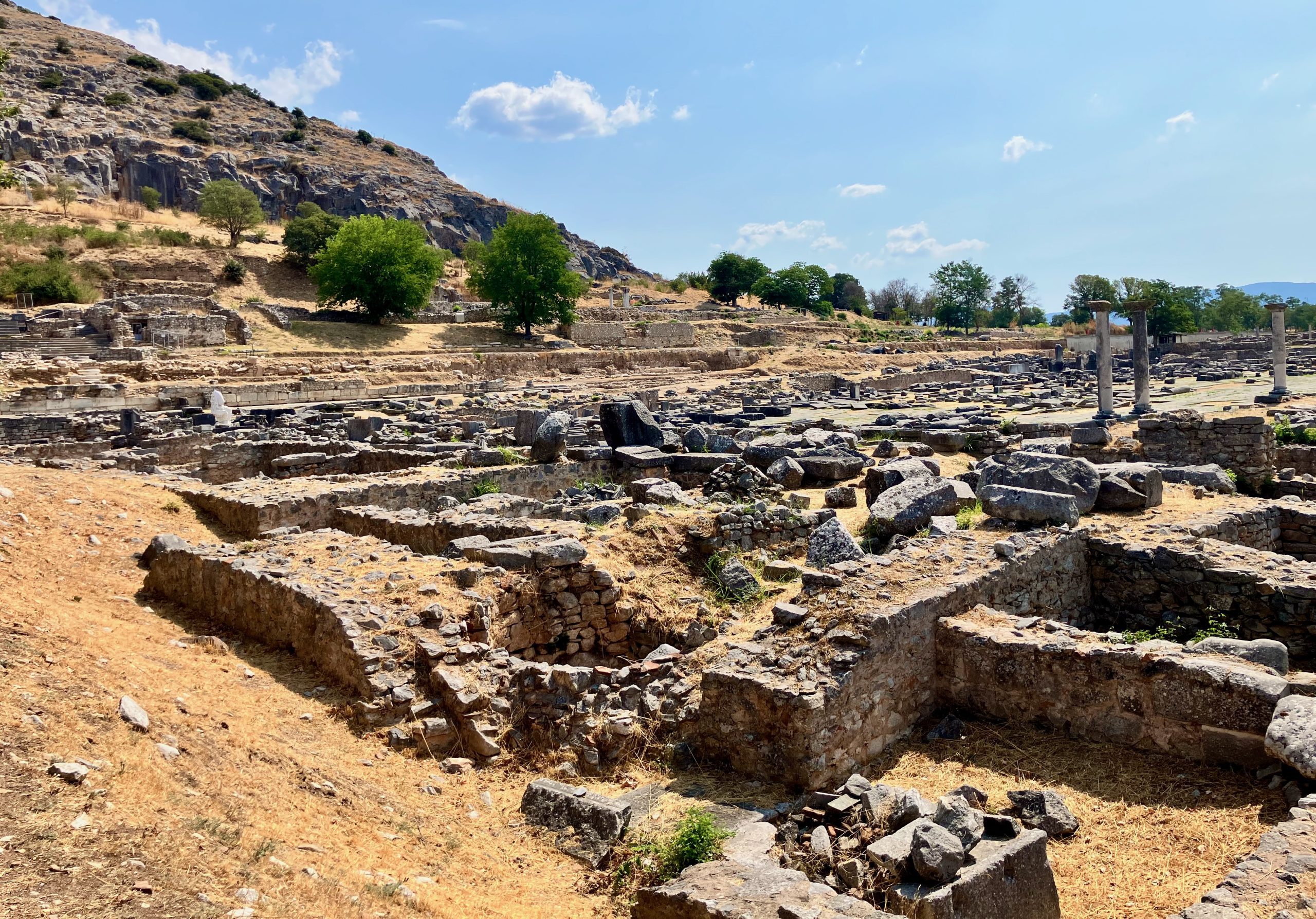
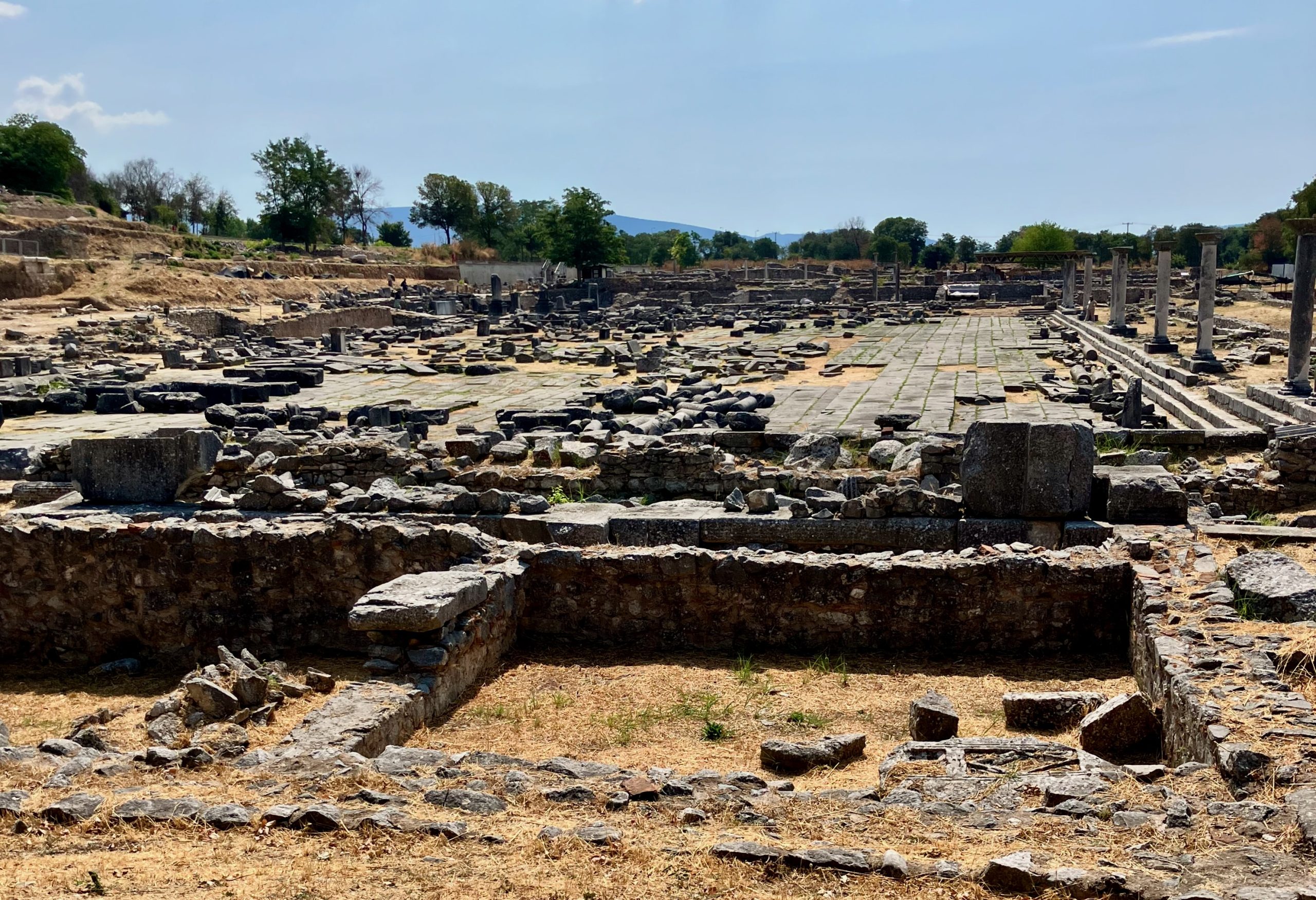
Most of the remains of the marketplace (Hellenistic “agora”) that Paul was dragged into are actually from the Roman forum built in the second century on the earlier site. But these photos give a sense of its size and general layout.
Here are some photos taken from inside the forum:
Here are some photos taken overlooking the forum from various angles:
(Not) the prison of Paul and Silas
Paul and Silas were imprisoned:
And when they had inflicted many blows upon them, they threw them into prison, ordering the jailer to keep them safely.
(Acts 19:23)
They were fastened in stocks (Acts 19:24), then miraculously released via an earthquake–but chose to stay put (Acts 19:25–28). The Philippian jailer asked what he must do to be saved. They replied, “Believe in the Lord Jesus, and you will be saved, you and your household.” (Acts 19:29–31 quoting 31). He believed and was baptised (Acts 19:32–34). When the chief city officials sent to release Paul, Paul revealed his Roman citizenship, which made them afraid. They asked them to leave, and they did, visiting Lydia and the other believers as they departed (Acts 19:35–40).
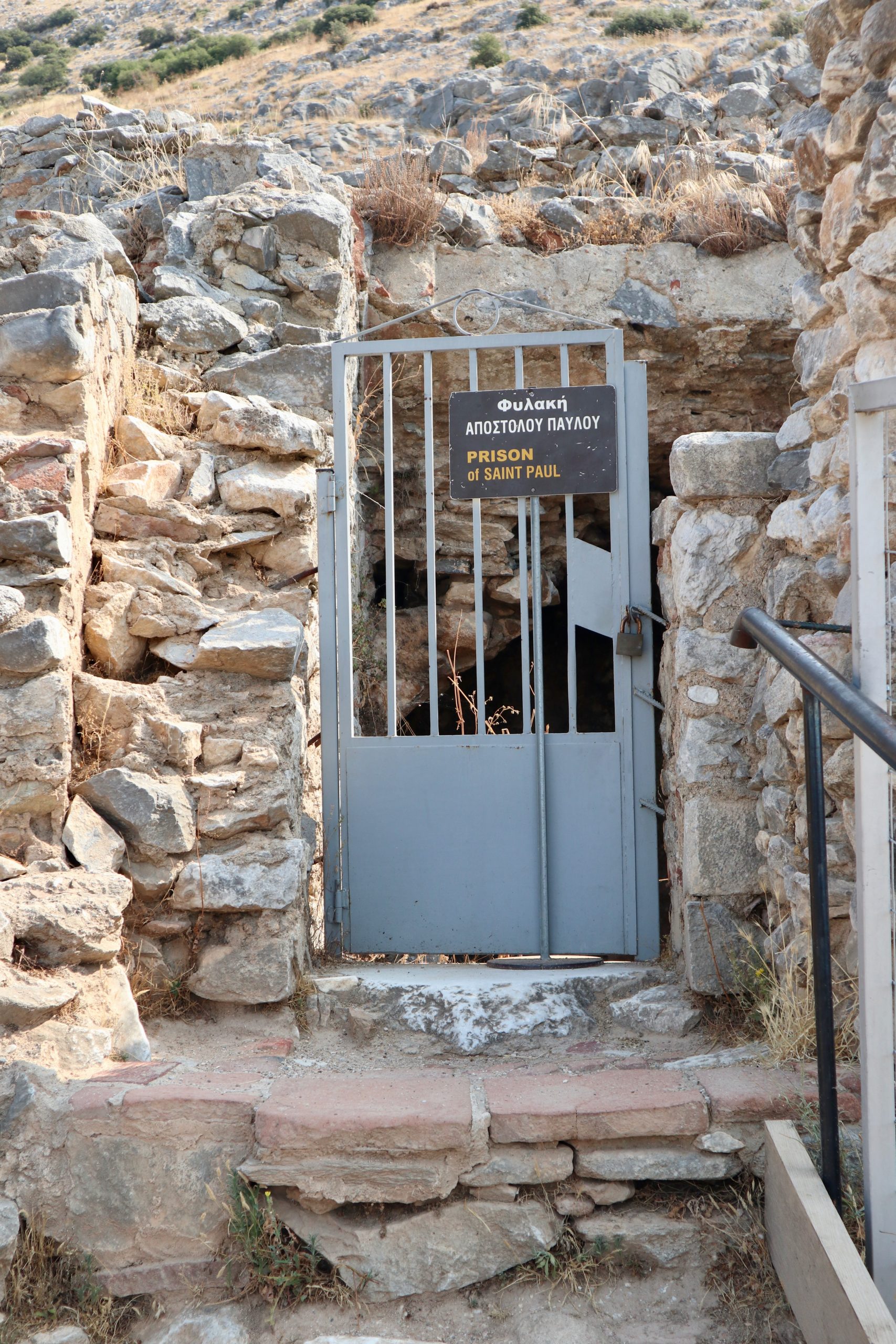
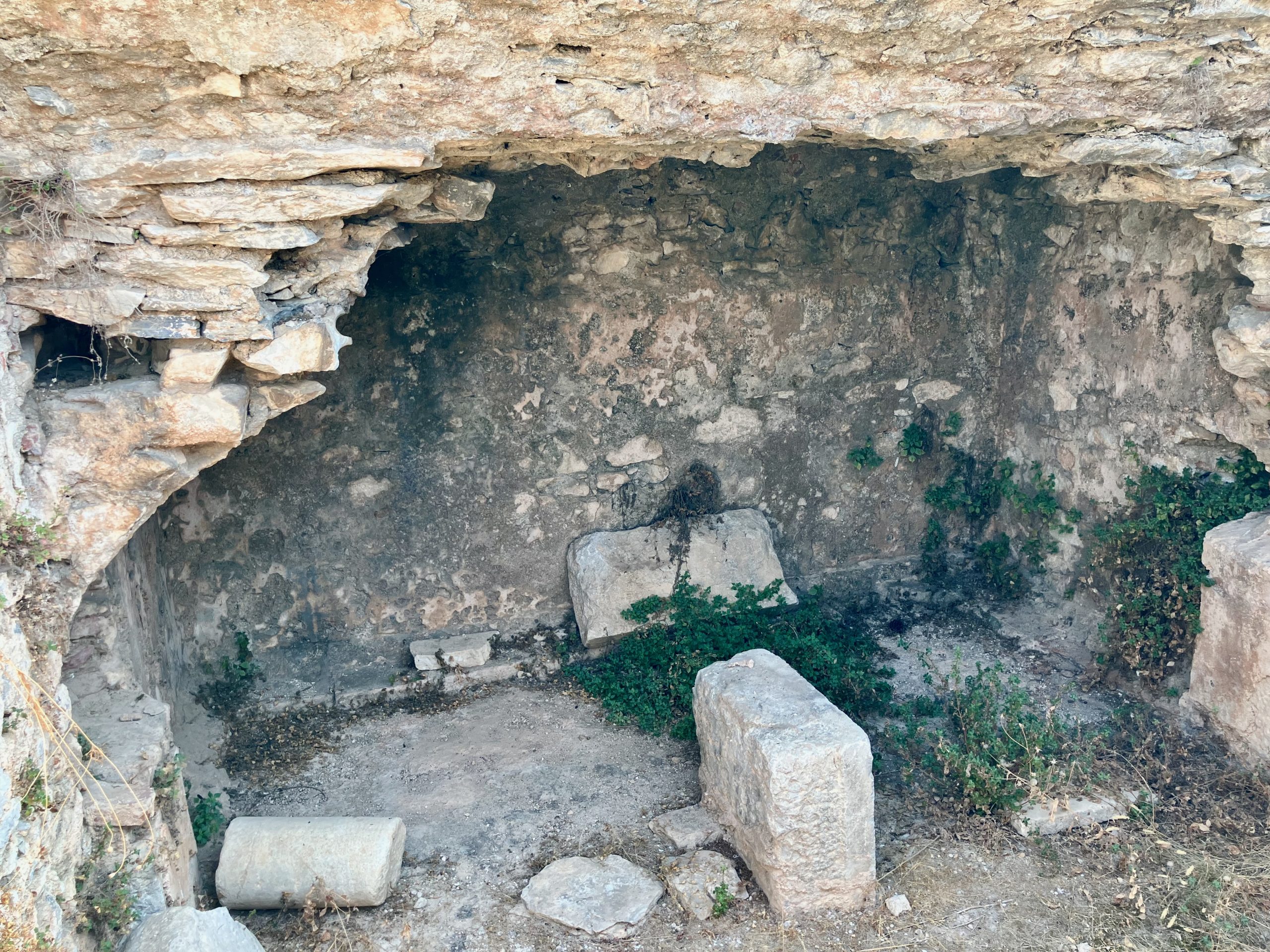
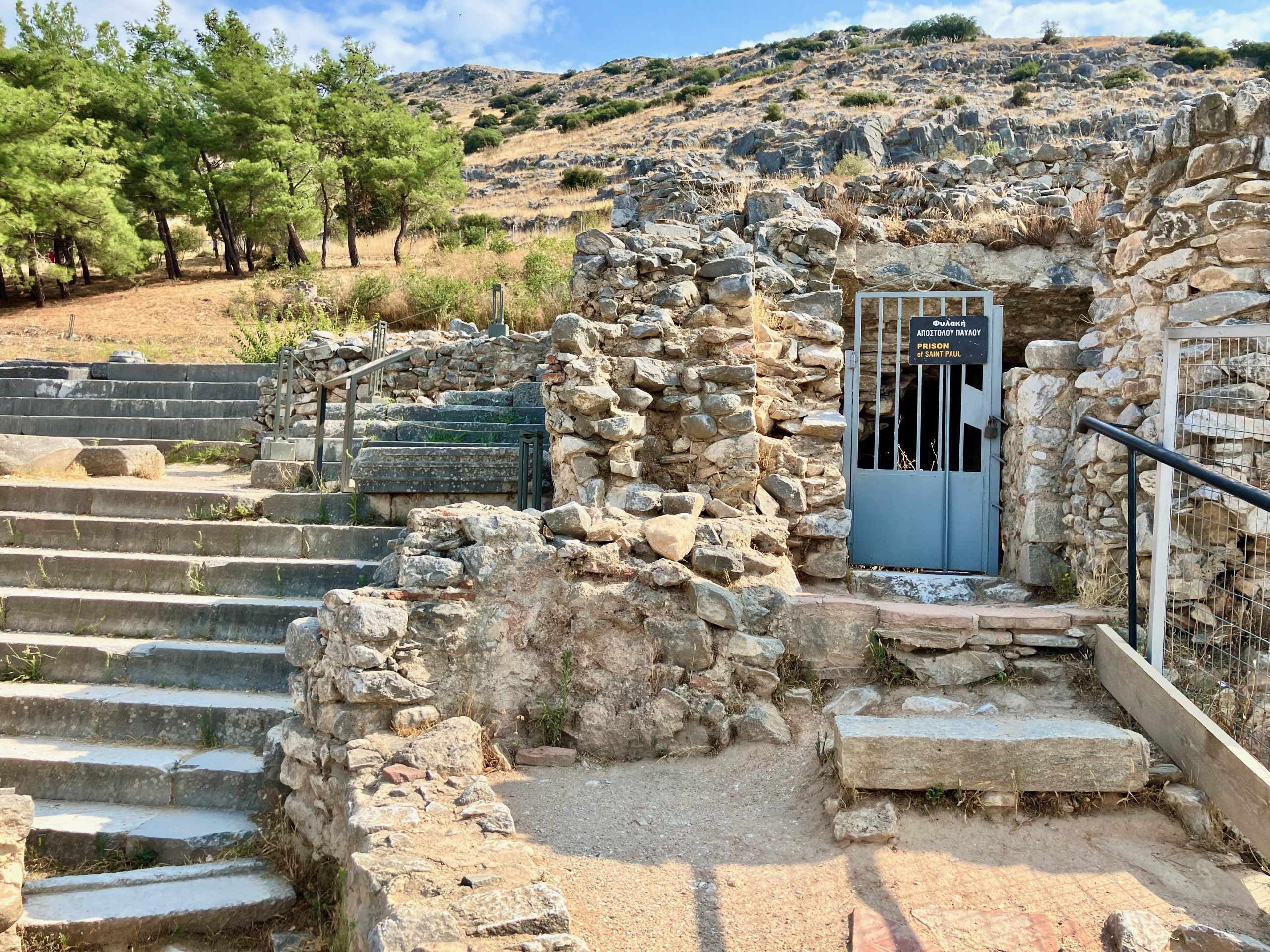
At the north of the Roman Forum is the traditional site of Paul and Silas’s imprisonment. Unfortunately, it’s highly unlikely that this was the actual site since this was a place for various shrines and temples. It’s more likely a cistern. Here’s some photos anyway.
Paul’s hope in the face of death
Paul later wrote to the Philippians from another prison about his great hope in the face of death:
… as it is my eager expectation and hope that I will not be at all ashamed, but that with full courage now as always Christ will be honored in my body, whether by life or by death. For to me to live is Christ, and to die is gain. If I am to live in the flesh, that means fruitful labor for me. Yet which I shall choose I cannot tell. I am hard pressed between the two. My desire is to depart and be with Christ, for that is far better.
(Philippians 1:20–23)
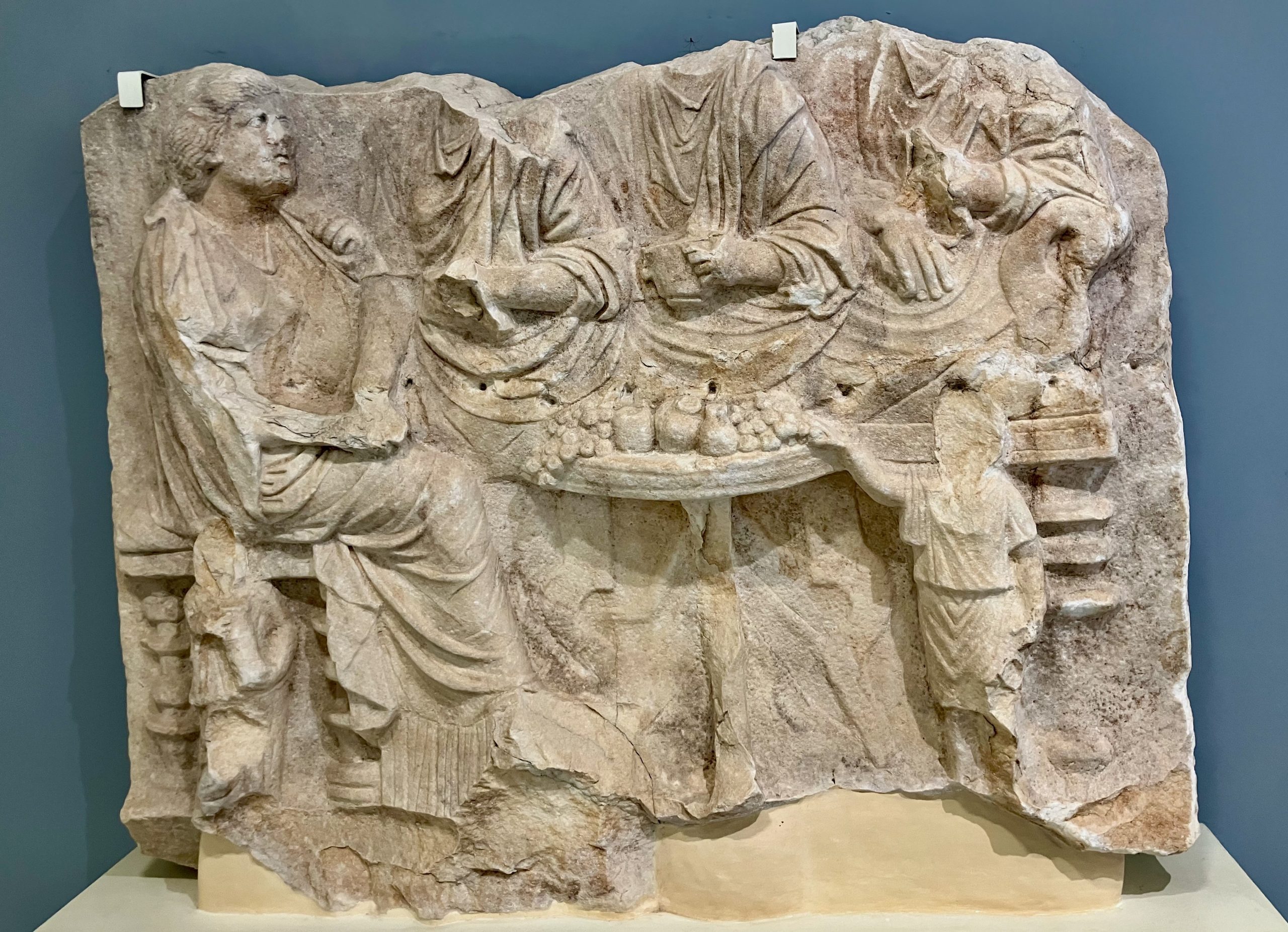
Paul’s confident attitude to death forms a strong contrast with the kinds of shadowy hopes the Greeks and Romans in Philippi tended to have. Here is a marble relief of a funeral supper from the Philippi Museum:
The gods above and below
Paul also wrote to the Philippians about Jesus Christ, who came down from heaven in humility, died on a cross, rose from death, and received a name above and beyond all names:
Have this mind among yourselves, which is yours in Christ Jesus, who, though he was in the form of God, did not count equality with God a thing to be grasped, but emptied himself, by taking the form of a servant, being born in the likeness of men. And being found in human form, he humbled himself by becoming obedient to the point of death, even death on a cross. Therefore God has highly exalted him and bestowed on him the name that is above every name, so that at the name of Jesus every knee should bow, in heaven and on earth and under the earth, and every tongue confess that Jesus Christ is Lord, to the glory of God the Father.
(Philippians 2:5–11)
This reference to Jesus’ humility and exaltation “above” all other names would have had a physical resonance with the Philippians. Close to and above the marketplace of Philippi was the Acropolis, a fortress hill in which the shrines of various gods were placed. The gods were literally names that were above the Philippians. The photos give a sense of the heights above Philippi where the gods’ names were placed.
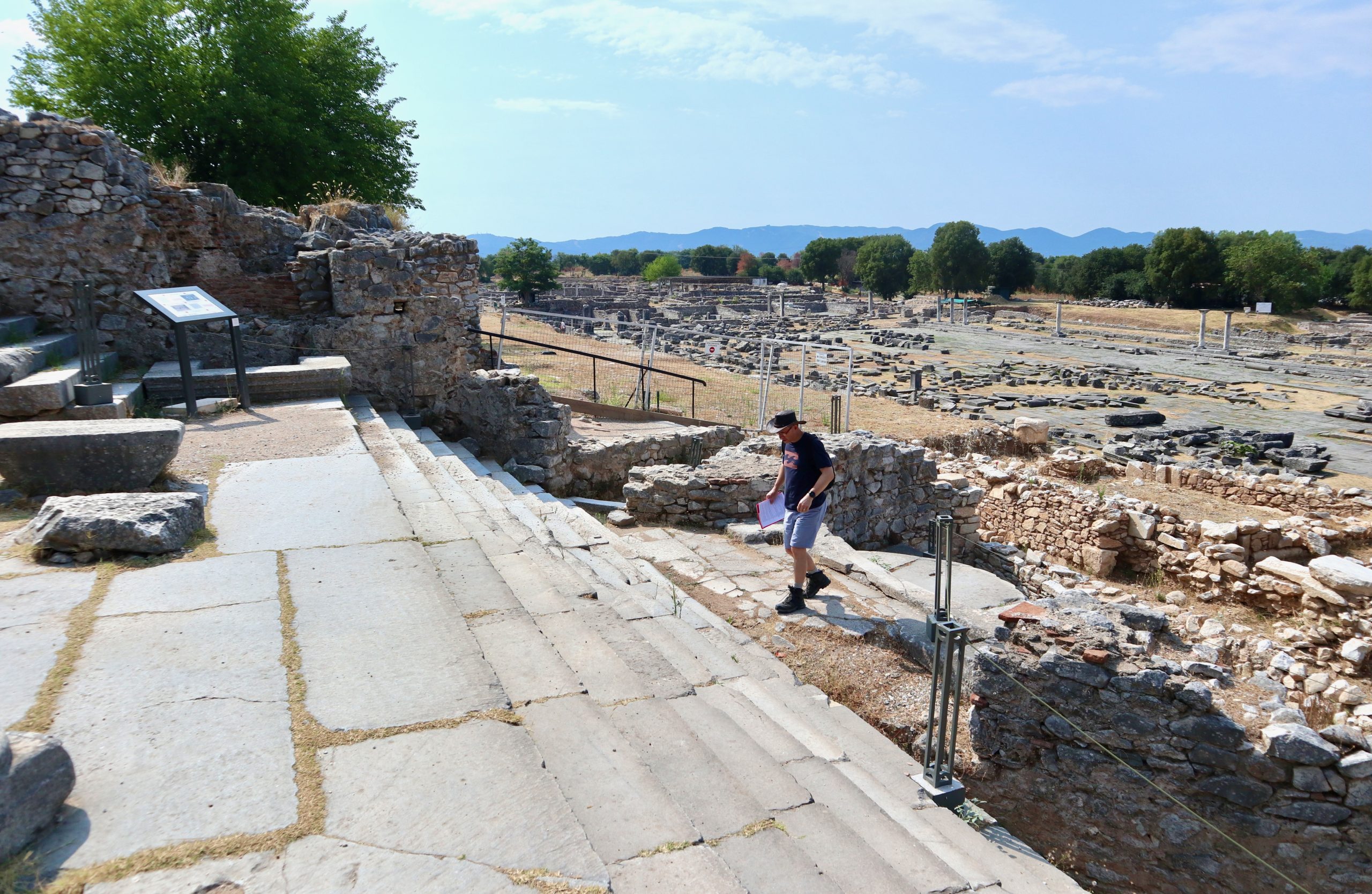
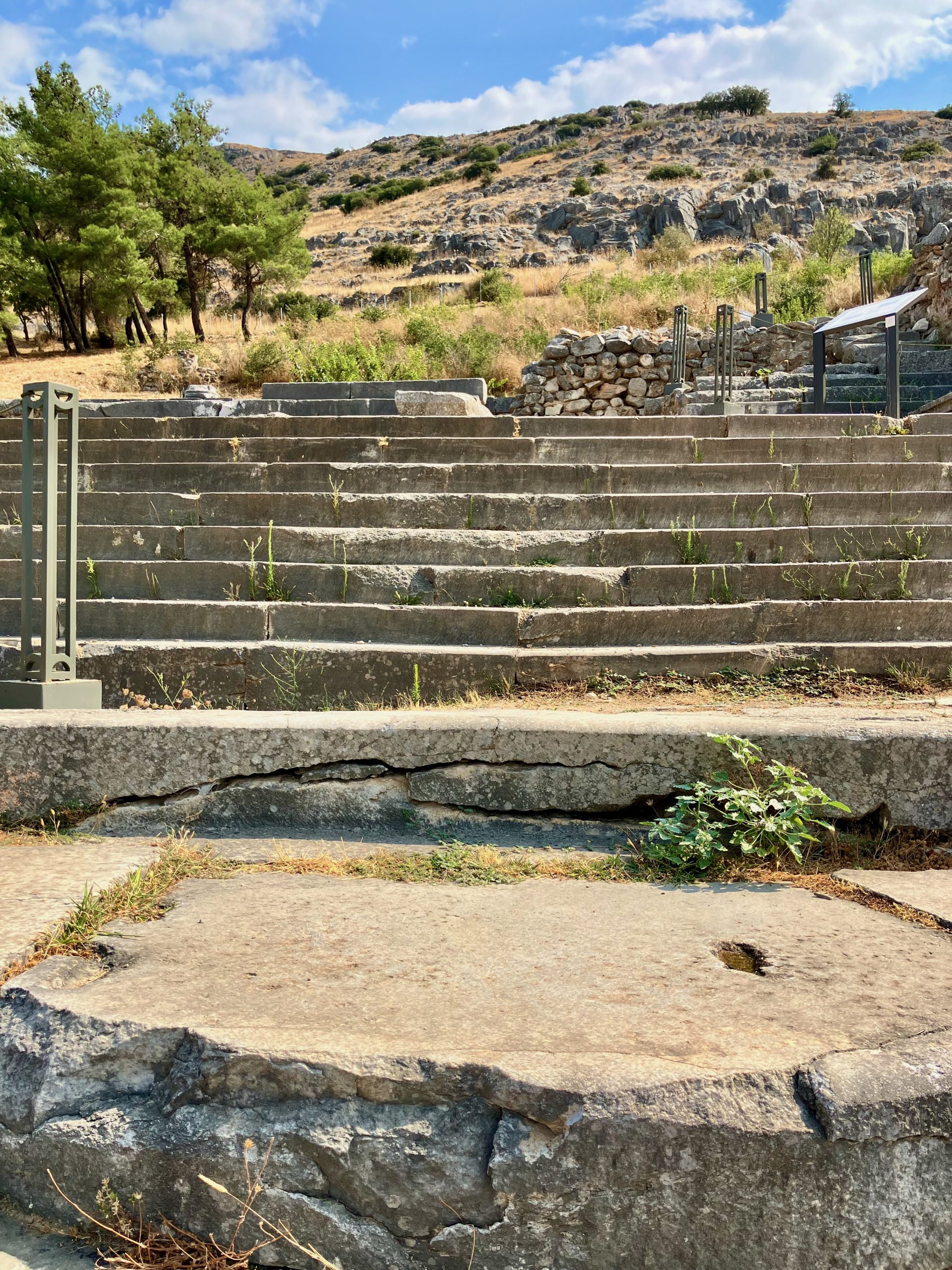
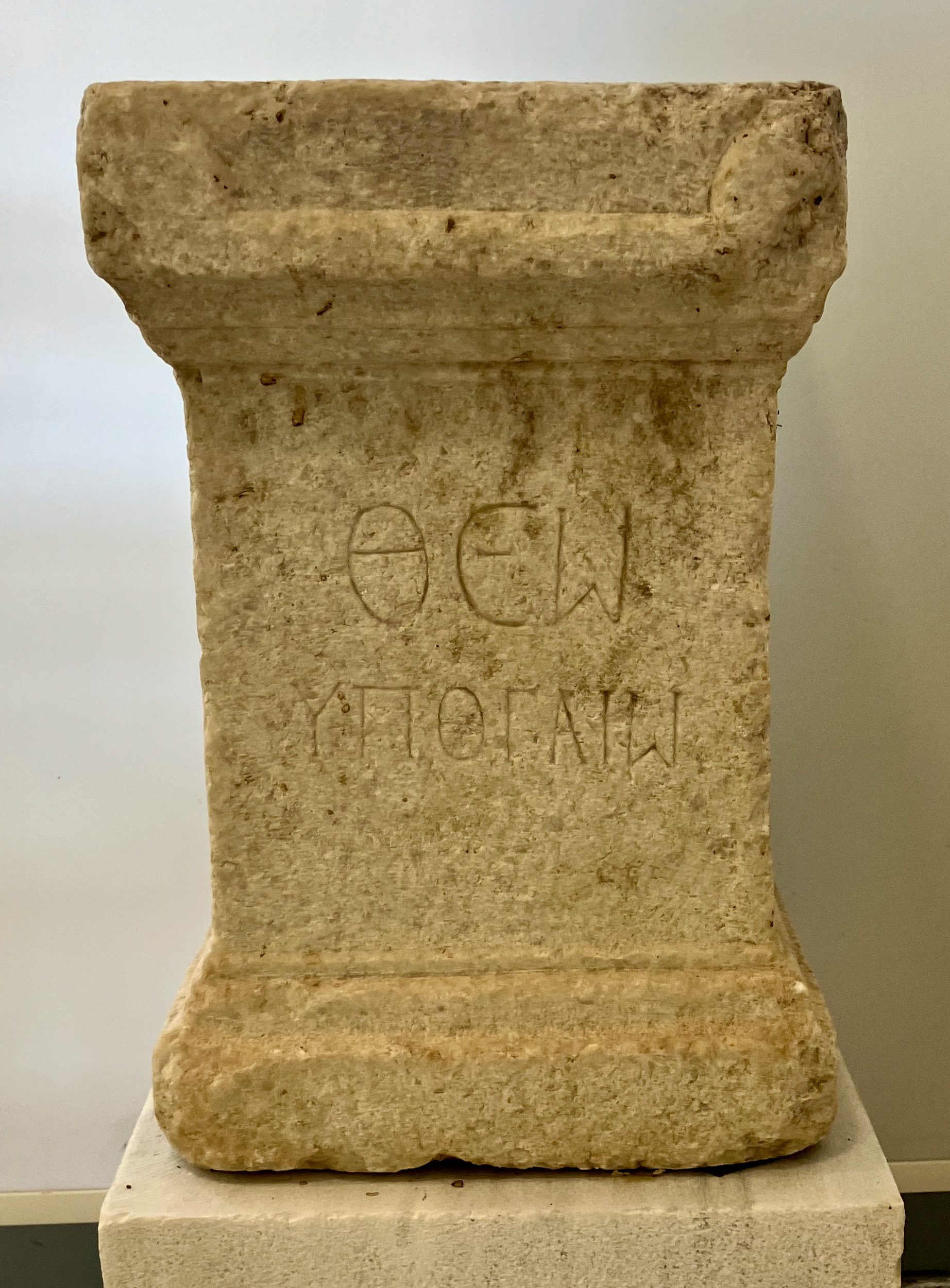
Jesus’ name, says Paul, is above all these names–including those “under the earth” (Philippians 2:10). In the Philippi Archaeological Museum is an altar “to the god under-earth” from the Roman period.
Righteousness from Christ not ourselves
Paul also wrote to the Philippians that his hope was not anchored in his own righteousness and deeds, but in Christ. This makes his hope certain and sure, not dependent on himself. Paul’s hope in gaining Christ is to:
be found in him, not having a righteousness of my own that comes from the law, but that which comes through faith in Christ, the righteousness from God that depends on faith
(Philippians 3:9)
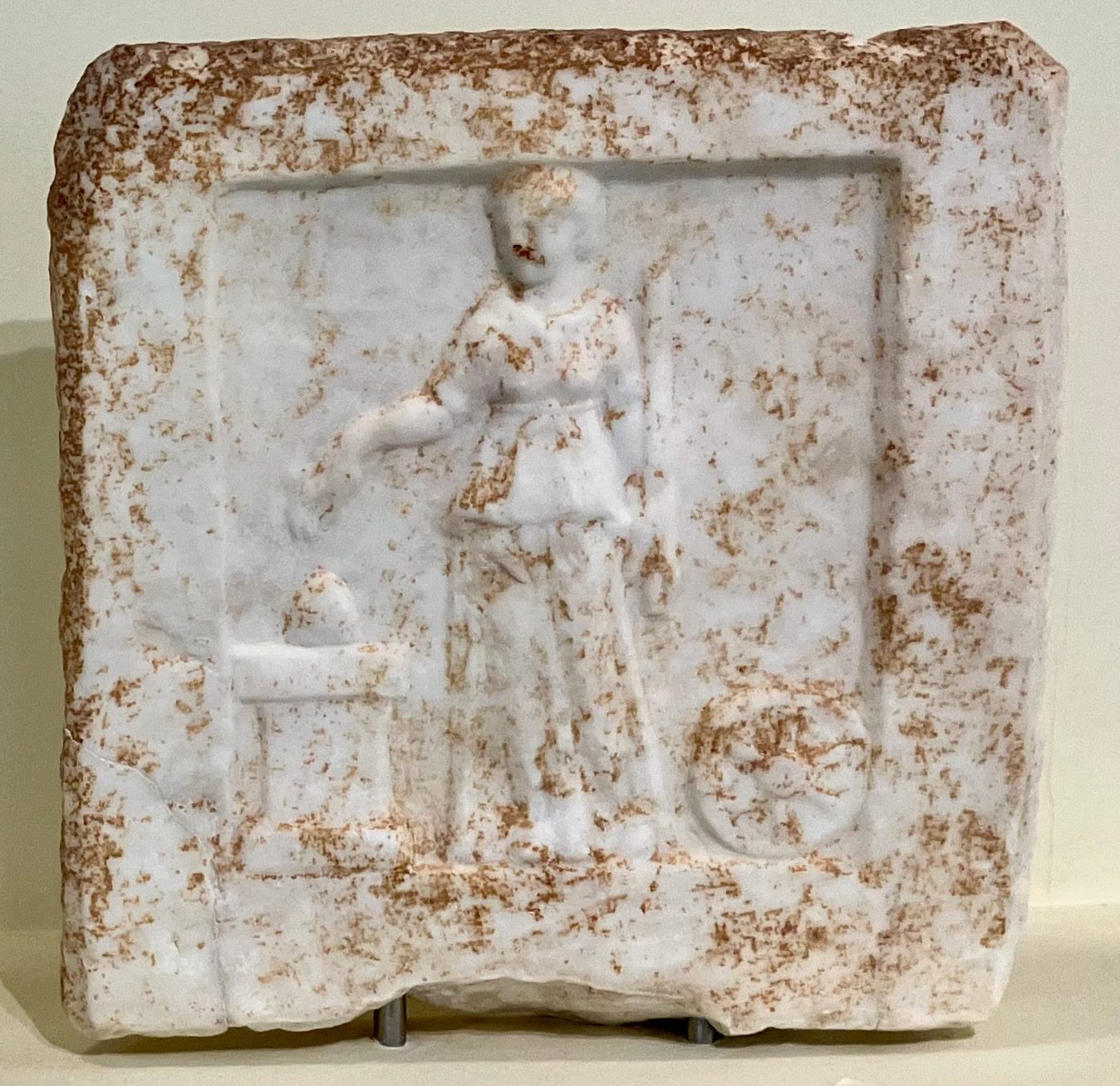
By contrast, the god Nemesis in the ancient world rewarded people according to their own righteousness and provided an uncertain and shadowy hope. Nemesis was the god of justice, order, equilibrium, rewarding the good and punishing the arrogant. Here is Nemesis in the Philippi Museum:
Gospel partnership
The Philippians, likely coordinated by Lydia among others, were in strong gospel partnership with Paul for much of his ministry. They supported him materially and through their prayers. Paul writes to the Philippians:
And you Philippians yourselves know that in the beginning of the gospel, when I left Macedonia, no church entered into partnership with me in giving and receiving, except you only. Even in Thessalonica you sent me help for my needs once and again. Not that I seek the gift, but I seek the fruit that increases to your credit. I have received full payment, and more. I am well supplied, having received from Epaphroditus the gifts you sent, a fragrant offering, a sacrifice acceptable and pleasing to God.
(Philippians 4:15–18)
In the museum are examples of the kind of coins that would have been used to provide such gifts: