In July 2025, I visited ancient Corinth with my wife Bron and daughter Ellie. We went to see archaeological remains associated with the Apostle Paul. Here are some photos of the site and museum exhibits. They help to provide context for New Testament texts associated with Corinth. Enjoy!
Paul arrives in Corinth
After his time in Athens (see my post with photos from Athens), Paul travelled to Corinth:
After this Paul left Athens and went to Corinth.
(Acts 18:1 ESV)
Here are pictures of ancient Corinth from the Acrocorinth (the fortress heights overlooking Corinth):
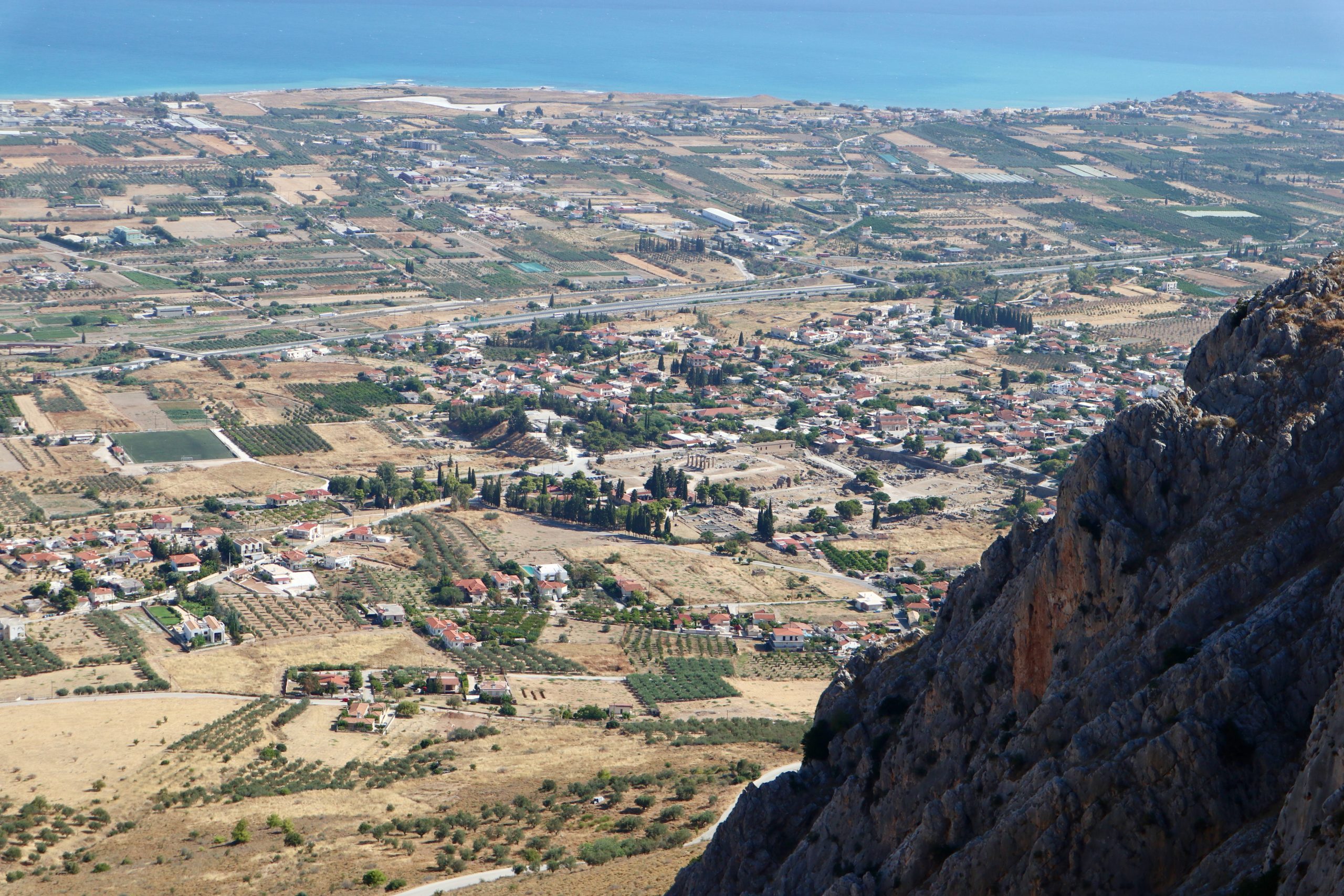
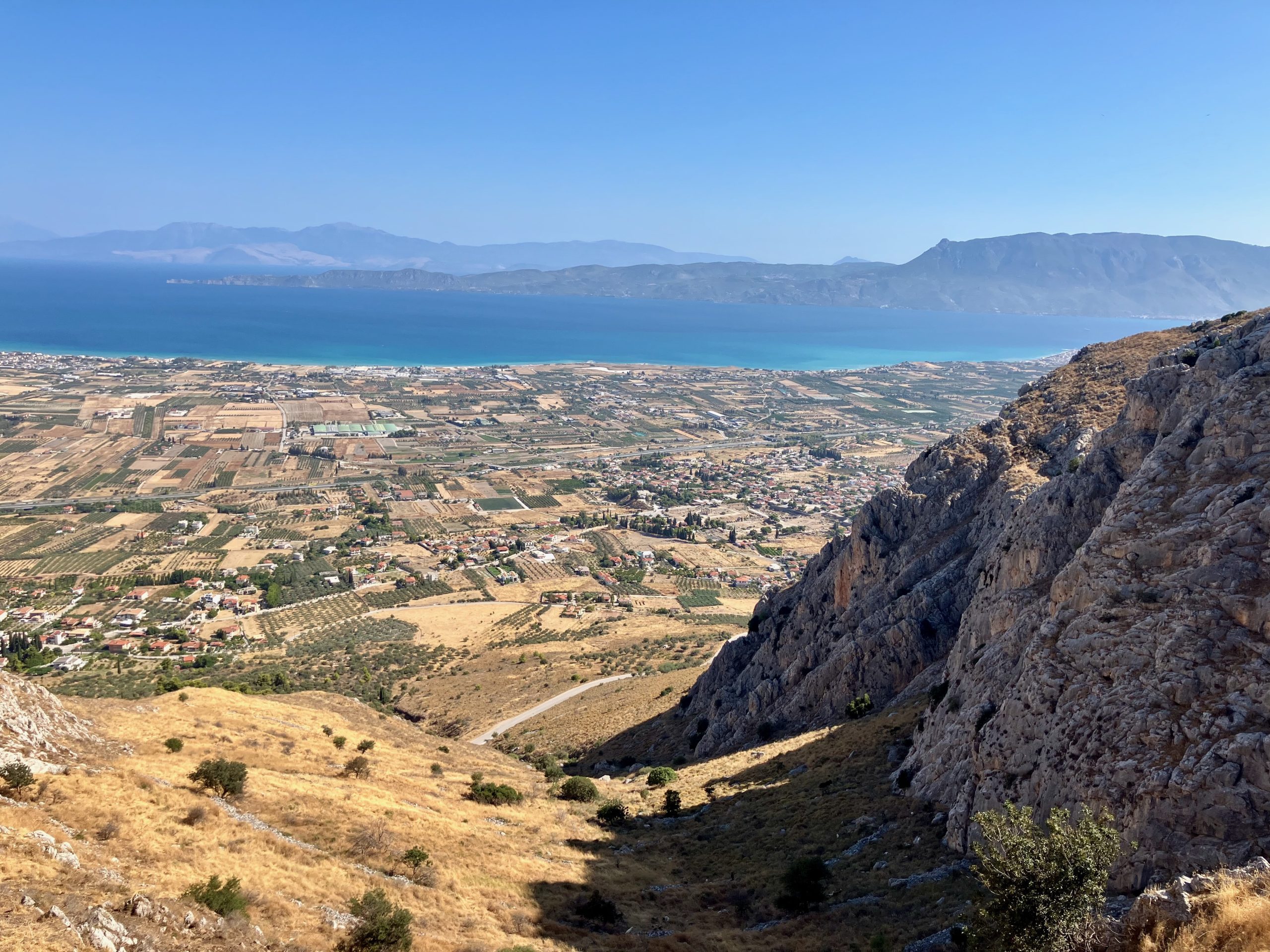
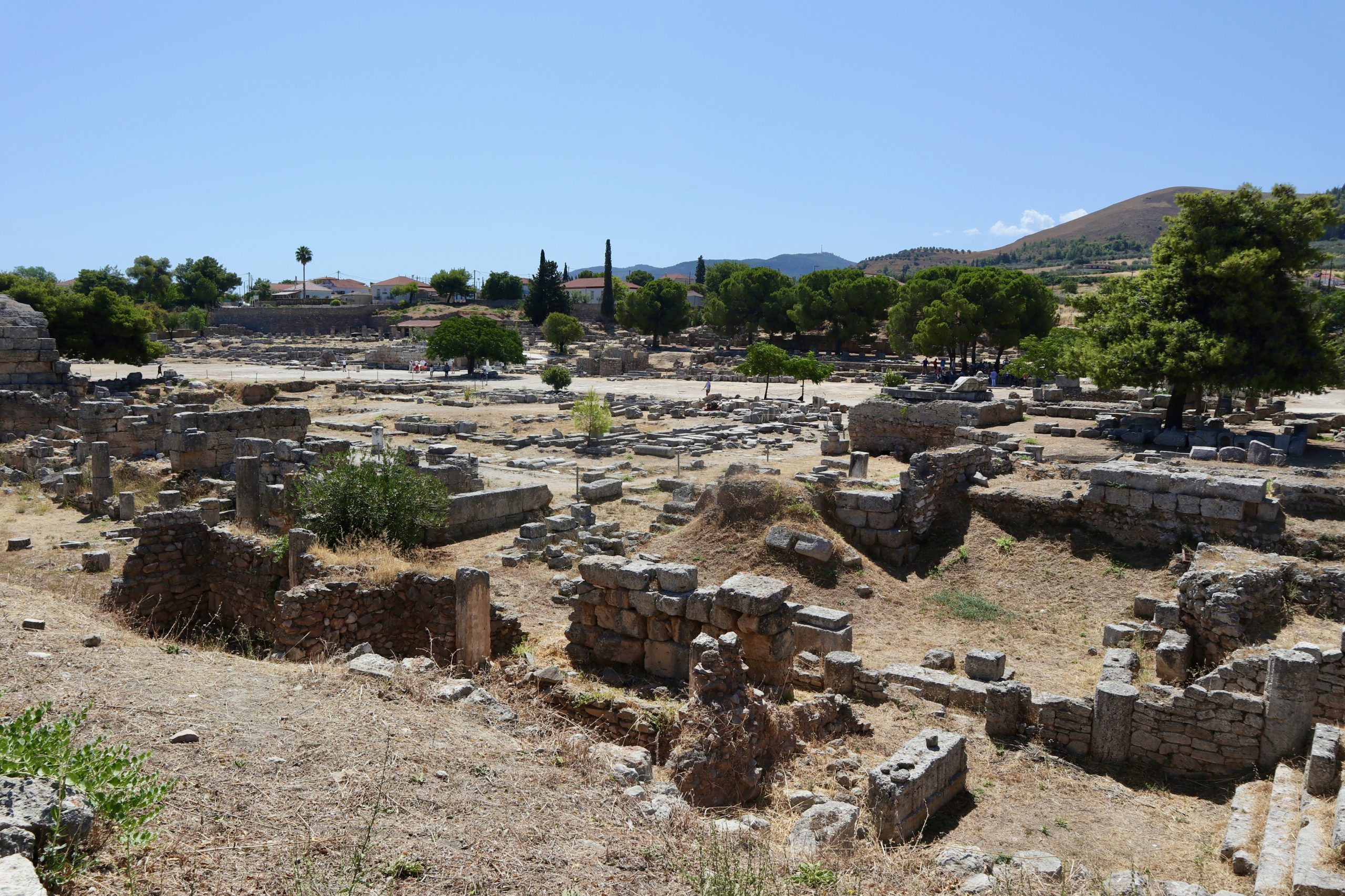
Here’s an overview of the marketplace in ancient Corinth:
Paul’s work in Corinth
And he found a Jew named Aquila, a native of Pontus, recently come from Italy with his wife Priscilla, because Claudius had commanded all the Jews to leave Rome. And he went to see them, and because he was of the same trade he stayed with them and worked, for they were tentmakers [or: manufacturers of stage properties] by trade.
(Acts 18:2–3 ESV)
Scholars debate the nature of the trade in which Aquila and Paul were involved. The word skēnopoios is a standard theatre term that means “manufacturer of stage properties”. Traditionally, it’s been argued that Jewish religious objections against the theatre would make it highly unlikely that Jews such as Aquila and Paul would have been involved in this trade. Hence, the traditional translation is “tentmaker”, a broader term that could imply being a general leatherworker involved in the manufacture of awnings, canopies, market stalls, and other similar items. The problem is that outside a theatre context, the term doesn’t really mean “tentmaker”; would more naturally mean “pitcher of tents”. This job is more likely to be done by someone in a nomadic community, rather than in a highly urbanised setting like Corinth.
Certainly, theatres were a central feature of ancient cities like Corinth. And there was indeed a theatre in ancient Corinth, so there would have been business for manufacturers of stage properties. And while it’s likely that Jews would have avoided direct participation in religious rituals associated with the theatre, we don’t have direct evidence that they would have avoided trades associated with the theatre. The theatre wasn’t inherently idolatrous, though it would have had idolatrous associations. Hence, it is at least plausible that Aquila and Paul were involved in the manufacture of stage properties.
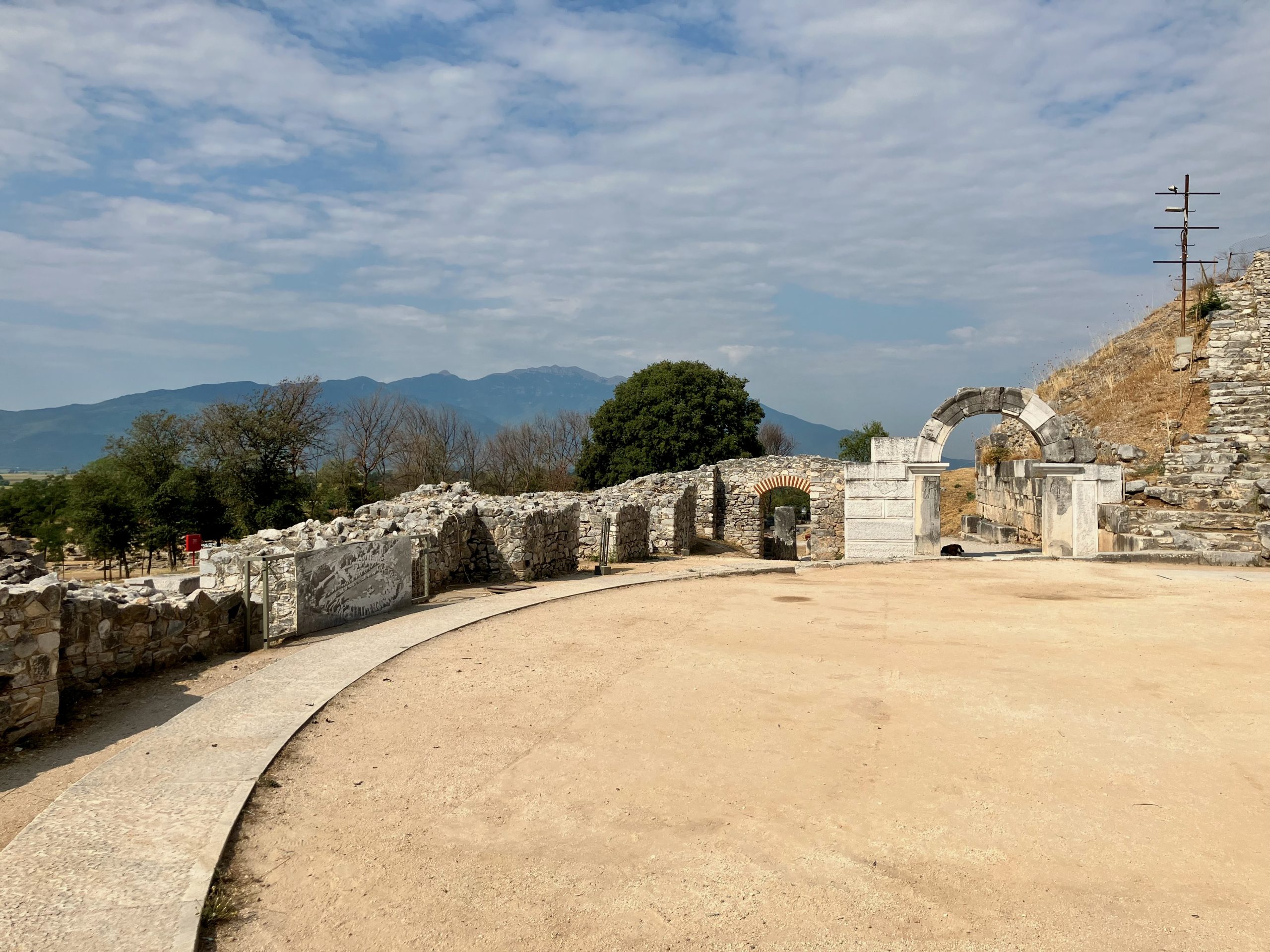
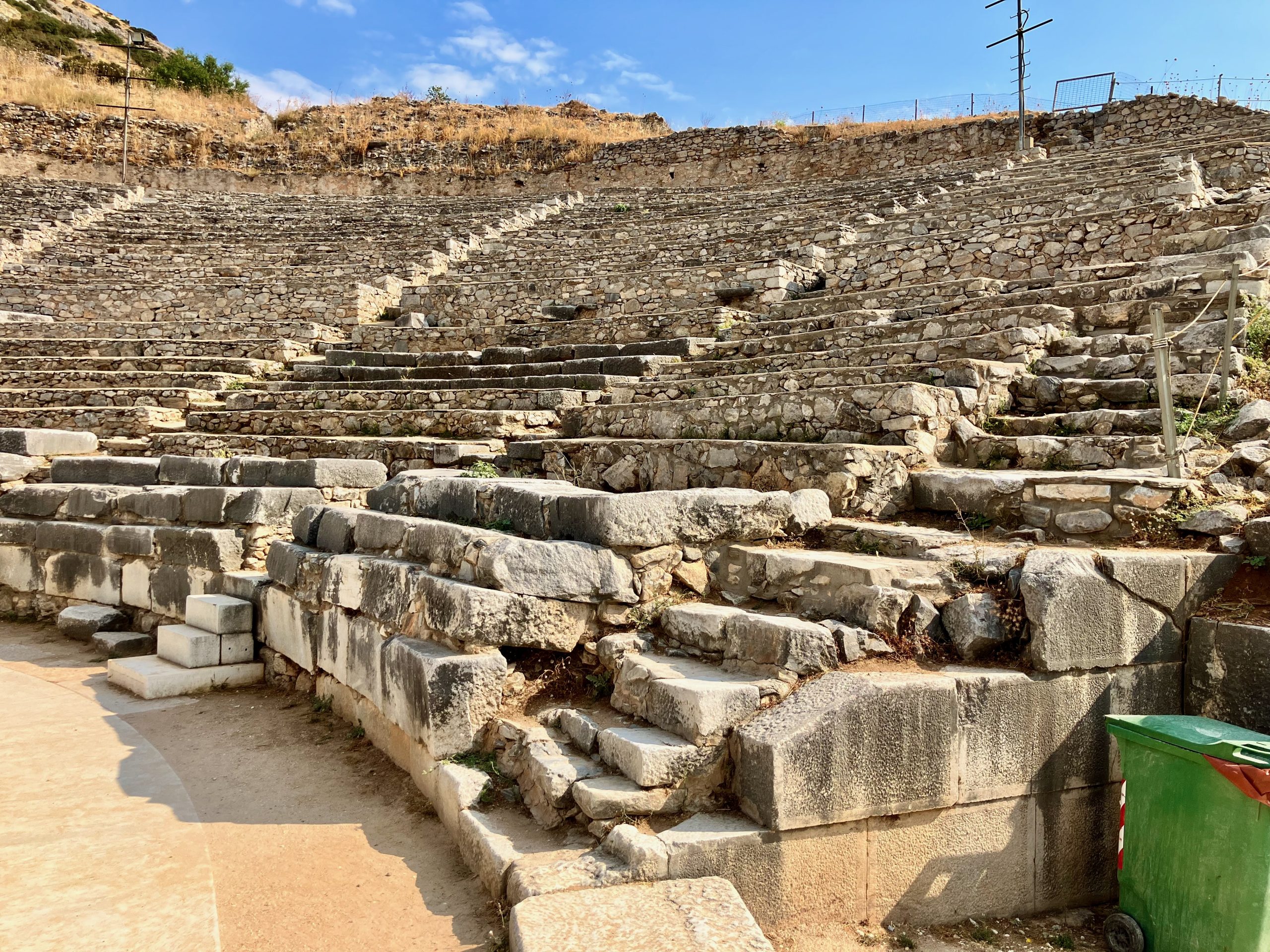
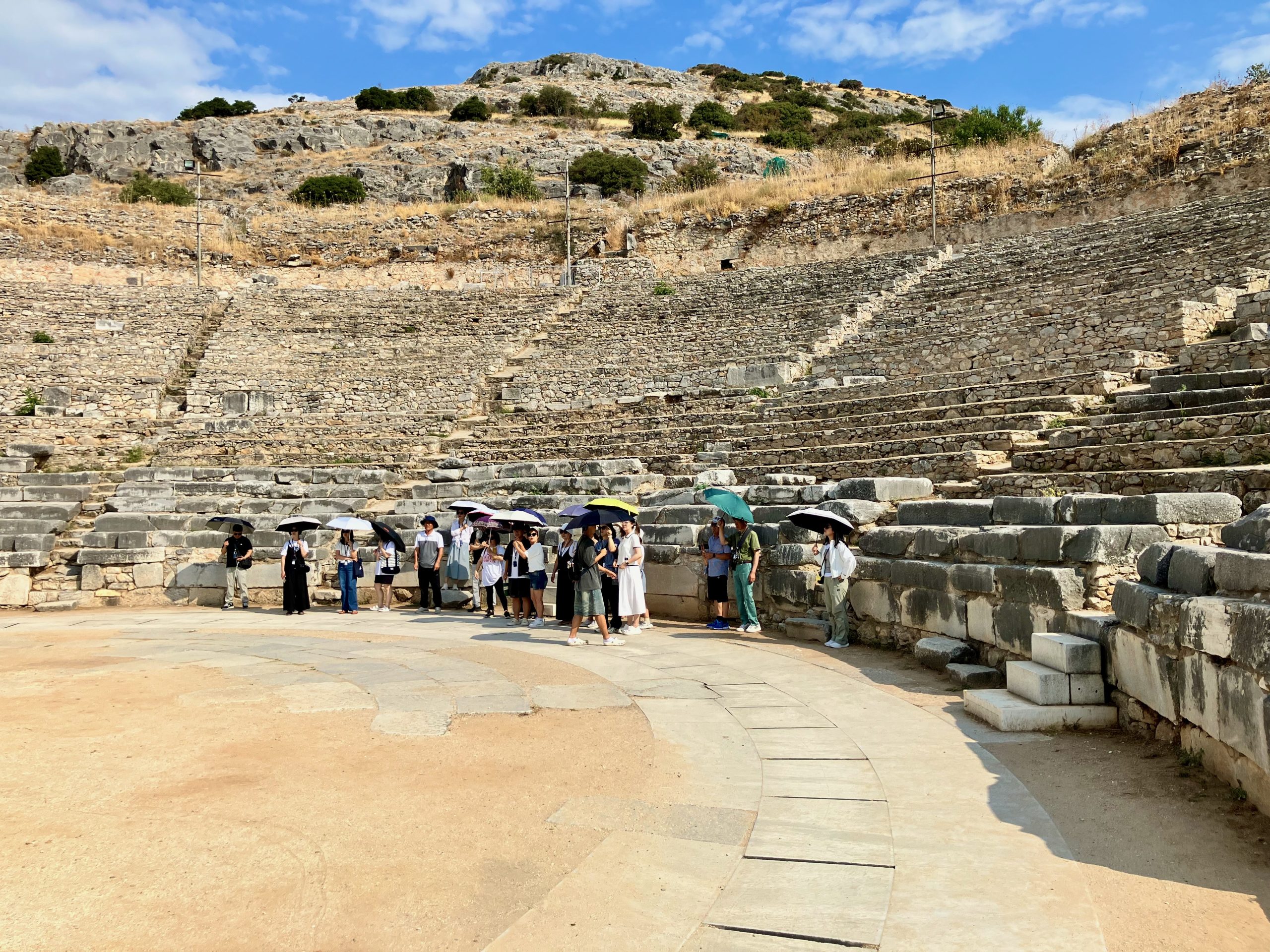
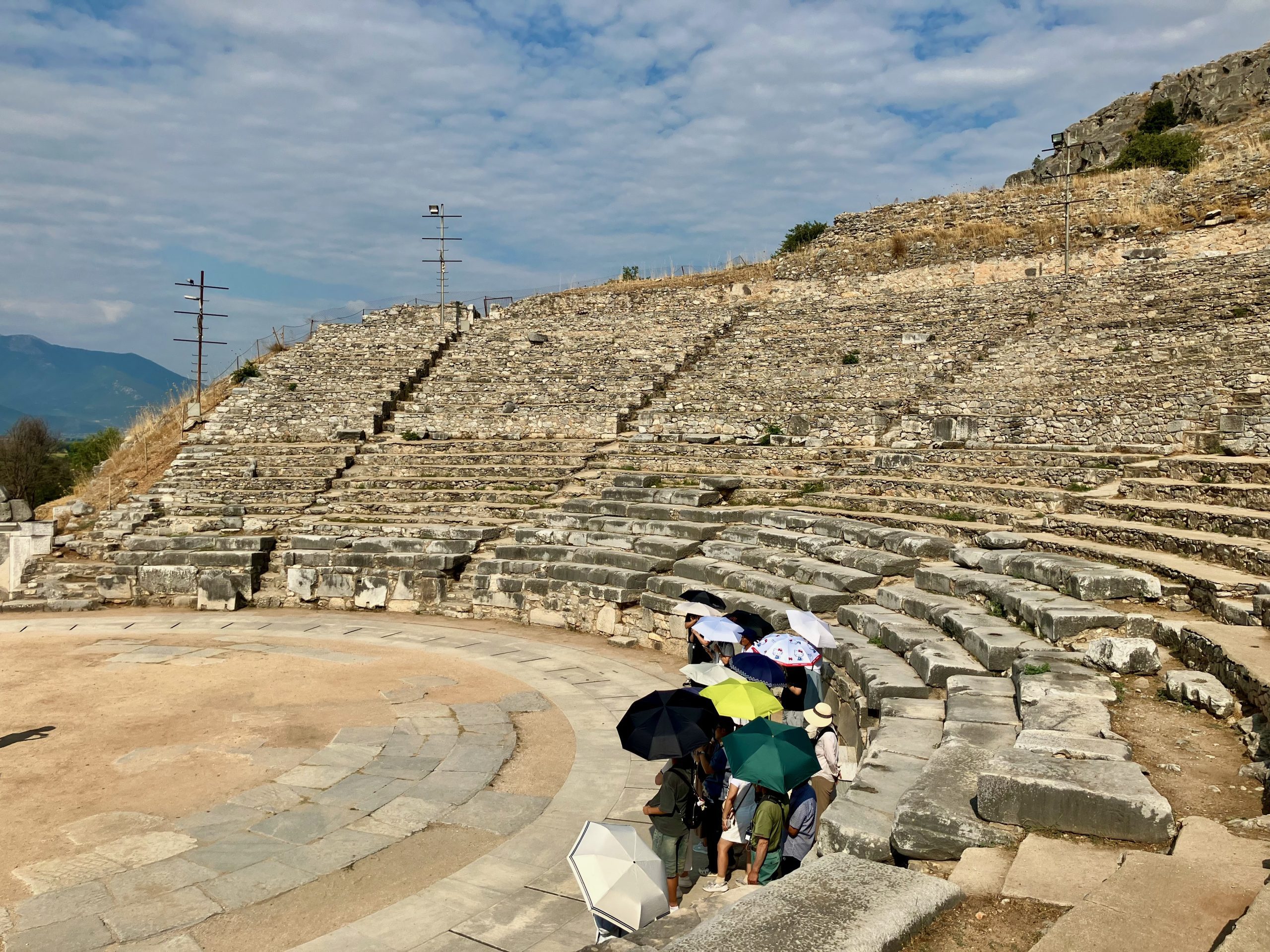
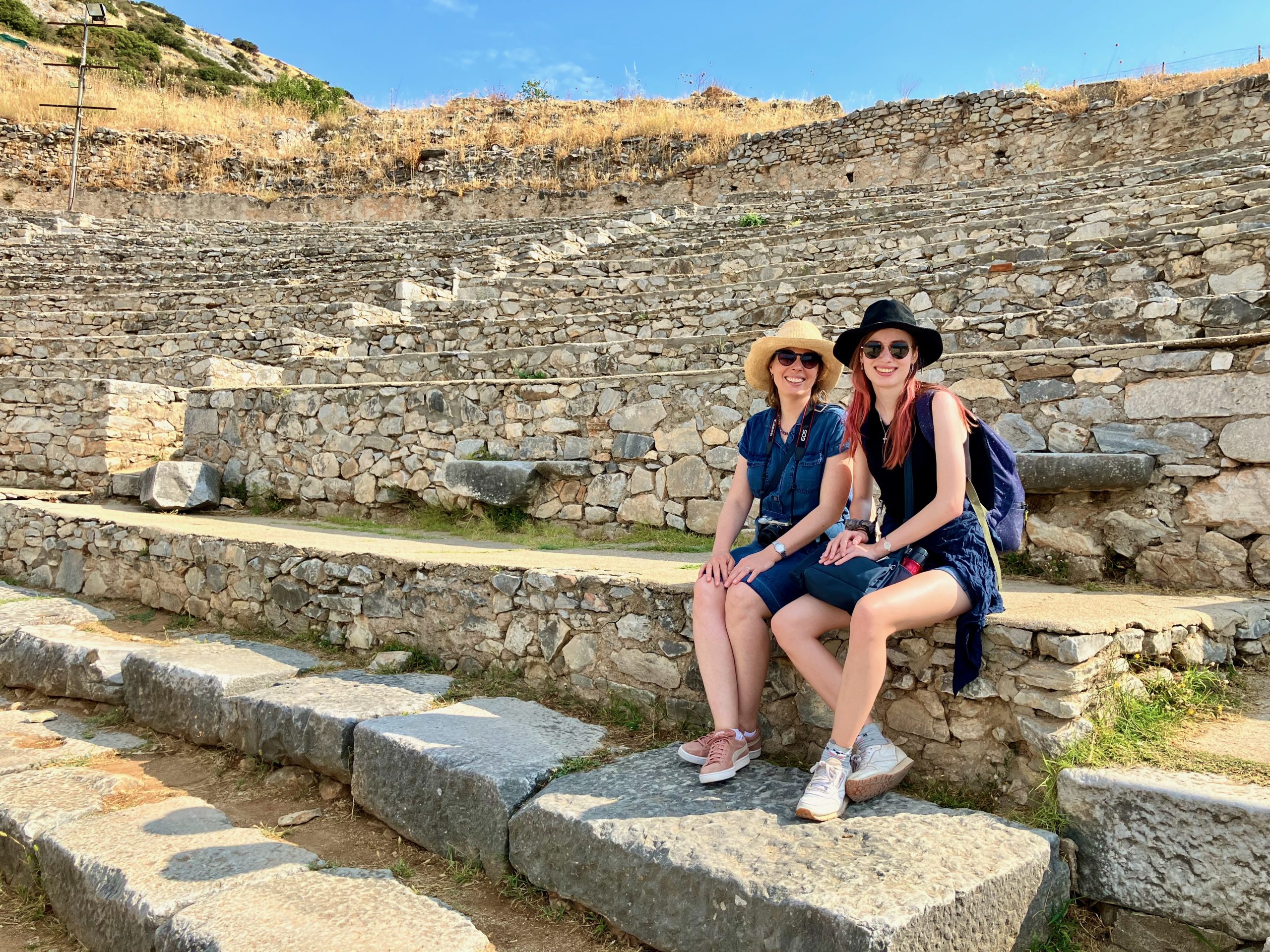
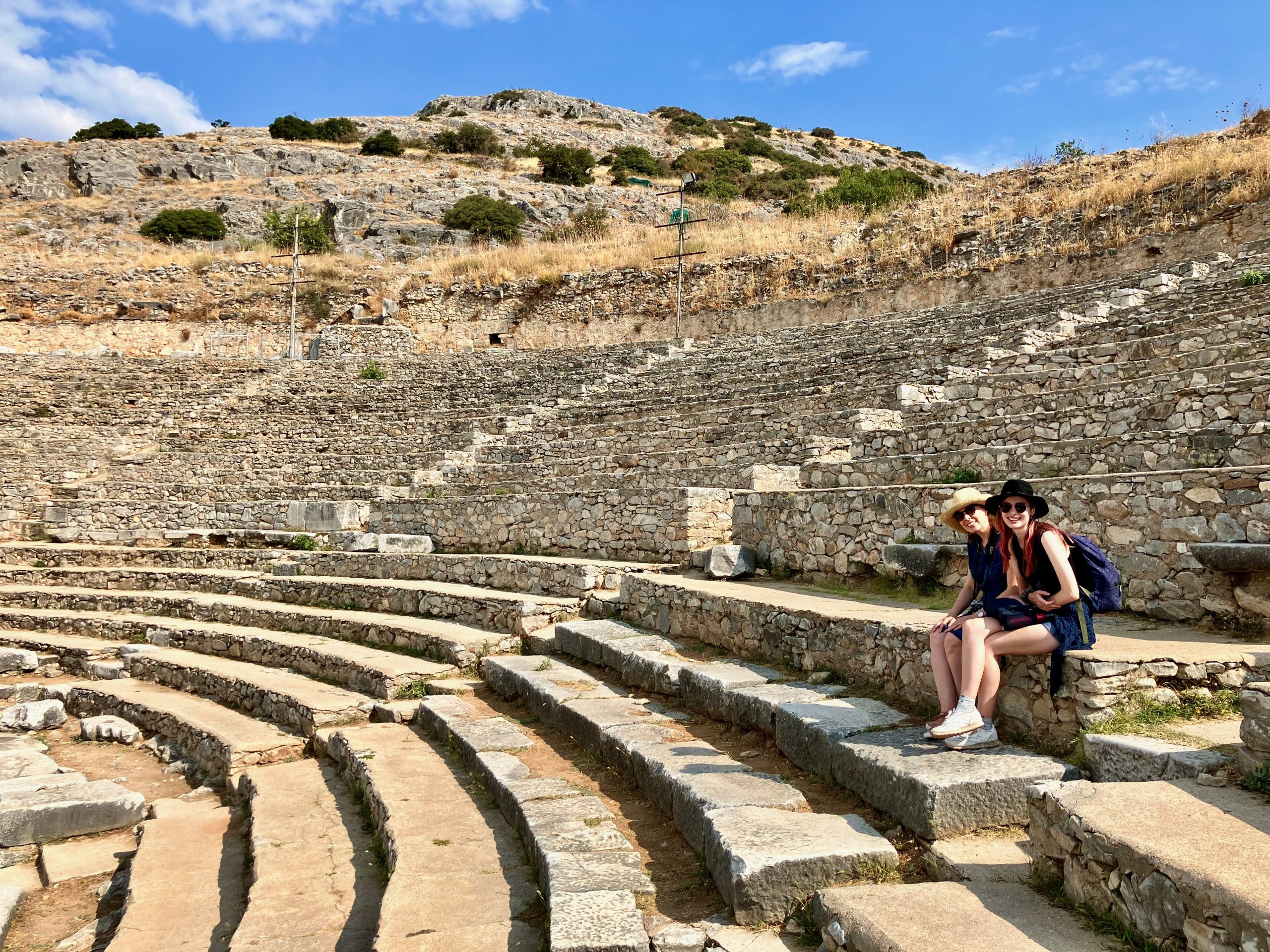
Unfortunately, I missed taking a photo of the Corinth theatre. However, here’s a photo I took of the theatre in ancient Philippi. Like the theatre in Corinth, it’s on the outskirts of town. It’s about two-thirds the diameter of the theatre in Corinth, with a similar semi-circular shape, including raised steps:
It is likely that Aquila’s workshop was located in the recently completed North Market, about 200m from the entrance to the theatre. Here are some photos of the North Market. It shows the outlines of some of the 44 workshops. Aquila’s workshop, where Paul worked, was quite likely one of these. Priscilla and Aquila, with their children if they had any, would have slept in the loft above. Paul would probably have slept in the workshop below.
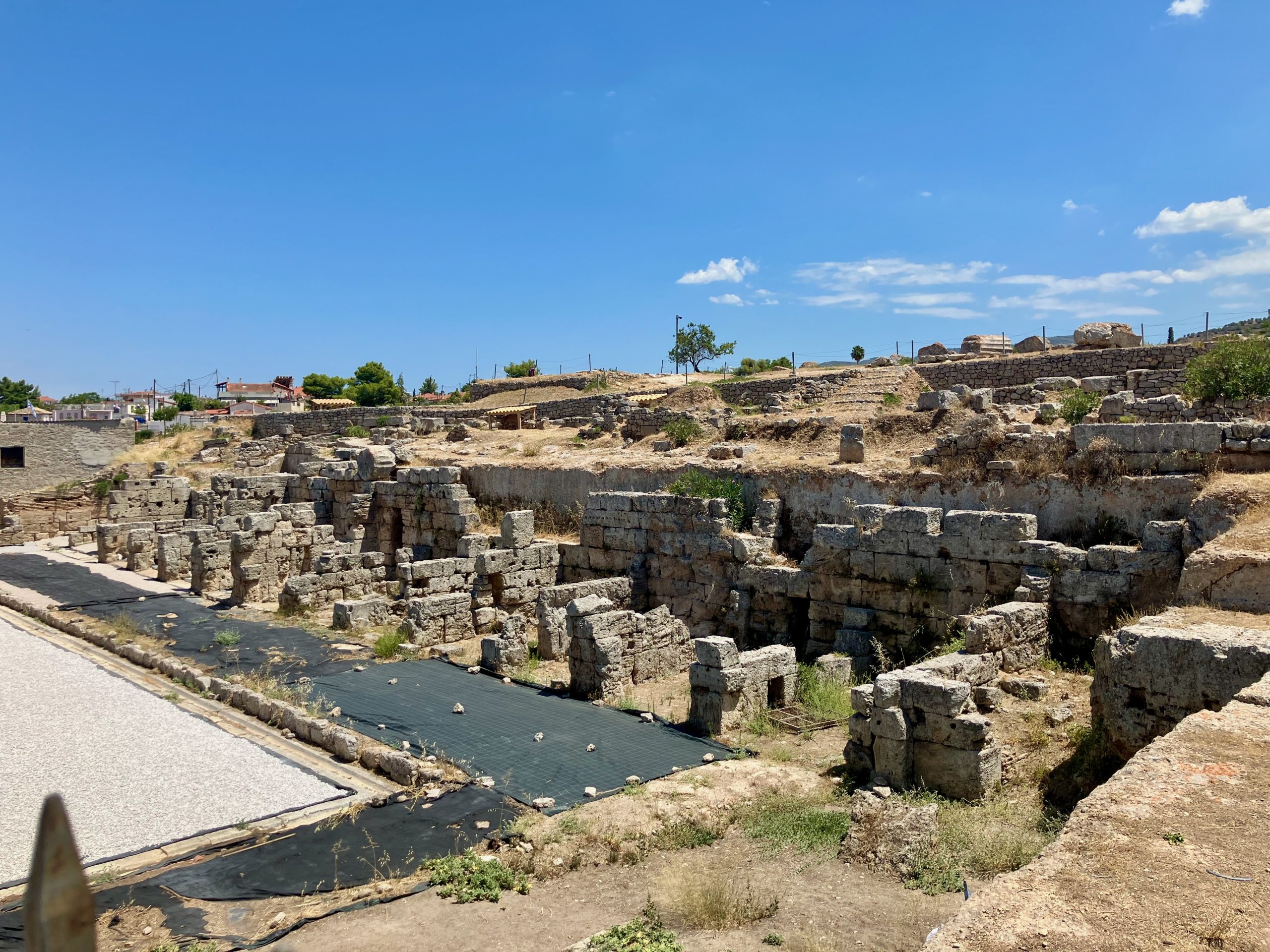
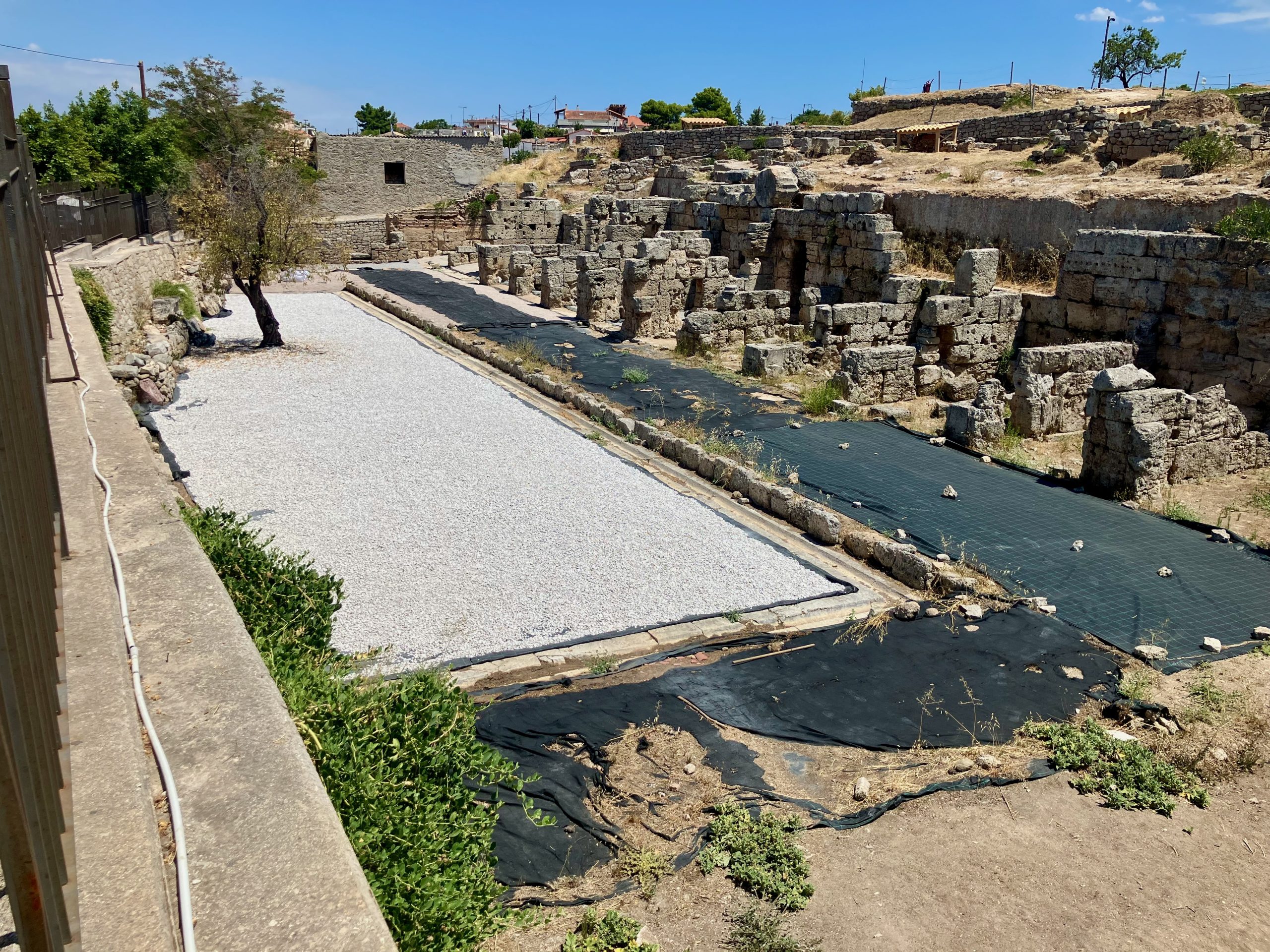
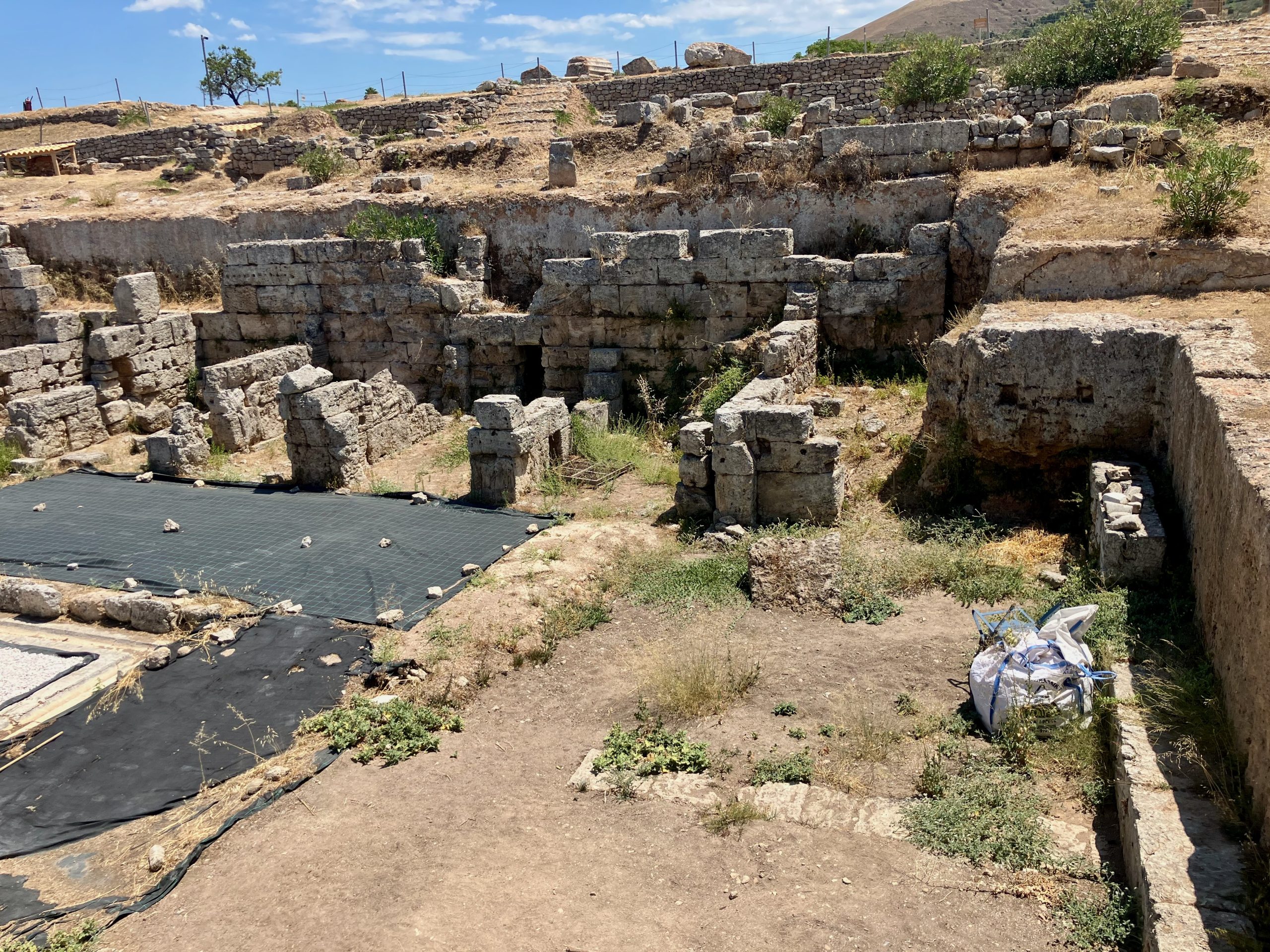
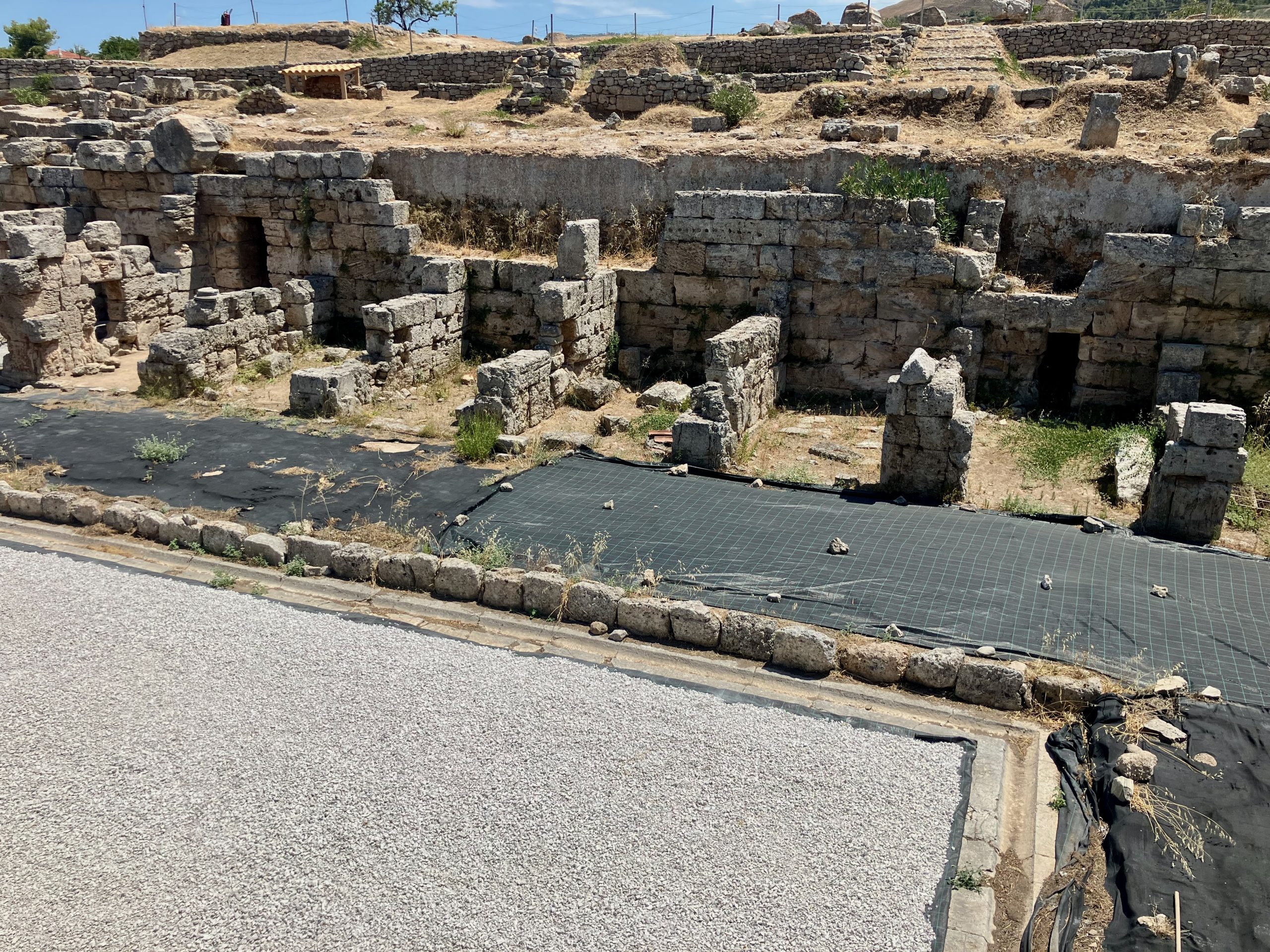
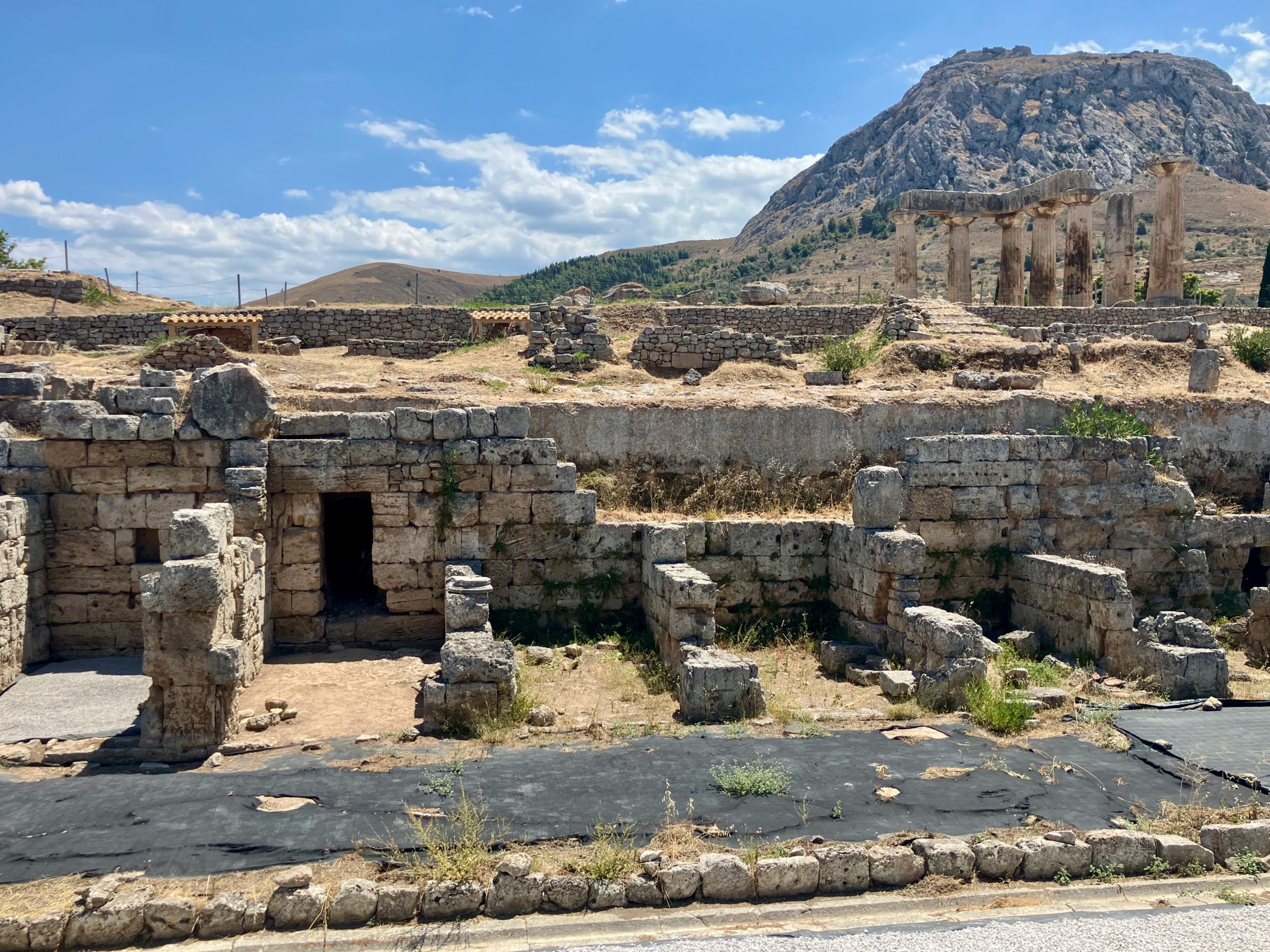
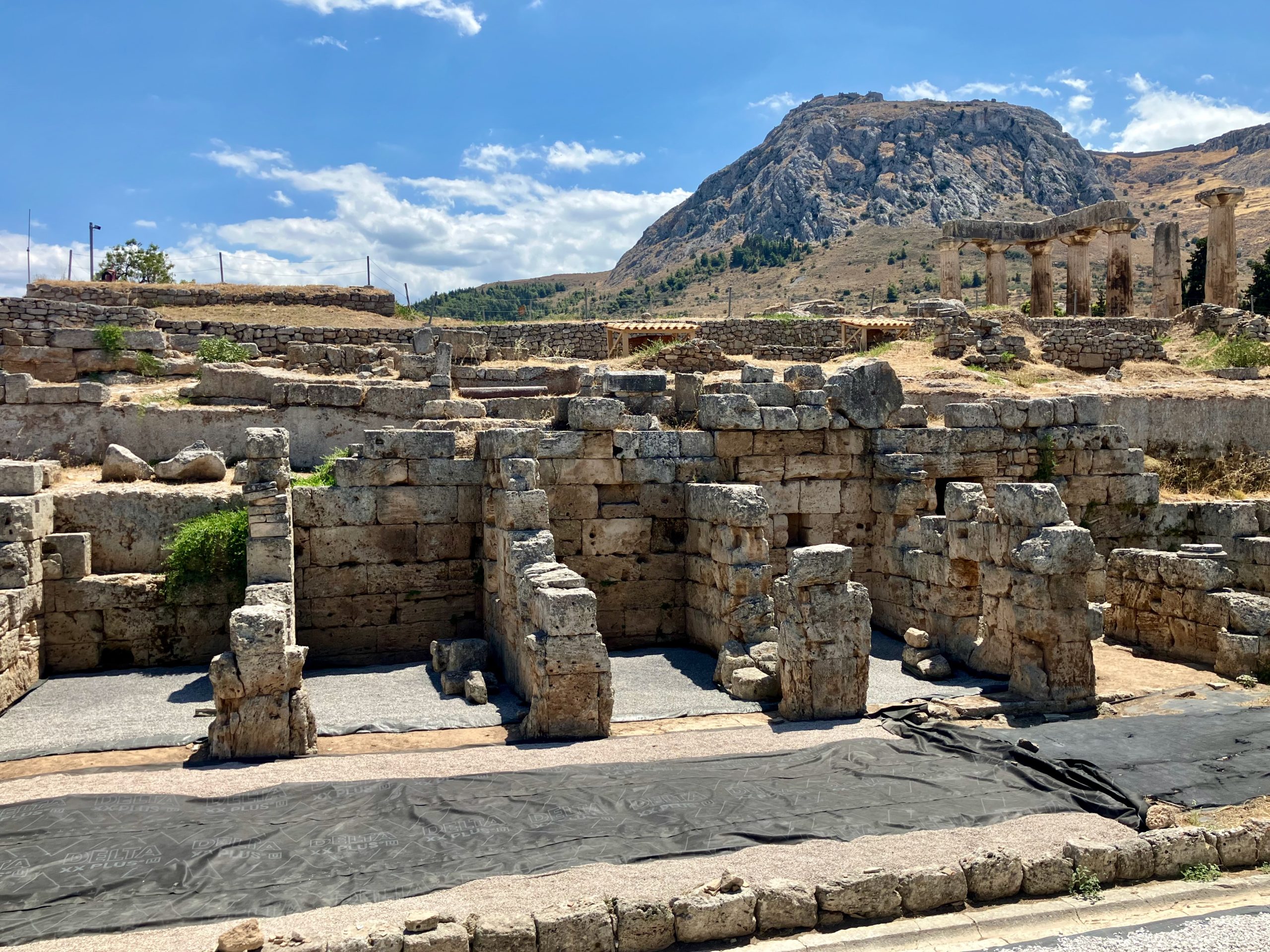
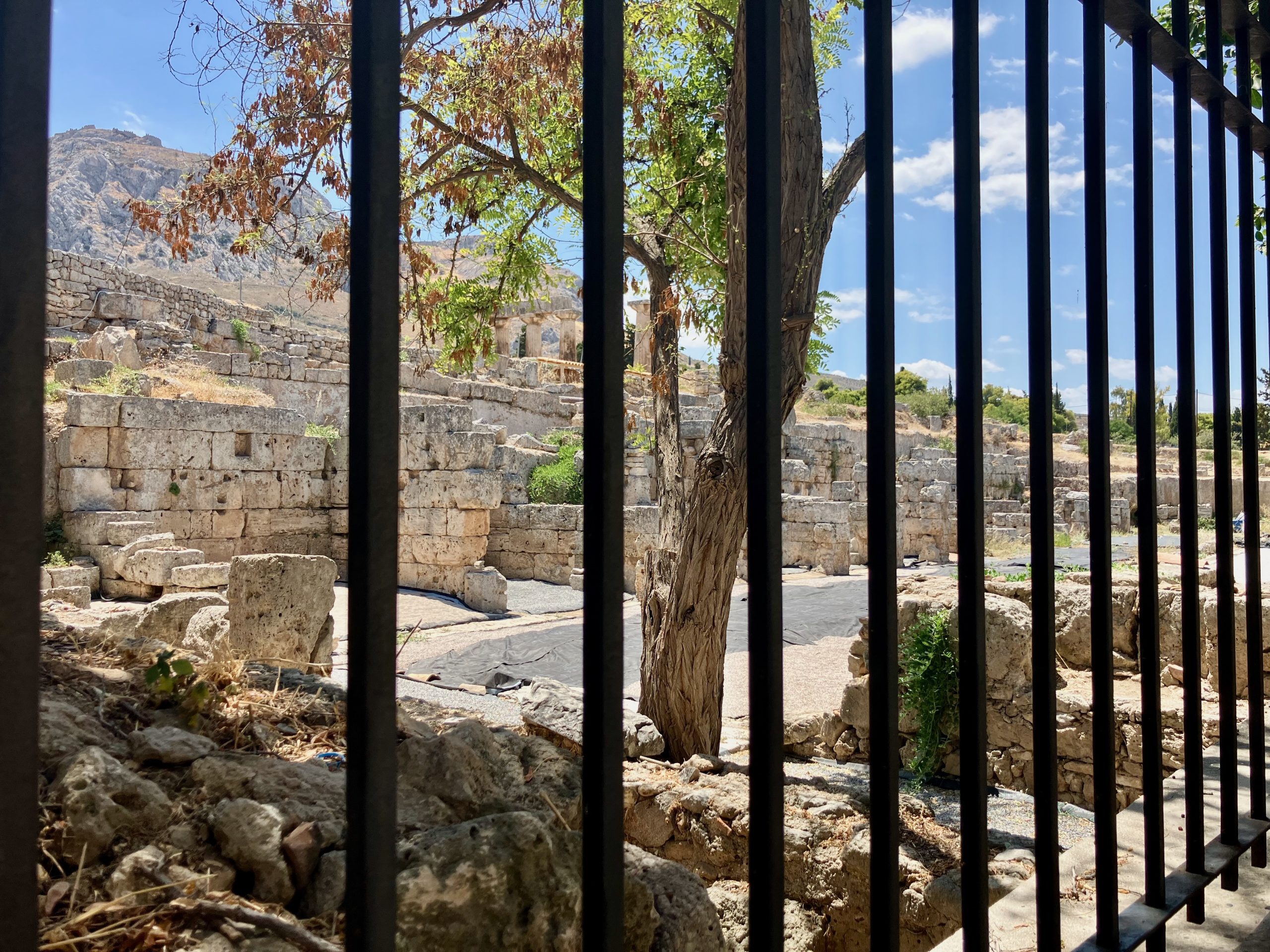
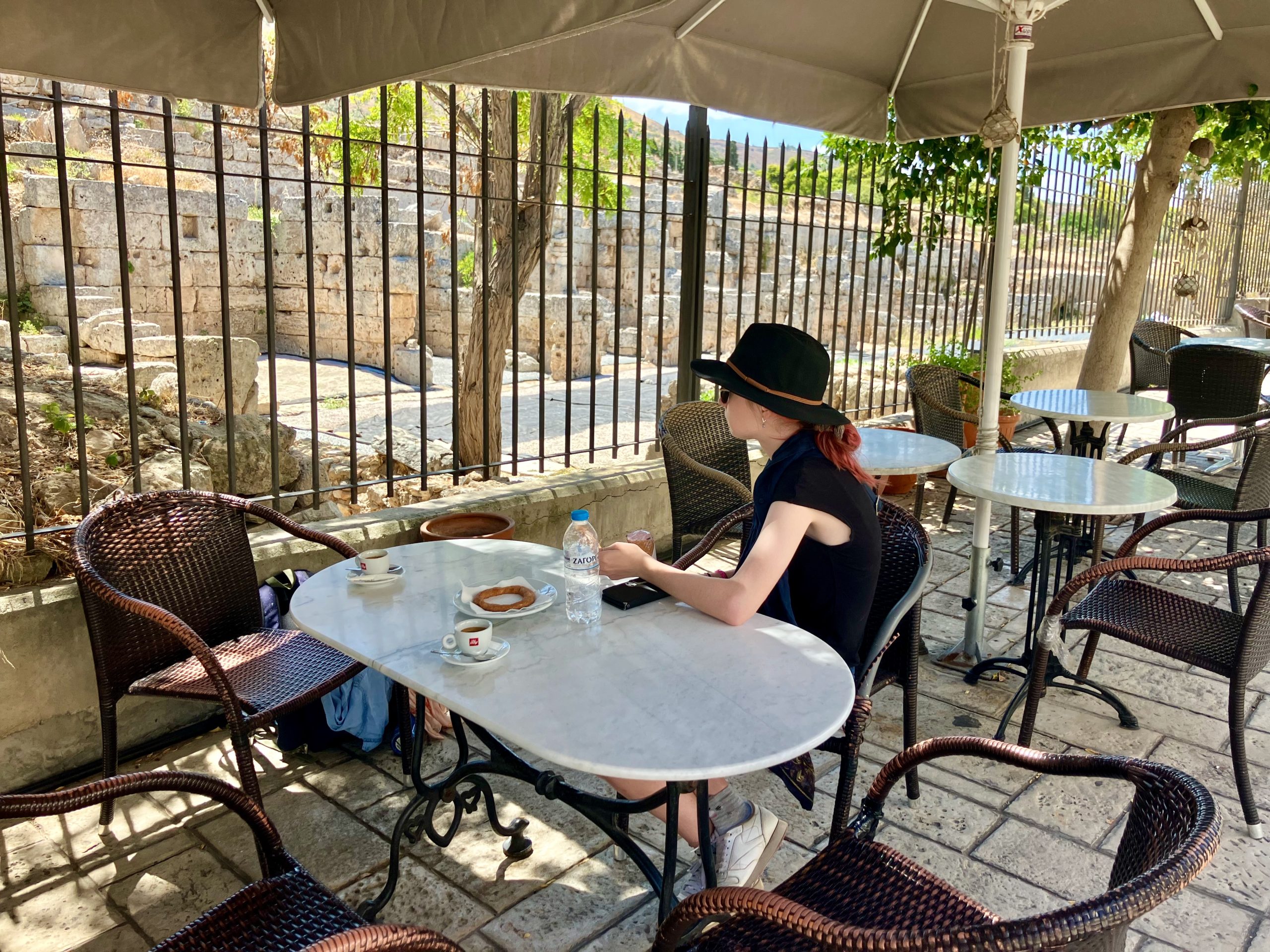
Paul (and probably Priscilla and Aquila) may well have been actively involved in sharing the gospel with customers and passers-by in this area as they worked. Whatever their precise occupation was, it would have been very hard work and of low status in Corinthian society. Cicero wrote,
Unbecoming to a gentleman, too, and vulgar are the means of livelihood of all hired workmen whom we pay for mere manual labour, not for artistic skill; for in their case the very wage they receive is a pledge of their slavery. … And all mechanics are engaged in vulgar trades; for no workshop can have anything liberal about it.
Cicero, Duties 1.150 [translation by Miller]
Paul appears to have embraced the low-status nature of this work and his consequent position in society. This is because many of the Corinthians he preached to, although they had accepted his message and believed in Christ, were still entangled in the worldly wisdom, status, and power games of Corinthian society (see 1 Corinthians 1–4). Embracing such a low status meant that the message Paul preached–the message of the cross, which was foolishness in the eyes of the world with its ideas of wisdom and social power–was clear to his hearers. He wrote later to the Corinthians, who were still falling into the trap of seeing the world in terms of human wisdom and power:
We are fools for Christ’s sake, but you are wise in Christ. We are weak, but you are strong. You are held in honor, but we in disrepute. To the present hour we hunger and thirst, we are poorly dressed and buffeted and homeless, and we labour, working with our own hands. When reviled, we bless; when persecuted, we endure; when slandered, we entreat. We have become, and are still, like the scum of the world, the refuse of all things. I do not write these things to make you ashamed, but to admonish you as my beloved children.
(1 Corinthians 4:10–14 ESV)
Paul and the Synagogue in Corinth
Paul’s ministry began in the synagogue, but then, after significant opposition from influential people within the synagogue, moved next door:
And he reasoned in the synagogue every Sabbath, and tried to persuade Jews and Greeks. When Silas and Timothy arrived from Macedonia, Paul was occupied with the word, testifying to the Jews that the Christ was Jesus. And when they opposed and reviled him, he shook out his garments and said to them, “Your blood be on your own heads! I am innocent. From now on I will go to the Gentiles.” And he left there and went to the house of a man named Titius Justus, a worshiper of God. His house was next door to the synagogue. Crispus, the ruler of the synagogue, believed in the Lord, together with his entire household. And many of the Corinthians hearing Paul believed and were baptized.
(Acts 18:4–8 ESV)
In North-East ruins of Corinth, near the gates to the marketplace, a lintel stone was found with the inscription “Synagogue of the Hebrews”. The lintel stone is now in the museum. Here are photos of the lintel stone and the area around the gates where it was found:
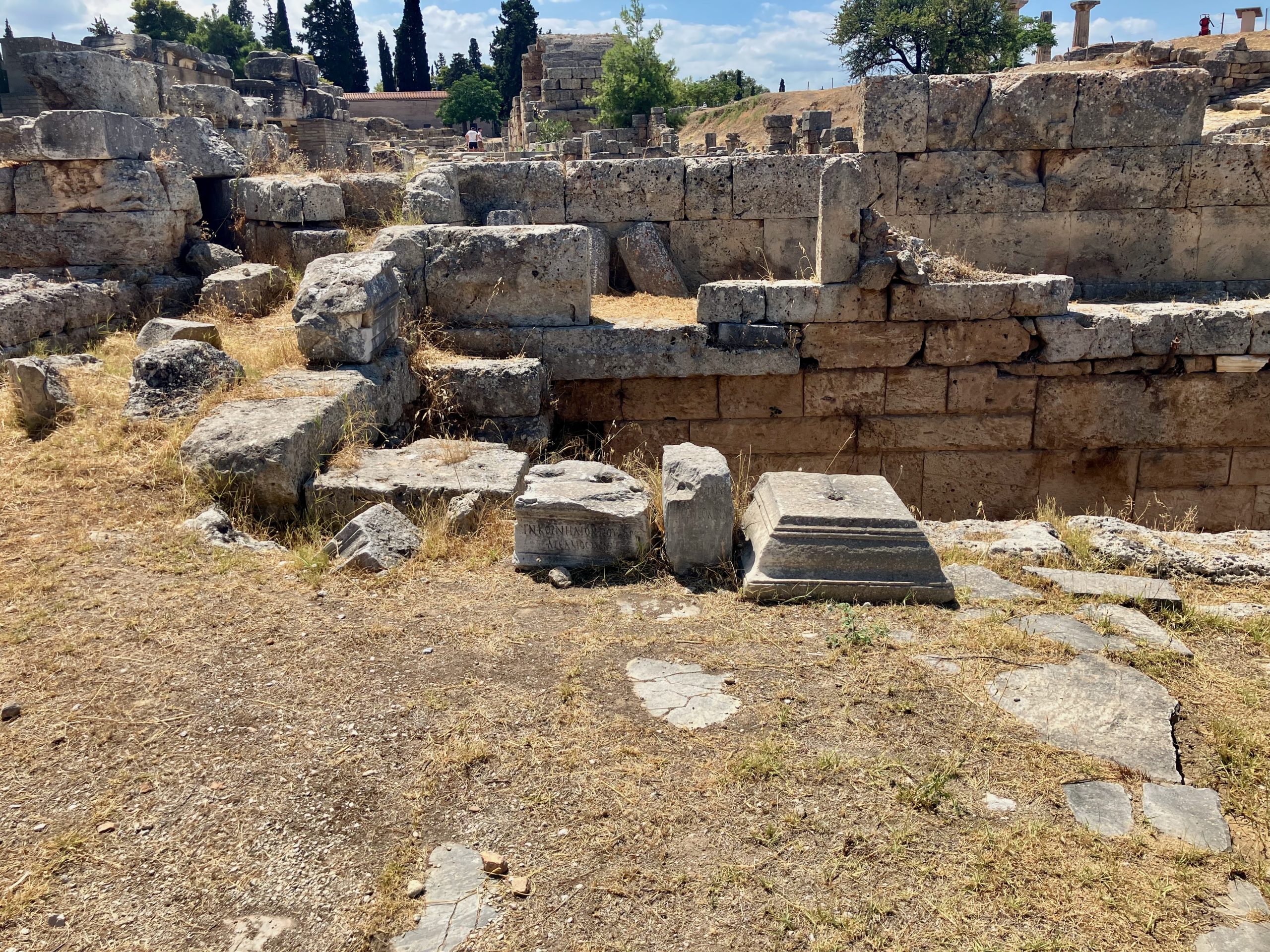
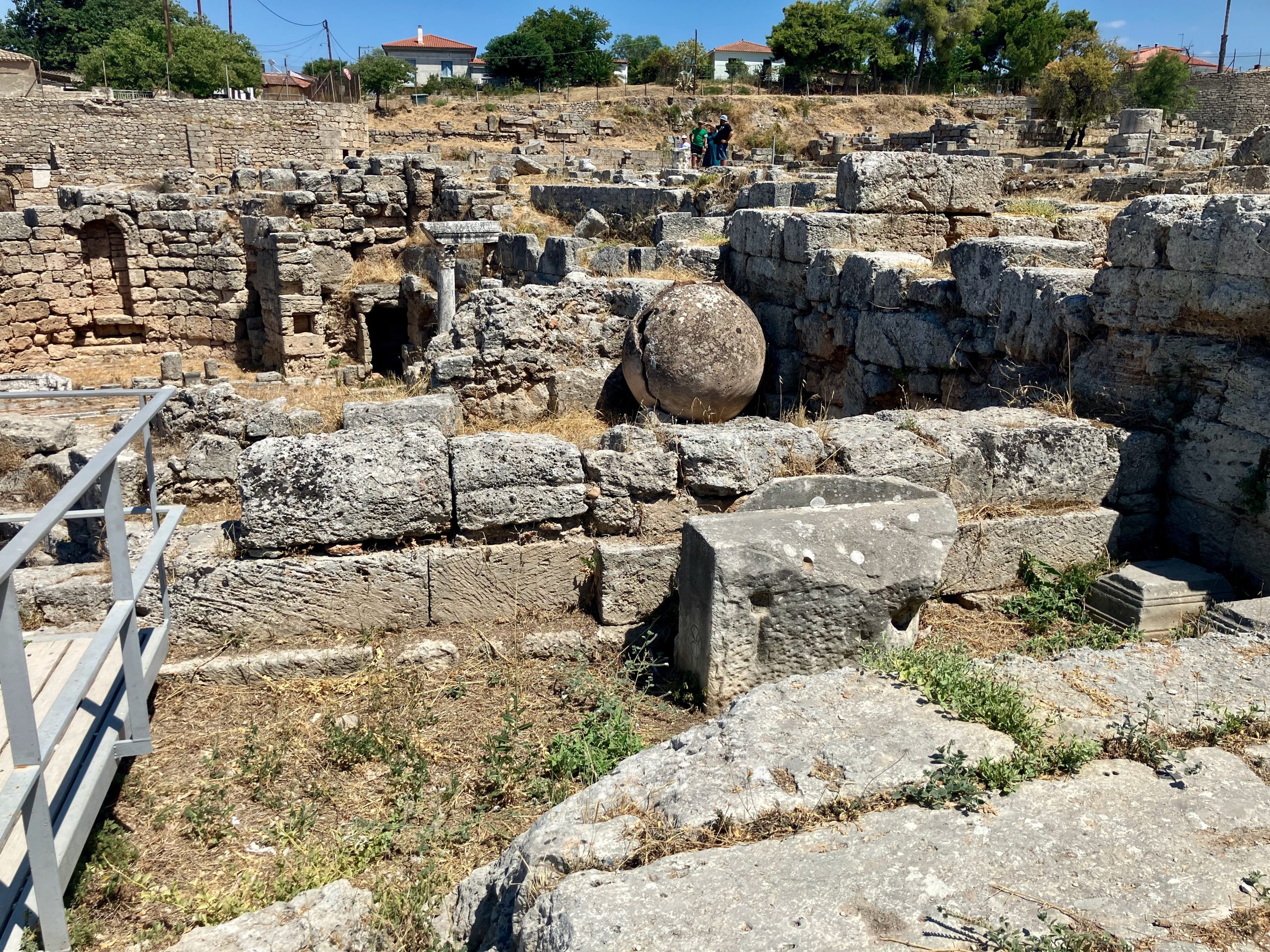
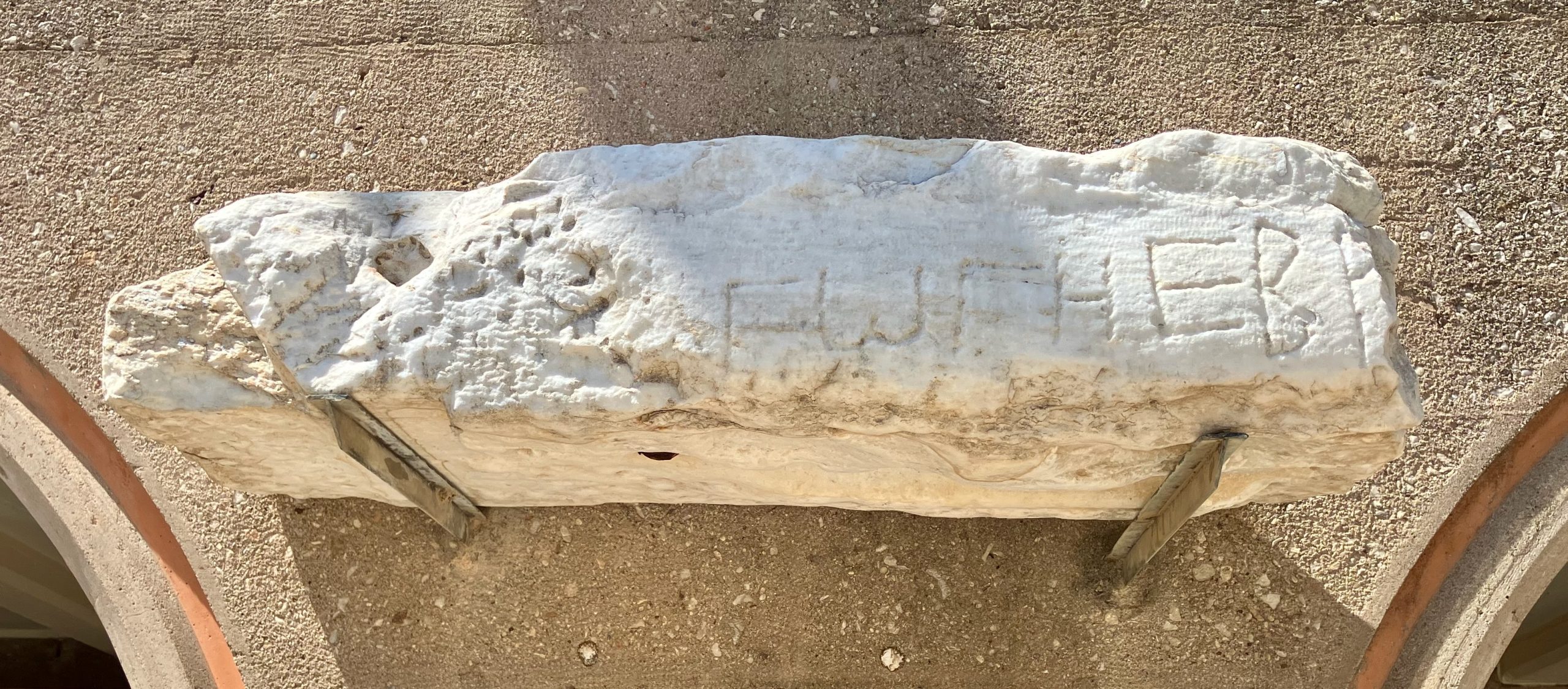
This lintel stone dates from three or four centuries after the time of Paul, and the place where it was found may not have been the original location. Having said that, synagogues were often erected on the site of previous synagogues, and the stone was quite large, so probably didn’t move far. This makes it at least plausible that the photos above, taken near the gates to the marketplace, show approximately the site of the synagogue where Paul preached.
Paul also mentions gospel ministry among Jews and being disciplined in the synagogue (which implies membership of the Jewish community) in his later letters to the Corinthians:
To the Jews I became as a Jew, in order to win Jews. (1 Corinthians 9:20 ESV)
Five times I received at the hands of the Jews the forty lashes less one. (2 Corinthians 11:24 ESV)
Paul before the tribunal
As had previously happened in Thessalonica, influential Jews opposed to Paul’s message sought to have him silenced by appealing to the city authorities with the charge that his form of worship was “contrary to the law”. In this case, the city authority was the Roman proconsul:
But when Gallio was proconsul of Achaia, the Jews made a united attack on Paul and brought him before the tribunal (bēma), saying, “This man is persuading people to worship God contrary to the law.” But when Paul was about to open his mouth, Gallio said to the Jews, “If it were a matter of wrongdoing or vicious crime, O Jews, I would have reason to accept your complaint. But since it is a matter of questions about words and names and your own law, see to it yourselves. I refuse to be a judge of these things.” And he drove them from the tribunal (bēma). And they all seized Sosthenes, the ruler of the synagogue, and beat him in front of the tribunal (bēma). But Gallio paid no attention to any of this.
(Acts 18:12–17 ESV)
There are two possible sites for the location of this Roman tribunal (Greek: bēma).
One possibility is the North Basilica in the North-East ruins, very close to the likely location of the synagogue. This was a likely place for holding formal hearings:
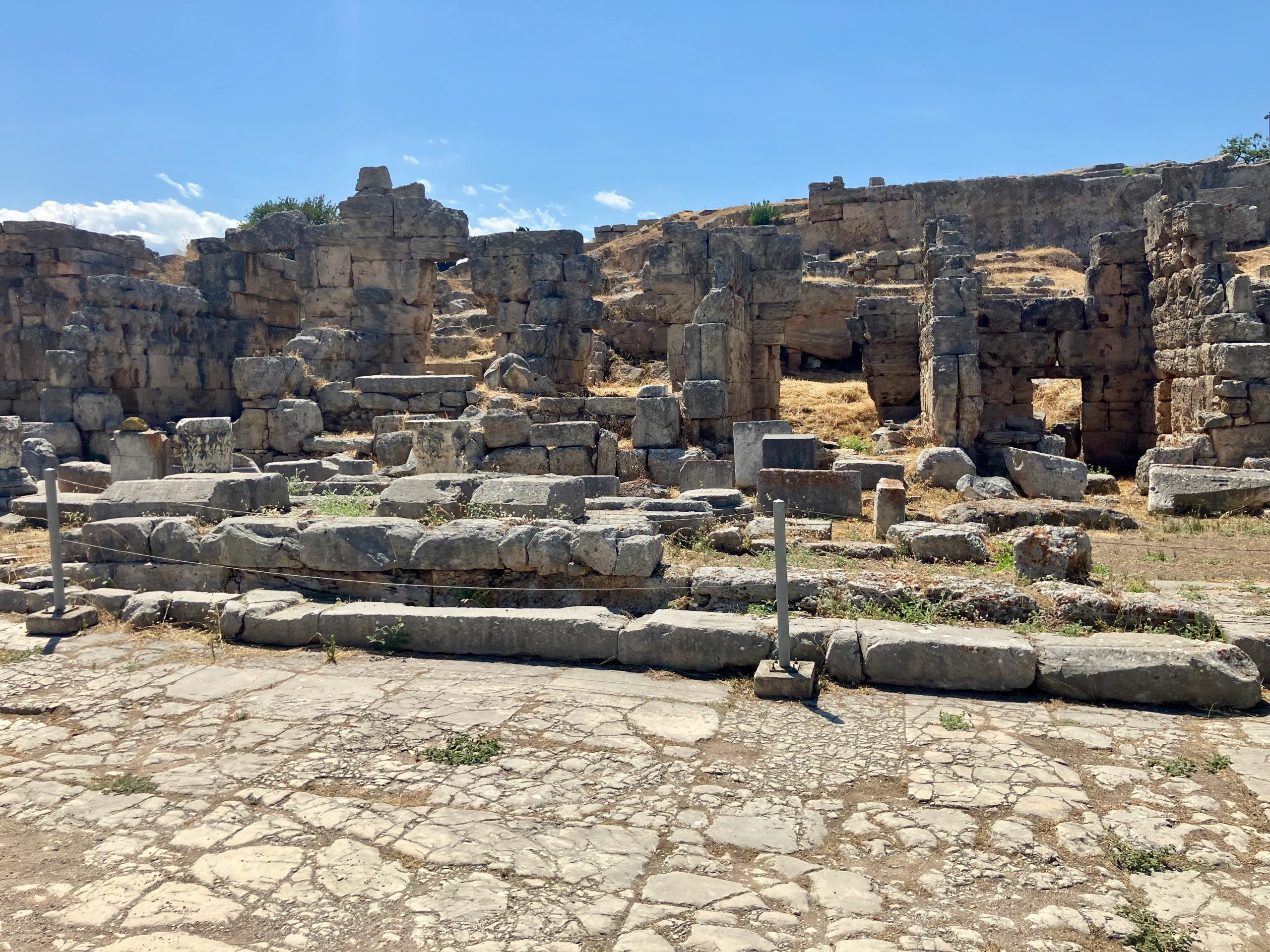
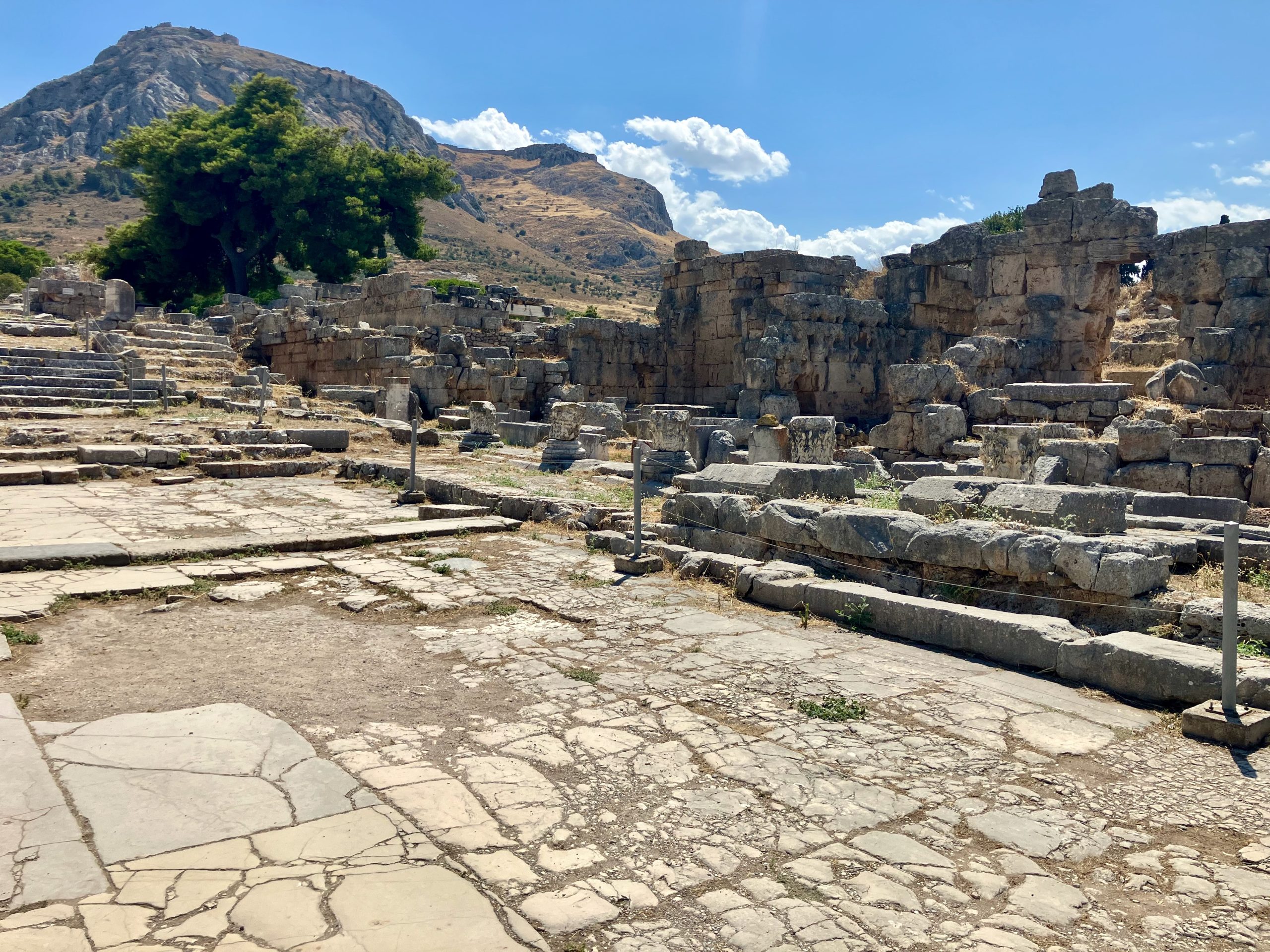
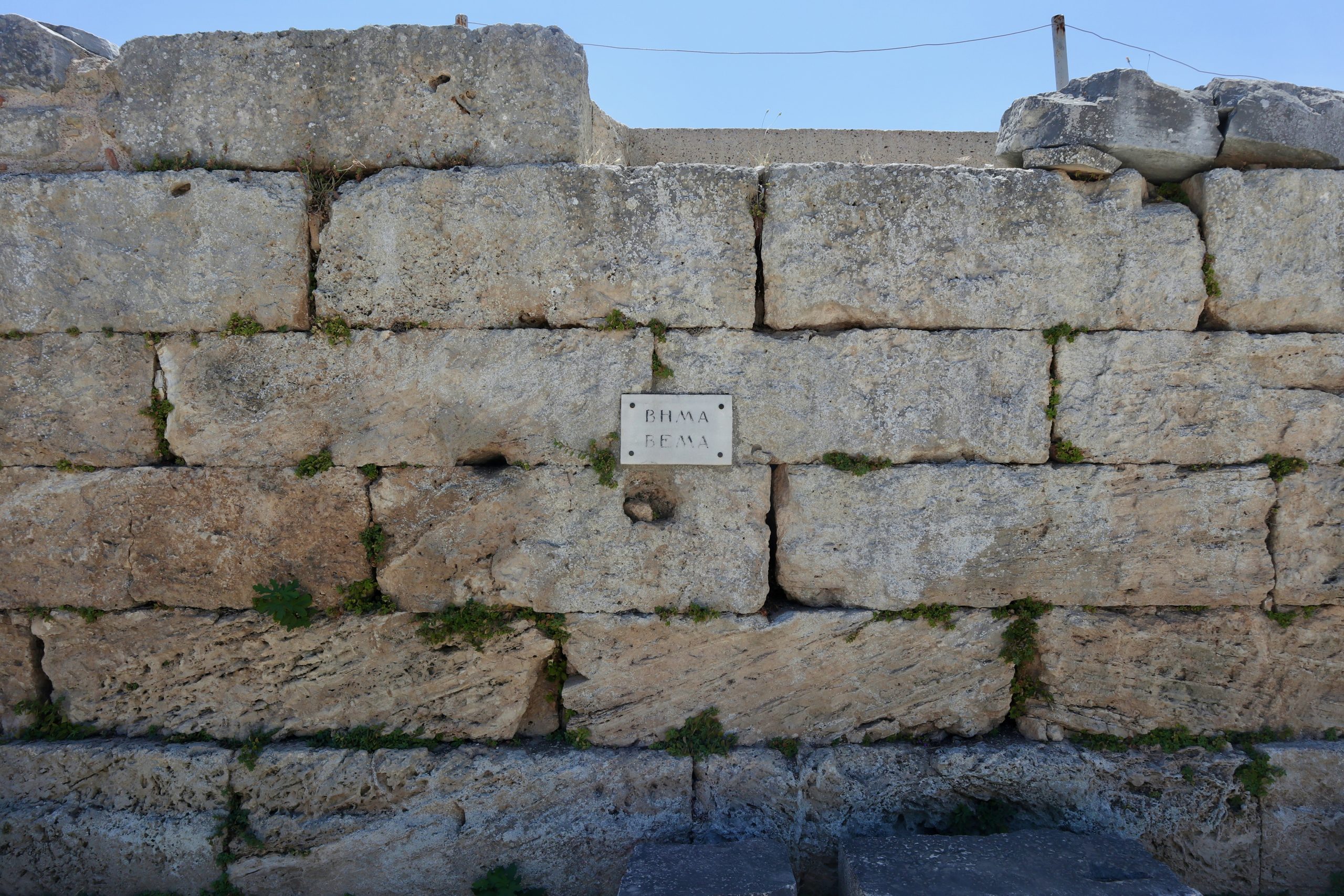
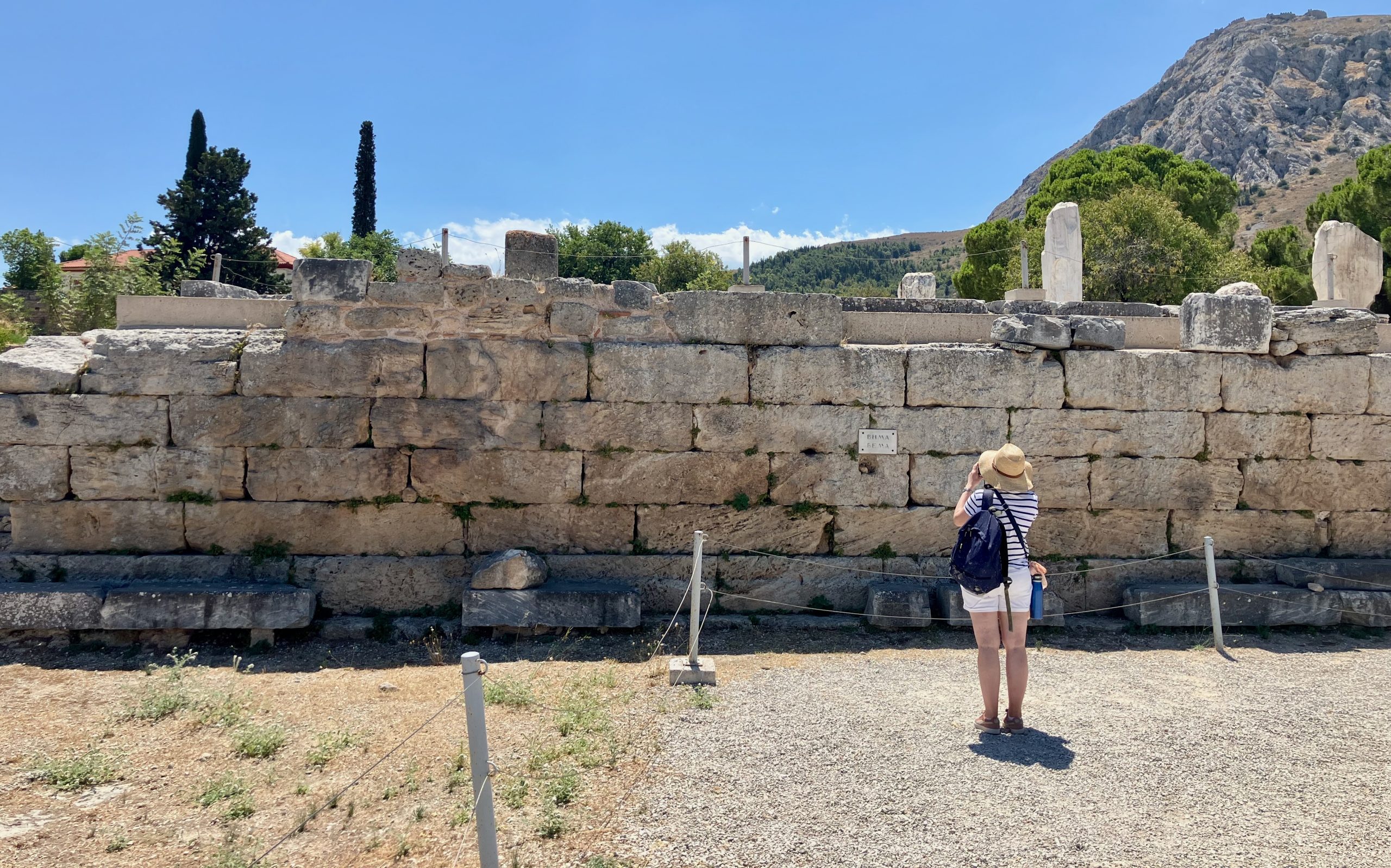
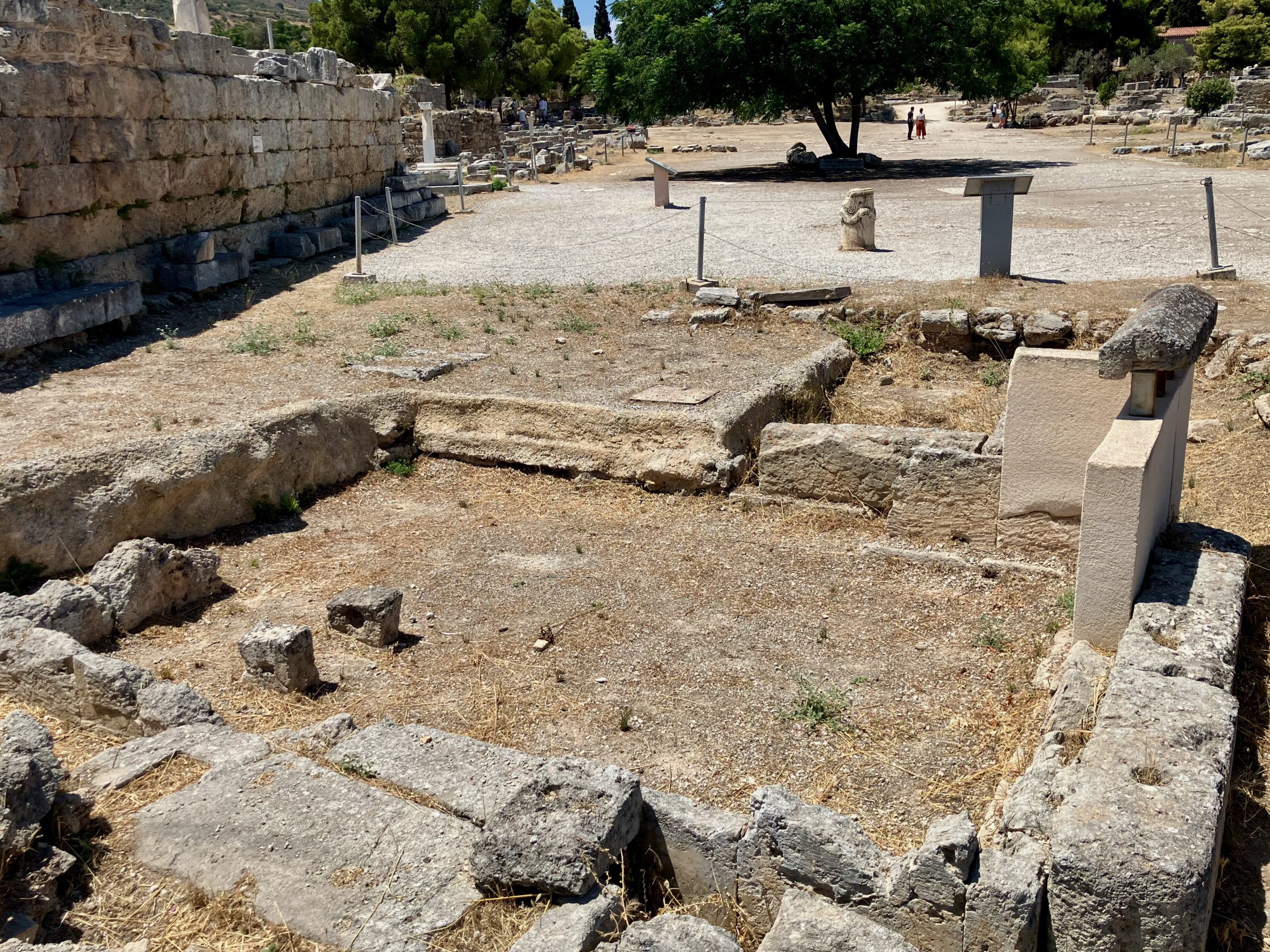
The more traditional site for the tribunal, however, is a large public platform (bēma) in the middle of the Roman marketplace. It was the place from which the governor and other Roman officials would address the assembled public. It was also a place of public judgment. Those who were brought before the bēma stood on a rectangular stone to receive their sentence. The base of the bēma and the stone are still in tact:
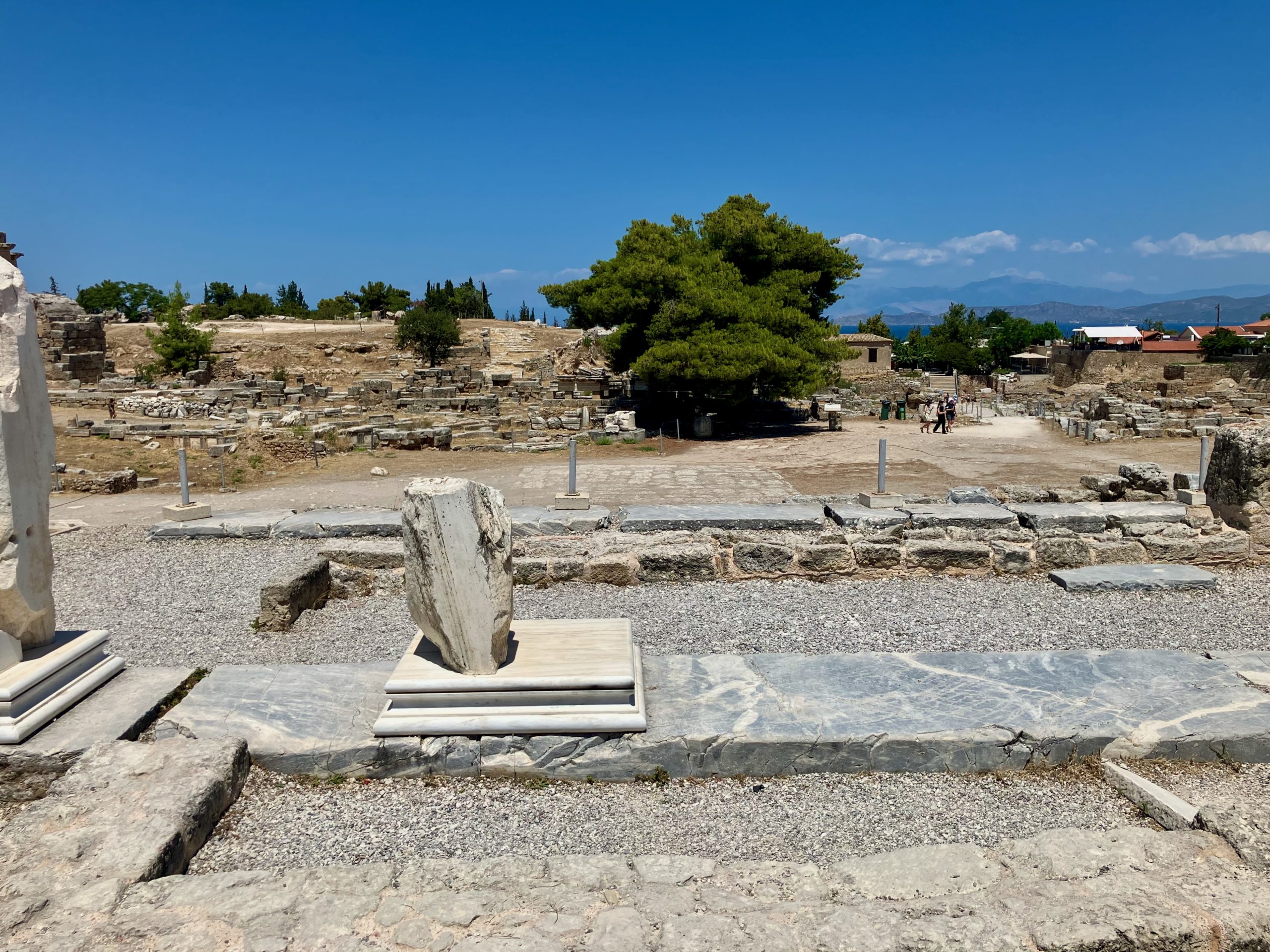
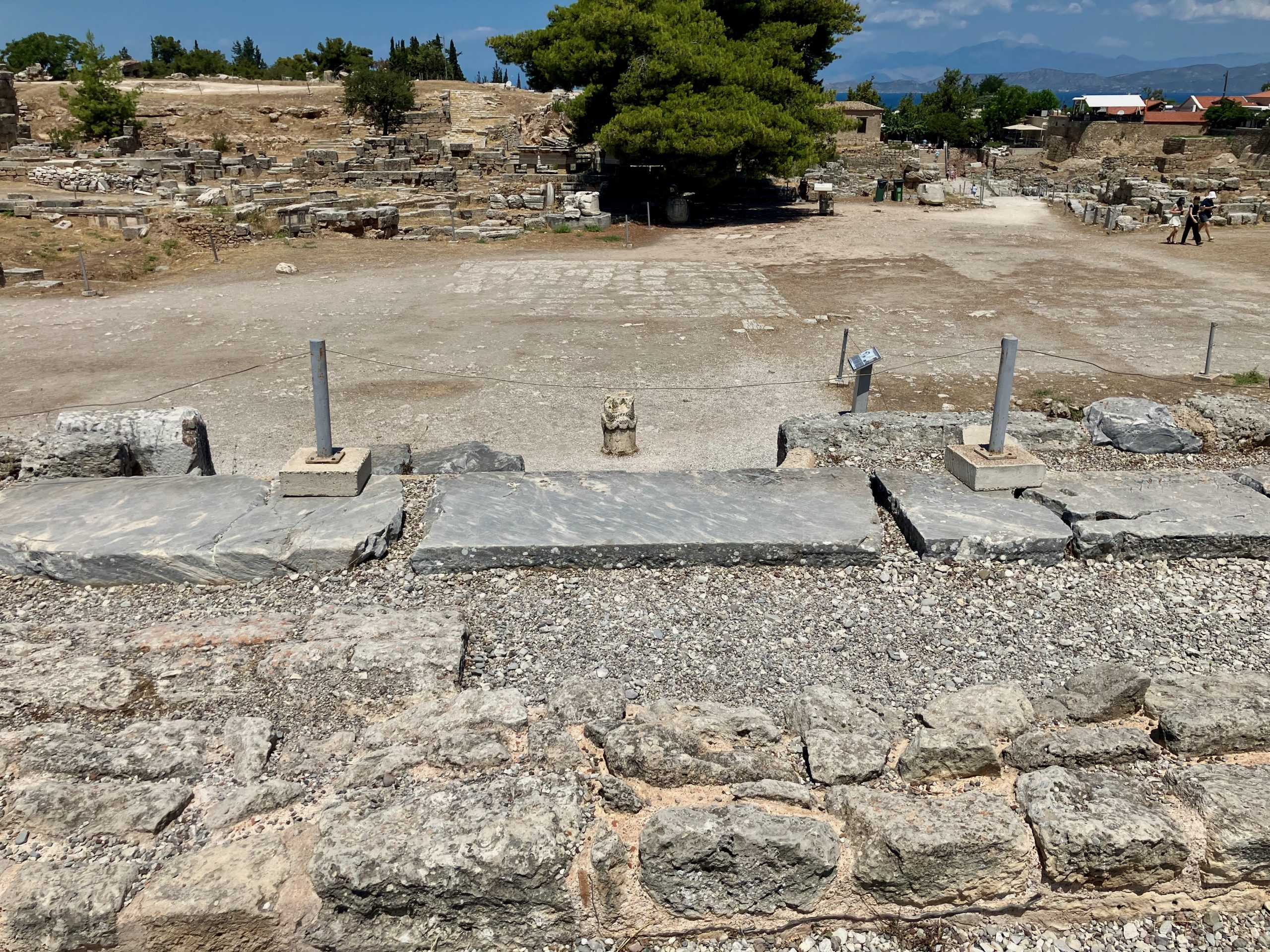
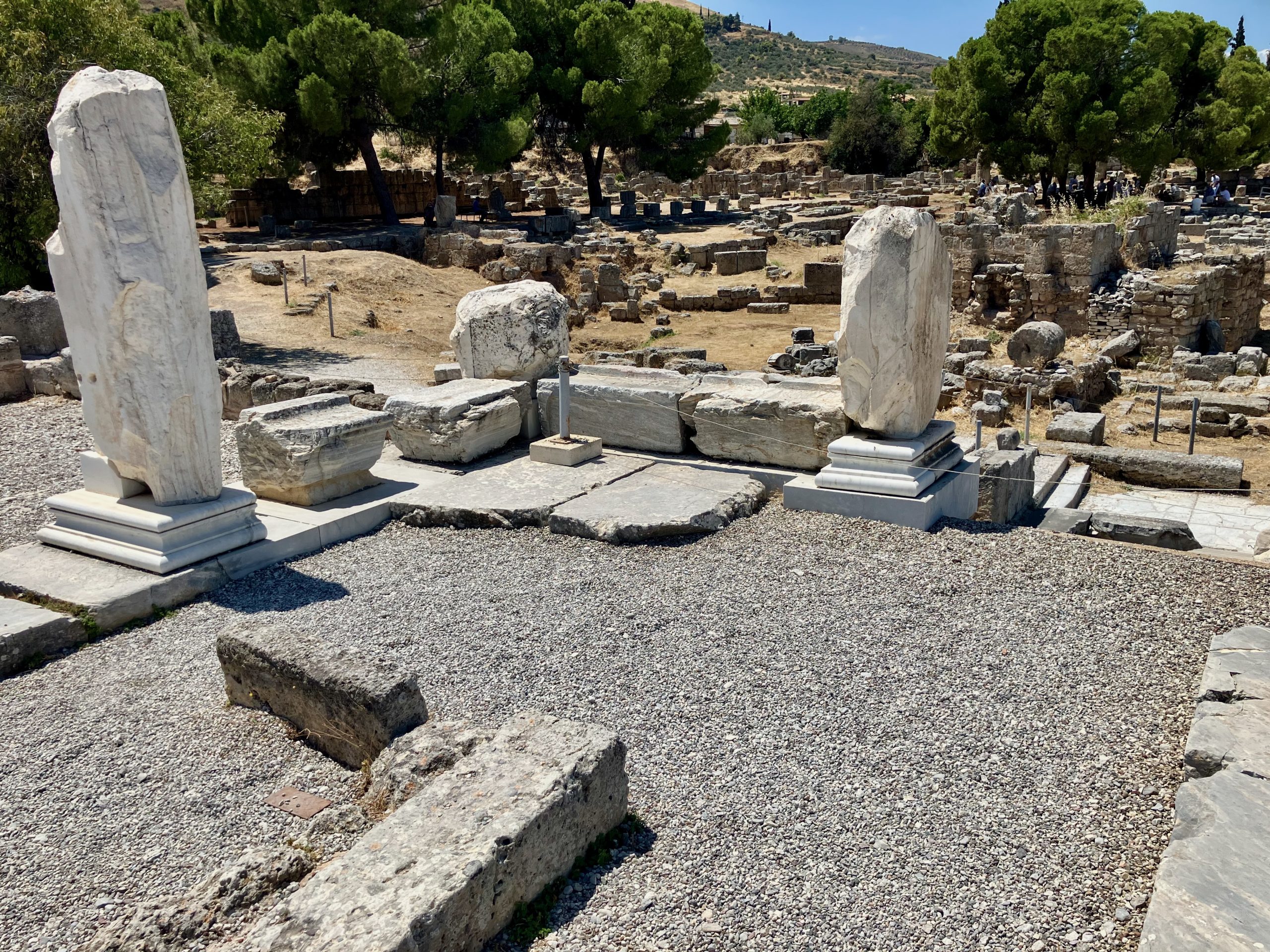
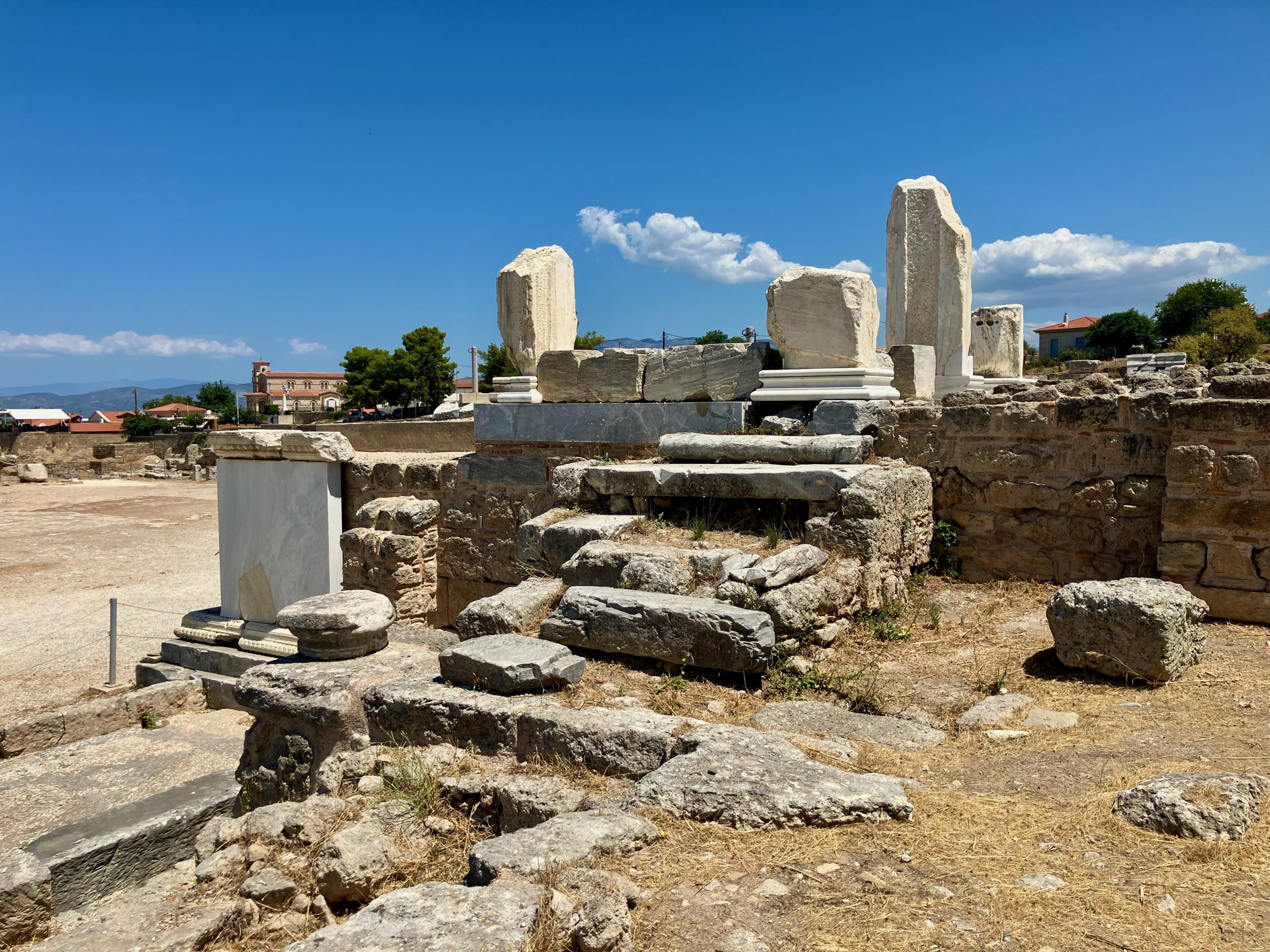
In a later letter to the Corinthians, and also in his letter written from Corinth to the believers in Rome, Paul speaks about the importance of living our lives in light of God’s tribunal, using the same term bēma:
For we must all appear before the judgment seat (bēma) of Christ, so that each one may receive what is due for what he has done in the body, whether good or evil.
(2 Corinthians 5:10 ESV)
Why do you pass judgment on your brother? Or you, why do you despise your brother? For we will all stand before the judgment seat (bēma) of God; for it is written, “As I live, says the Lord, every knee shall bow to me, and every tongue shall confess to God.” [Isaiah 45:23] So then each of us will give an account of himself to God.
(Romans 14:10–12 ESV)
Power, wisdom and honour in Corinth
There are many other ways in which remains found of ancient Corinth help to illustrate features of Paul’s letter to the Corinthians.
Worldly thinking in Corinth
A key feature of 1 Corinthians 1–4 is the worldliness of the Corinthians. Paul chides them for their worldly thinking by saying that they were like immature infants who needed to receive milk instead of solid food:
But I, brothers, could not address you as spiritual people, but as people of the flesh, as infants in Christ. I fed you with milk, not solid food, for you were not ready for it. And even now you are not yet ready, for you are still of the flesh. For while there is jealousy and strife among you, are you not of the flesh and behaving only in a human way? For when one says, “I follow Paul,” and another, “I follow Apollos,” are you not being merely human?
(1 Corinthians 3:1–4 ESV)
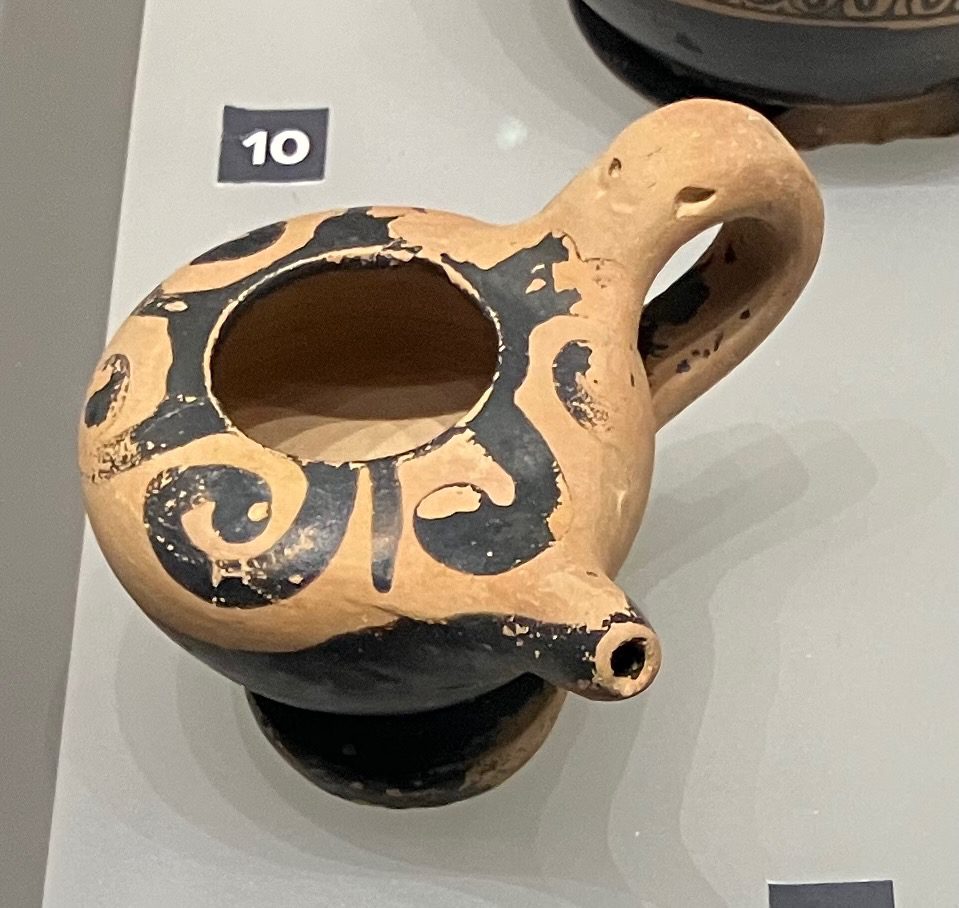
In the museum of ancient Corinth, there is a thelastron, a nursing jug for feeding milk to infants. It’s only a few centimetres long. This is the image Paul was conjuring up for the Corinthians by describing himself as giving them milk:
The power of wealth in Corinth
In both his introduction and his critique of the Corinthians’ worldliness, Paul refers to their wealth:
I give thanks to my God always for you because of the grace of God that was given you in Christ Jesus, that in every way you were enriched in him in all speech and all knowledge
(1 Corinthians 1:4–5 ESV)
Already you have all you want! Already you have become rich! Without us you have become kings! And would that you did reign, so that we might share the rule with you!
(1 Corinthians 4:8 ESV)
While both of these references to wealth are metaphorical, they have traction because Corinth was, in fact, literally a very wealthy city.
Corinth was located right next to the isthmus between Attica and the Pelepponesian Peninsula. This placed it on a major sea trade route. The trade was greatly enhanced by the construction of the diolkos, a stone channel on which small ships could be placed on a wheeled cart and skidded along from the Eastern to the Western sea route. The diolkos was an early version of a canal–and indeed now there is a canal in the same spot. Corinth was connected to the Lechaion port by a short road.
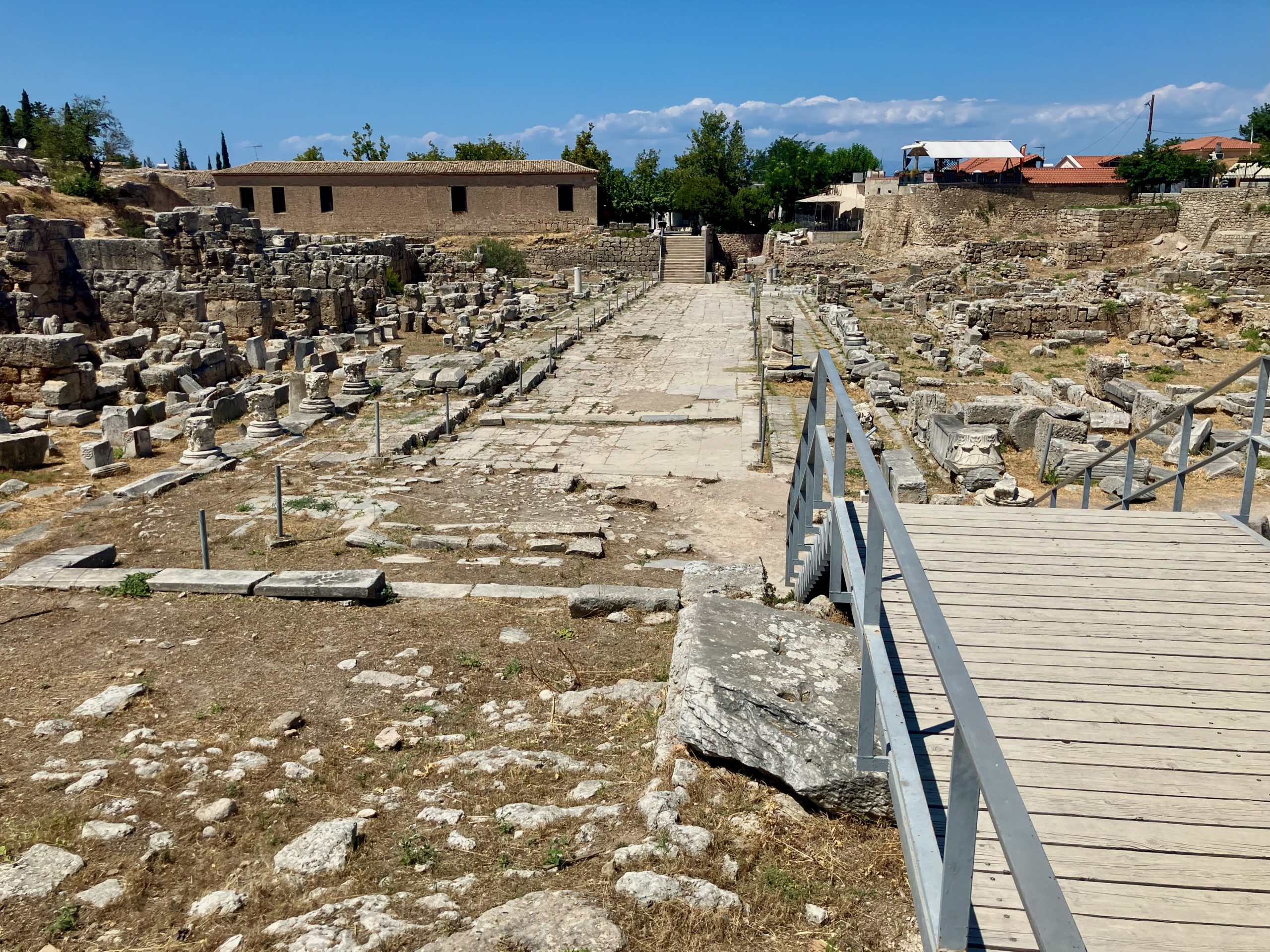
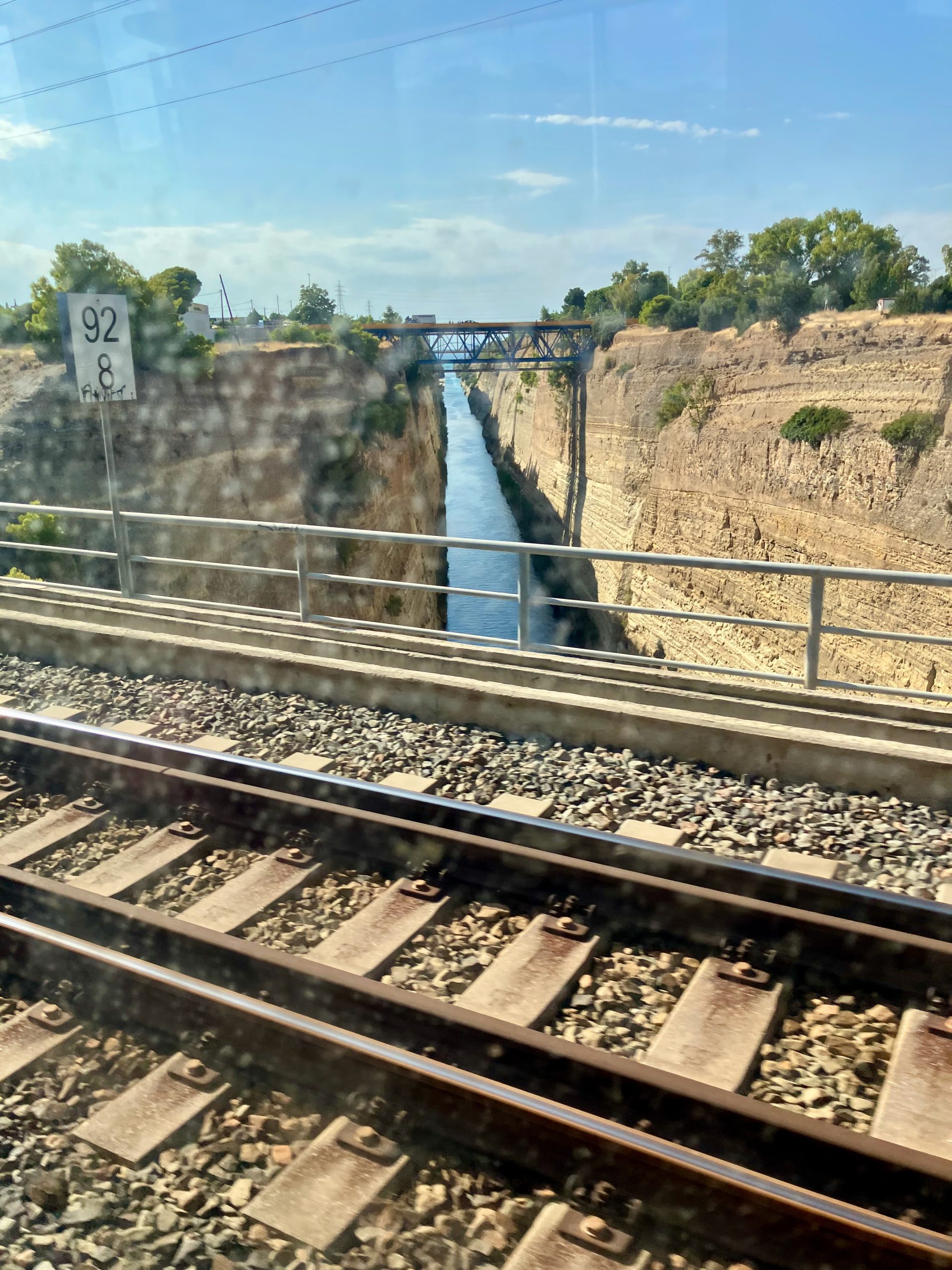
The wealth that this trading situation brought to Corinth would have been a major factor in their competitive worldliness.
The wisdom of speech in Corinth
A key issue that Paul deals with in 1 Corinthians 1–4 is a certain kind of worldly wisdom marked by “speech”.
For Christ did not send me to baptize but to preach the gospel, and not with words of eloquent wisdom [literally, “wisdom of word,” sophia logou], lest the cross of Christ be emptied of its power.
(1 Corinthians 1:17)
And I, when I came to you, brothers, did not come proclaiming to you the testimony of God with lofty speech or wisdom. For I decided to know nothing among you except Jesus Christ and him crucified. And I was with you in weakness and in fear and much trembling, and my speech and my message were not in plausible [lit. “persuasive”] words of wisdom, but in demonstration of the Spirit and of power, so that your faith might not rest in the wisdom of men but in the power of God.
(1 Corinthians 2:1–5 ESV)
Paul is quite likely referring to the valourisation of Greco-Roman rhetoric. Skilled orators were highly honoured in Greco-Roman society and gained followings. This is illustrated by a dedication in honour of an orator found in the South Basilica, now in the Museum. It’s from a slightly later time than Paul (AD 150–175) but still seems to illustrate a feature of Corinthian life that would have been a live reality in Paul’s day.
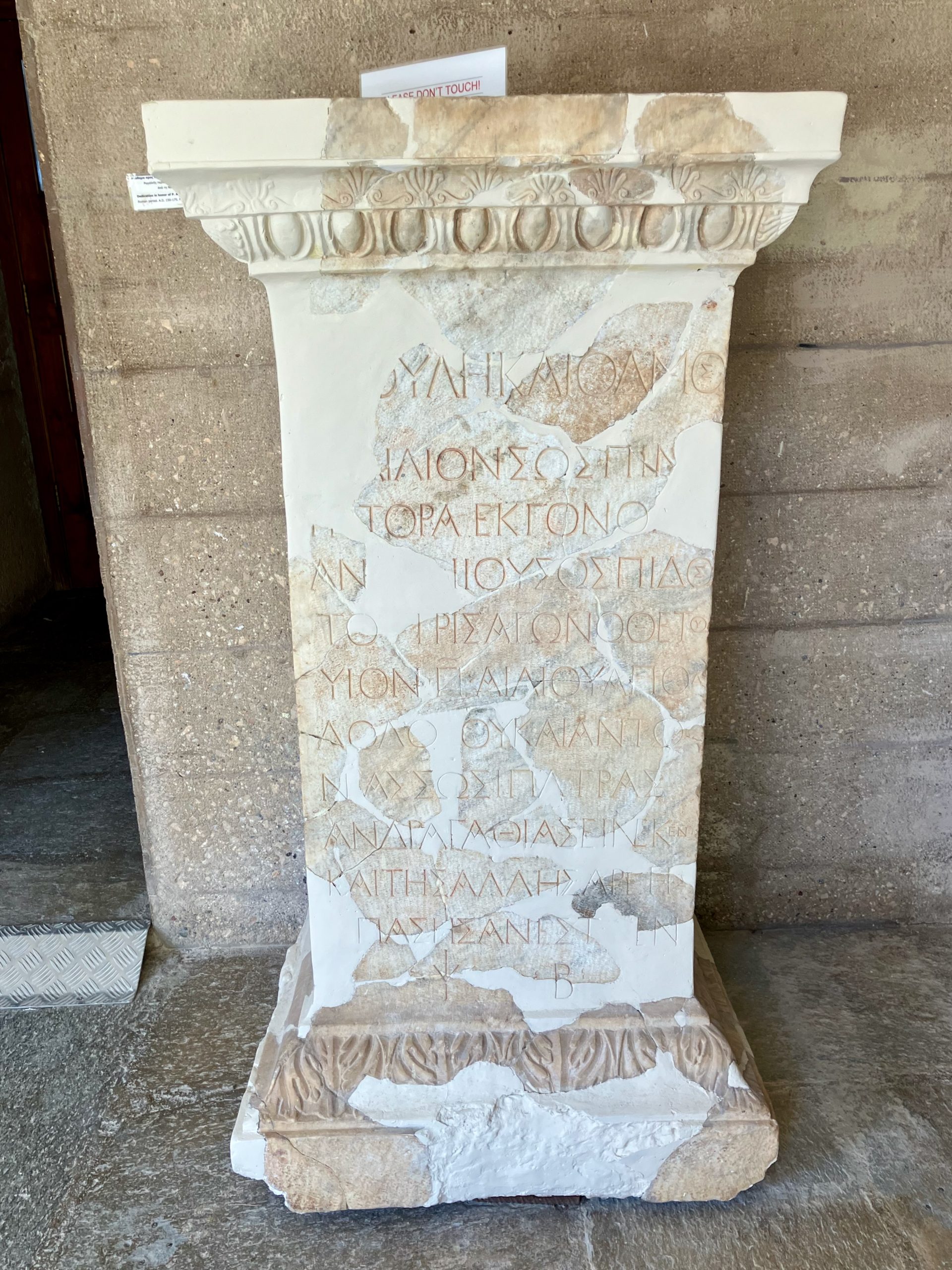
The quotes above indicate that this honouring of orators appears to be a significant feature of the factionalism among the Corinthians. The Corinthians were buying into this typical worldly value system (“wisdom”) of the day that treated skilled orators like celebrities who needed to be “followed”. They applied this worldly thinking to their Christian ministers, and even to Christ:
What I mean is that each one of you says, “I follow Paul,” or “I follow Apollos,” or “I follow Cephas,” or “I follow Christ.”
1 Corinthians 1:12 ESV
However, in 1 Corinthians 1–4, Paul rebukes them for adopting a kind of worldly “wisdom” that values people for their preaching skills (today we might say “ministry skills”). He points them instead to the wisdom of the cross, a wisdom from God that opposed to this value system that exalts human achievement.
The rulers of this age in Corinth
As part of his argument convincing the Corinthians they need to align themselves with God’s wisdom of the cross rather than the human wisdom of the surrounding culture in Corinth, Paul mentions “the rulers of this age”:
But we impart a secret and hidden wisdom of God, which God decreed before the ages for our glory. None of the rulers of this age understood this, for if they had, they would not have crucified the Lord of glory.
(1 Corinthians 2:7–8 ESV)
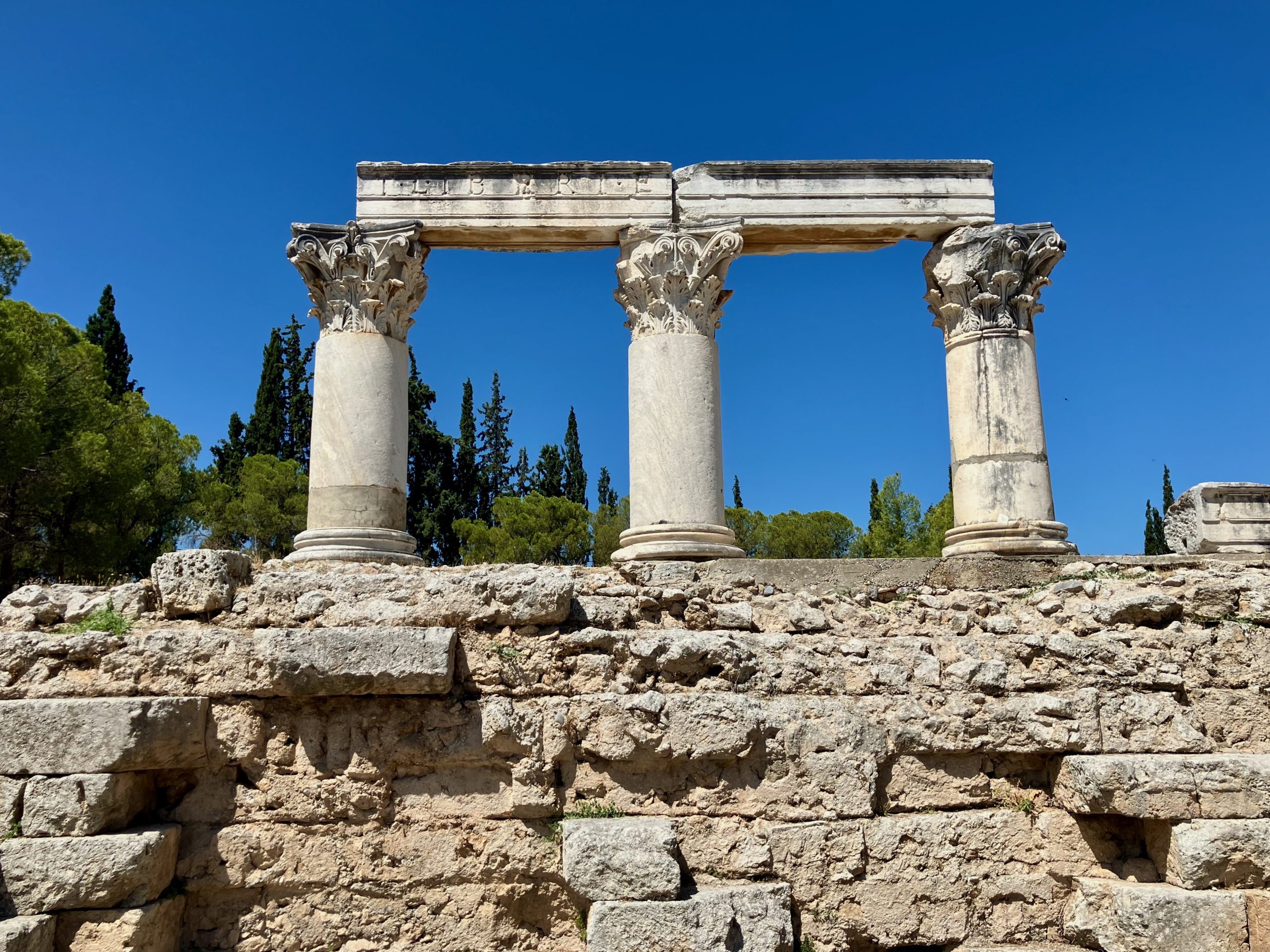
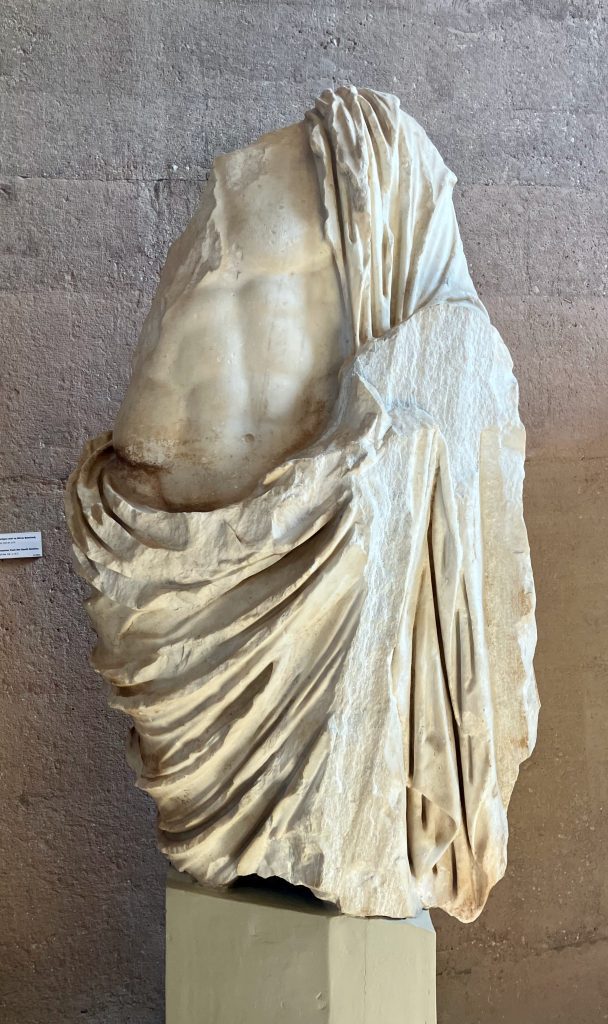
Who are these rulers? Spiritual powers or earthly powers? The answer is not as clear cut as we might assume in the twenty-first century. This is because the Roman rulers of Corinth deliberately portrayed themselves as divine figures.
We can see this, for example, in rhe Temple of Octavia (sister of Augustus) in the West ruins, and a statue of Jupiter or the deified Julius Caesar from the 1st Century AD which is now in the museum.
Honouring master builders in Corinth
Corinthian society was particularly fond of honouring influential individuals. The Corinthian believers applied this tendency to their own ministers, treating them like worthy individuals who should be followed and honoured in their own right. Paul strenuously resisted this tendency, ultimately aligning it with the “wisdom of the world”. He did not want anyone to align themselves with his own “name” or the name of any particular minister:
Is Christ divided? Was Paul crucified for you? Or were you baptized in the name of Paul? I thank God that I baptized none of you except Crispus and Gaius, so that no one may say that you were baptized in my name.
(1 Corinthians 1:13–15 ESV)
What then is Apollos? What is Paul? Servants through whom you believed, as the Lord assigned to each. I planted, Apollos watered, but God gave the growth. So neither he who plants nor he who waters is anything, but only God who gives the growth. He who plants and he who waters are one, and each will receive his wages according to his labor. For we are God’s fellow workers. You are God’s field, God’s building.
(1 Corinthians 3:5–9 ESV)
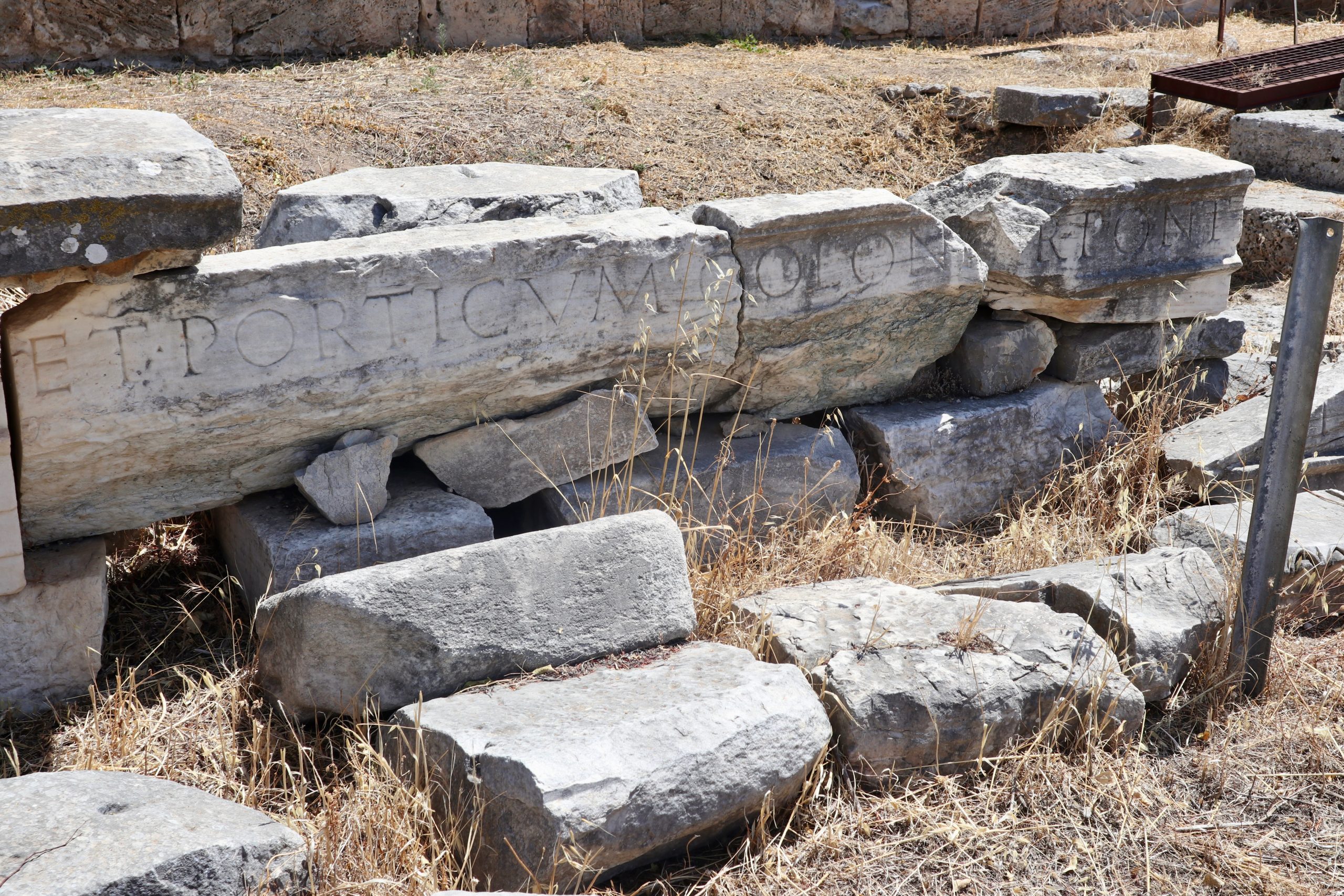
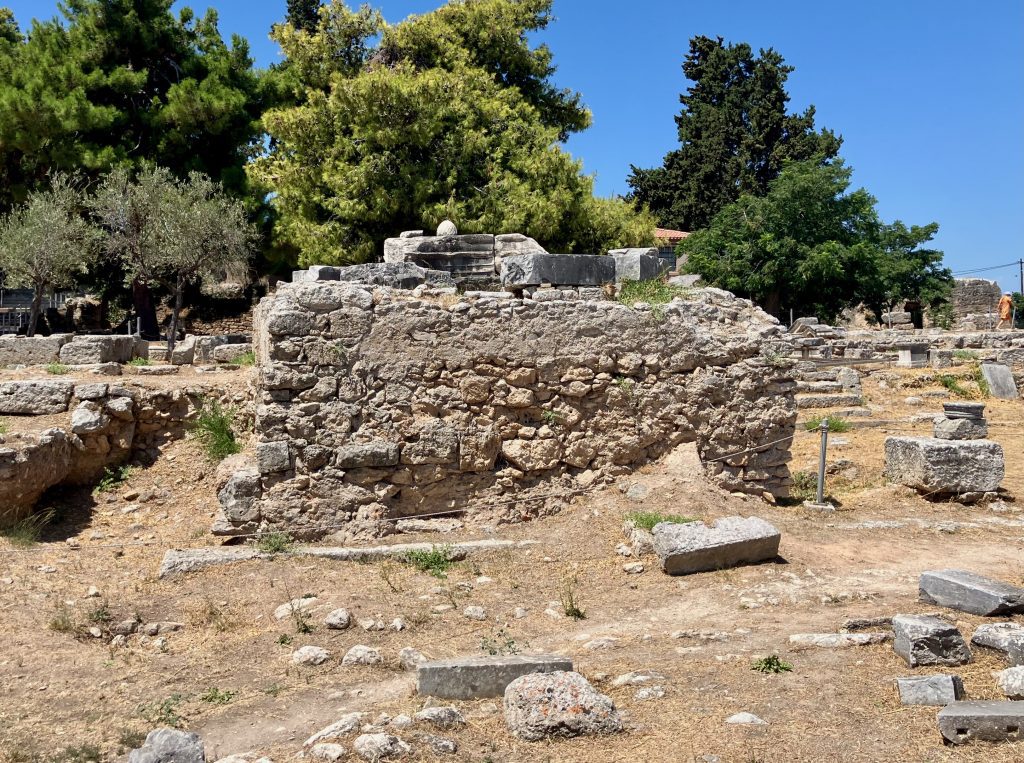
The ruins of Corinth evidence this tendency by Corinthian society to honour influential individuals. Especially prominent are those who built (or patronised/oversaw the building of) buildings. For example, in the East end of the Roman marketplace there is an inscription, probably describing the person who built or restored the building. At the West end, there “Babbius Monument”, erected by a wealthy individual called Babbius and dedicated to himself.
At this point, Corinth was city in a state of rebuilding and restoration. It had earlier been a Greek city, but was sacked by the Romans in 146 BC. The rebuilding of the city by the Romans commenced in 46 BC. A significant part of the Roman works involved the restoration of earlier Greek temples based on their Greek foundations. Hence the idea of building a temple on a previously laid foundation would have been a live and tangible concept for the Corinthians. Paul picks this idea up in 1 Corinthians 3, using it as a metaphor for gospel work. Paul, the Apostle, is the “master builder” who lays the basic pattern, plan and foundation of the gospel and gospel ministry. Others, like Apollos, are building on that foundation. Paul emphasises the importance of building according to the gospel foundation (i.e., the wisdom of the cross) rather than simply human skill:
According to the grace of God given to me, like a skilled master builder I laid a foundation, and someone else is building upon it. Let each one take care how he builds upon it. For no one can lay a foundation other than that which is laid, which is Jesus Christ. Now if anyone builds on the foundation with gold, silver, precious stones, wood, hay, straw—each one’s work will become manifest, for the Day will disclose it, because it will be revealed by fire, and the fire will test what sort of work each one has done. If the work that anyone has built on the foundation survives, he will receive a reward. If anyone’s work is burned up, he will suffer loss, though he himself will be saved, but only as through fire.
Do you not know that you are God’s temple and that God’s Spirit dwells in you? If anyone destroys God’s temple, God will destroy him. For God’s temple is holy, and you are that temple.
(1 Corinthians 3:10–17 ESV)
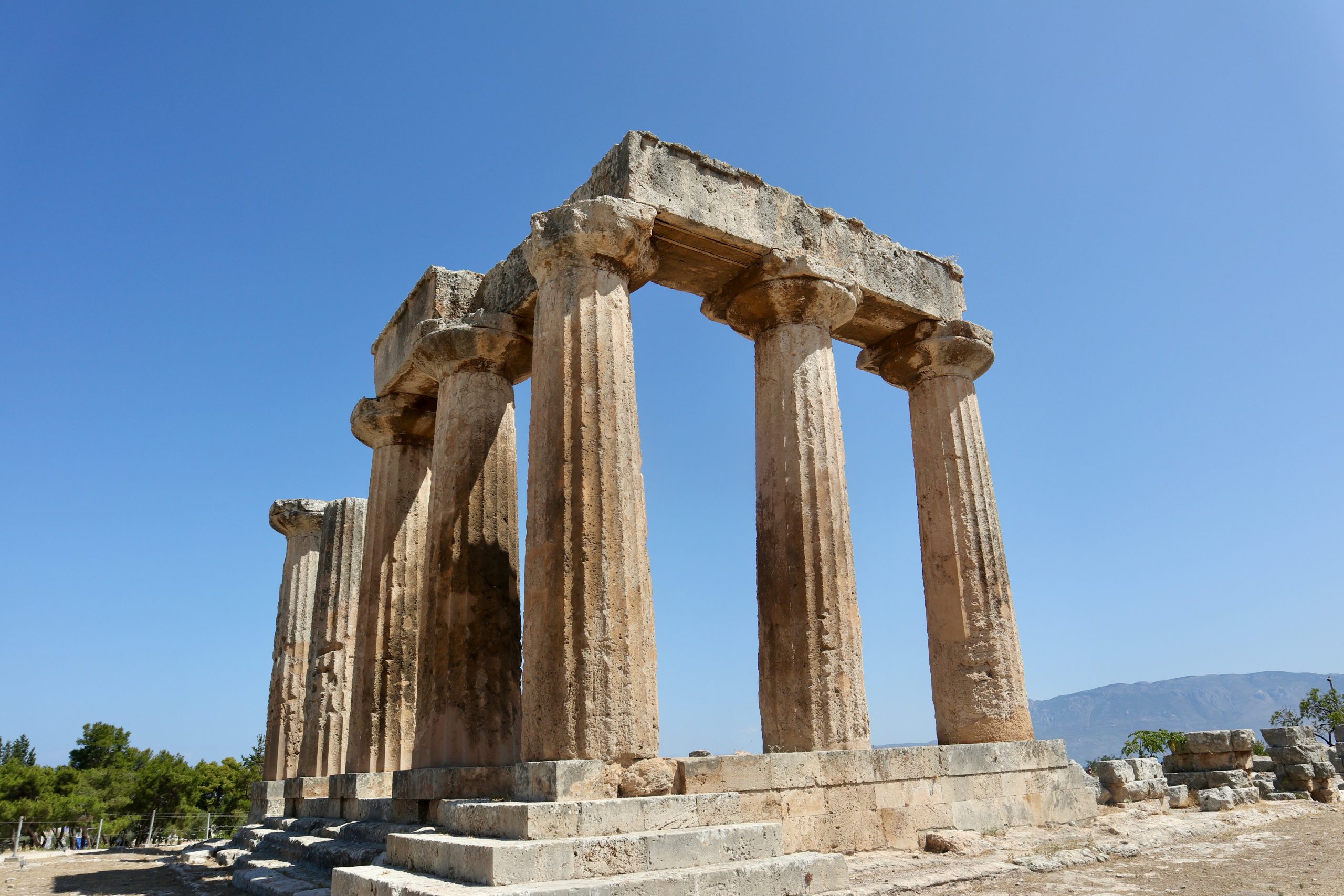
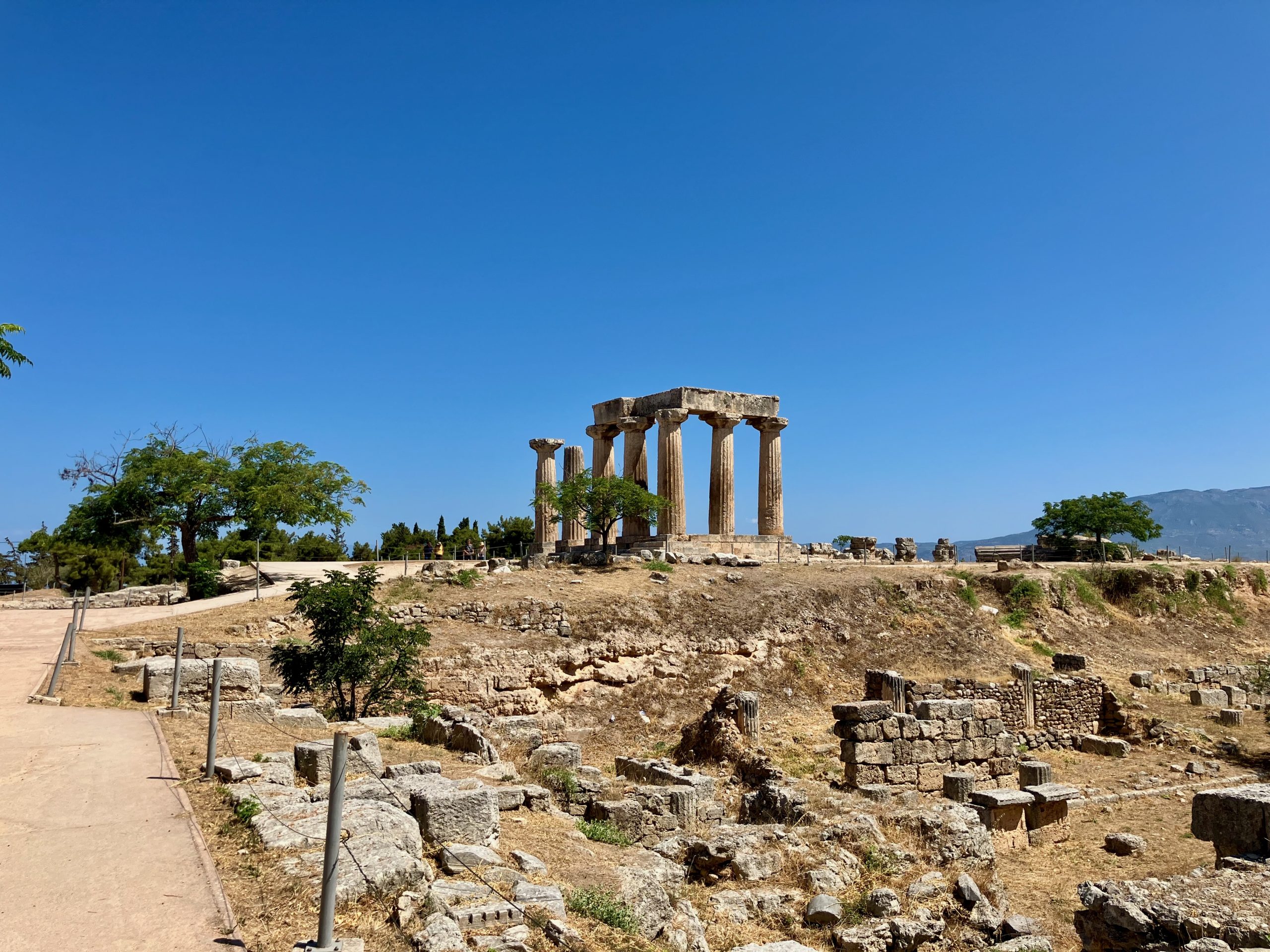
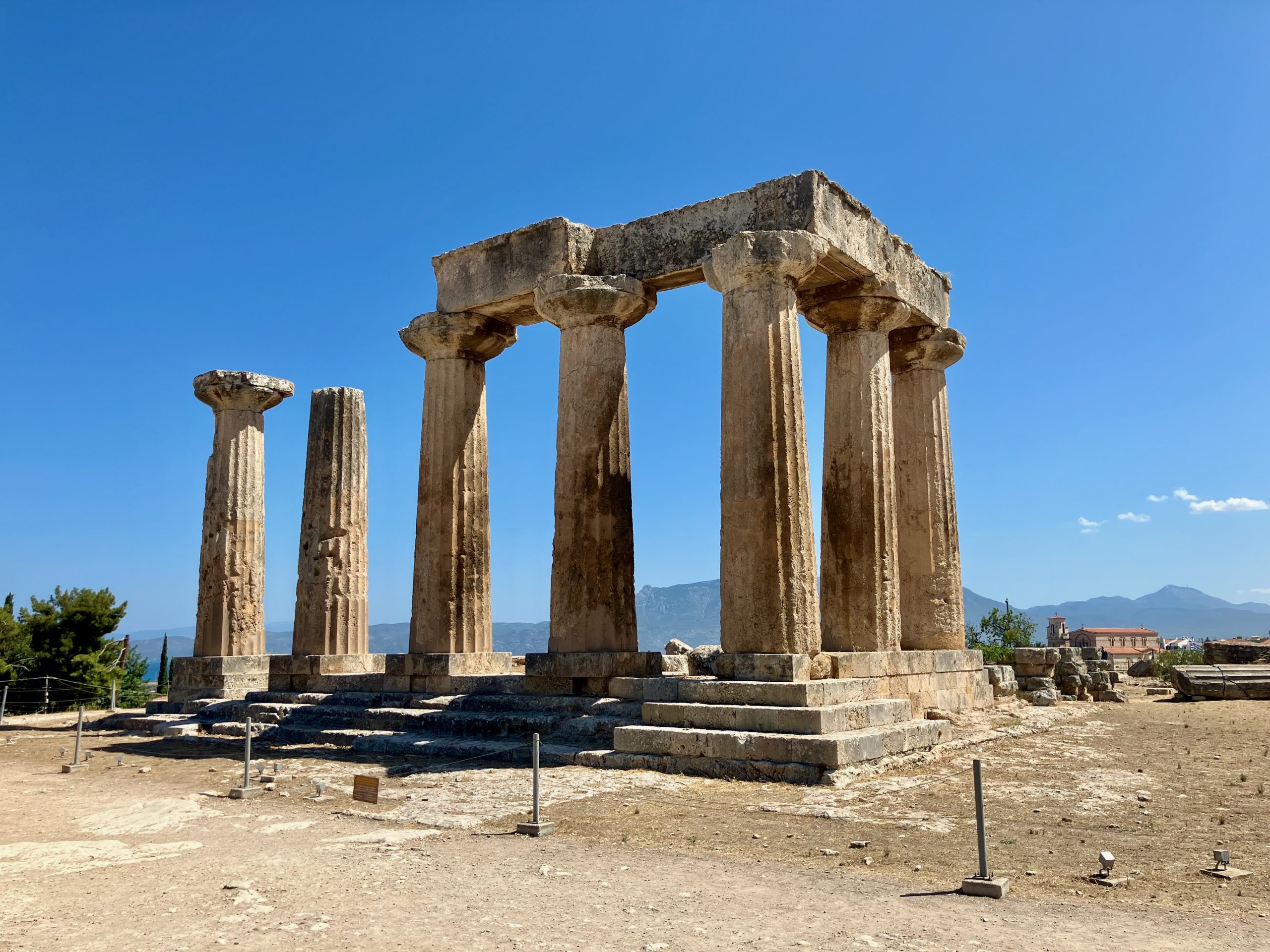
One particularly obvious example of Roman temple rebuilding based on older Greek foundations and patterns is the dominant Temple of Apollo in the North ruins. Its reconstruction occurred early in Corinth’s time as a Roman colony: 44 BC. The old Greek temple gave the new Roman colony a sense of antiquity and a Greek pedigree to showcase beside Roman institutions.
Paul’s dishonour in Corinth
The Corinthians boasted about human strength and honour in Romans society. Paul regarded this as part of the wisdom of the world, which is opposed to the wisdom of the cross. In chapter 4, he strikingly emphasised the dishonour he had experienced:
For I think that God has exhibited us apostles as last of all, like men sentenced to death, because we have become a spectacle to the world, to angels, and to men. We are fools for Christ’s sake, but you are wise in Christ. We are weak, but you are strong. You are held in honor, but we in disrepute. To the present hour we hunger and thirst, we are poorly dressed and buffeted and homeless, and we labour, working with our own hands. When reviled, we bless; when persecuted, we endure; when slandered, we entreat. We have become, and are still, like the scum of the world, the refuse of all things.
(1 Corinthians 4:9–13 ESV)
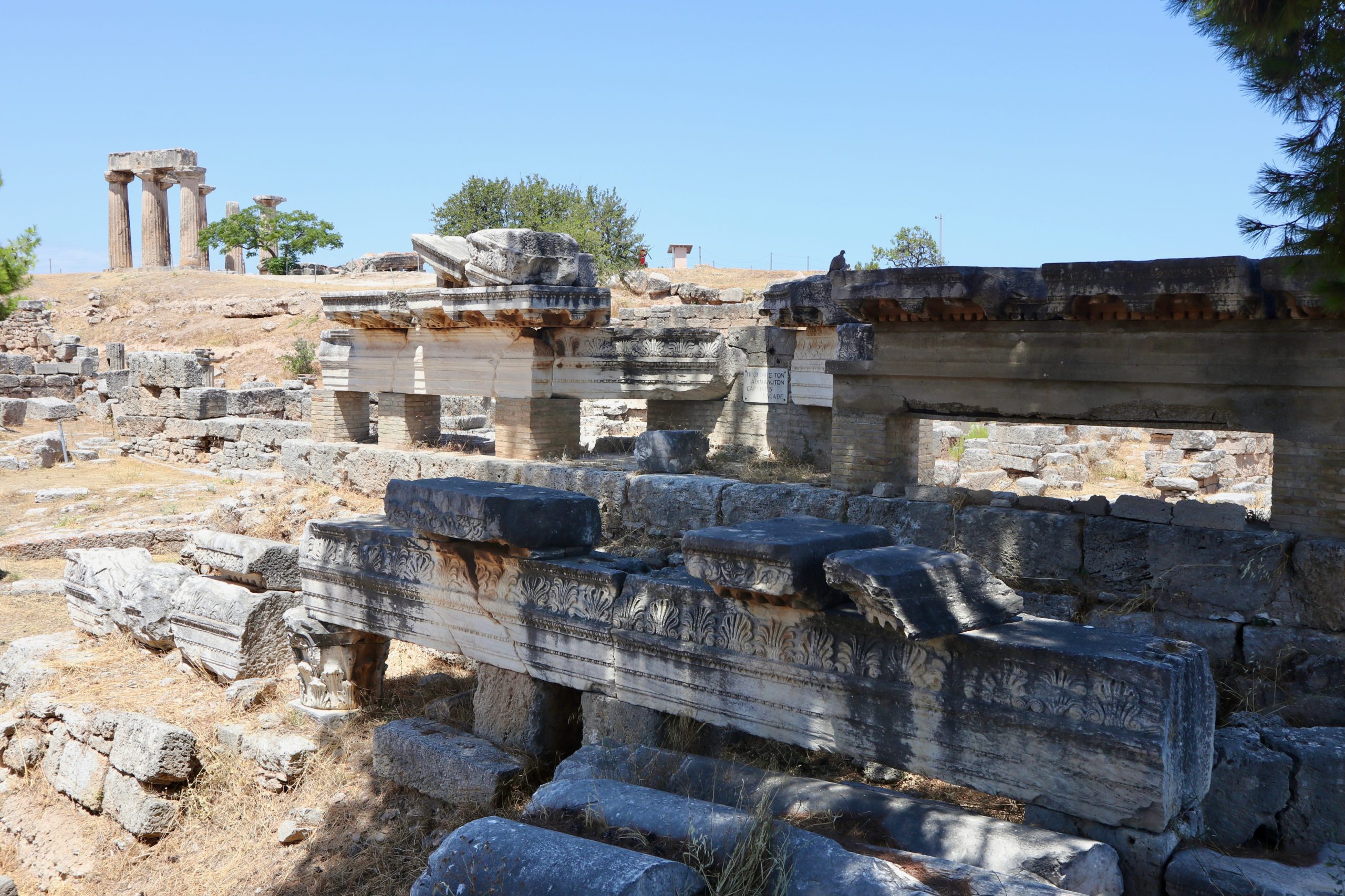
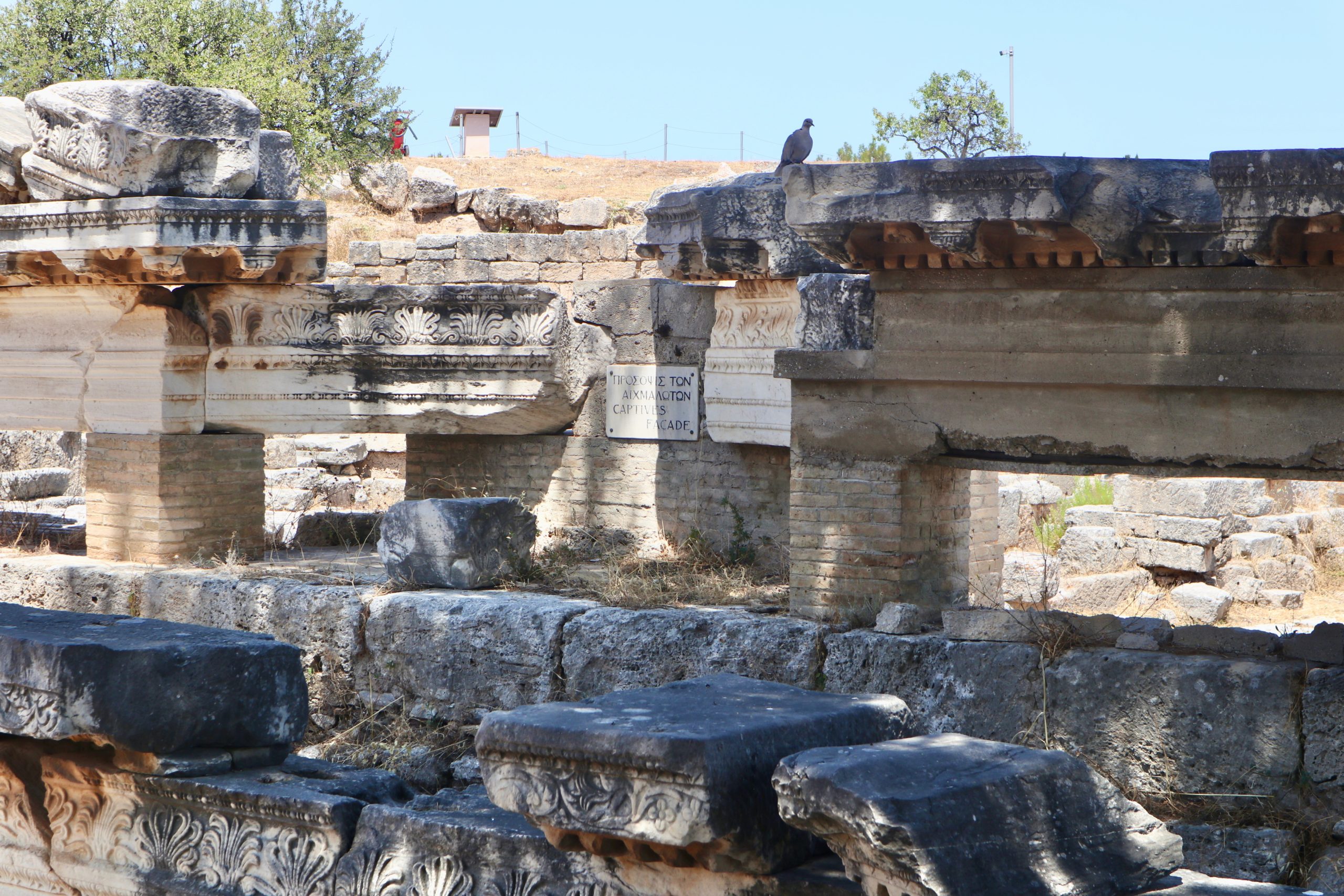
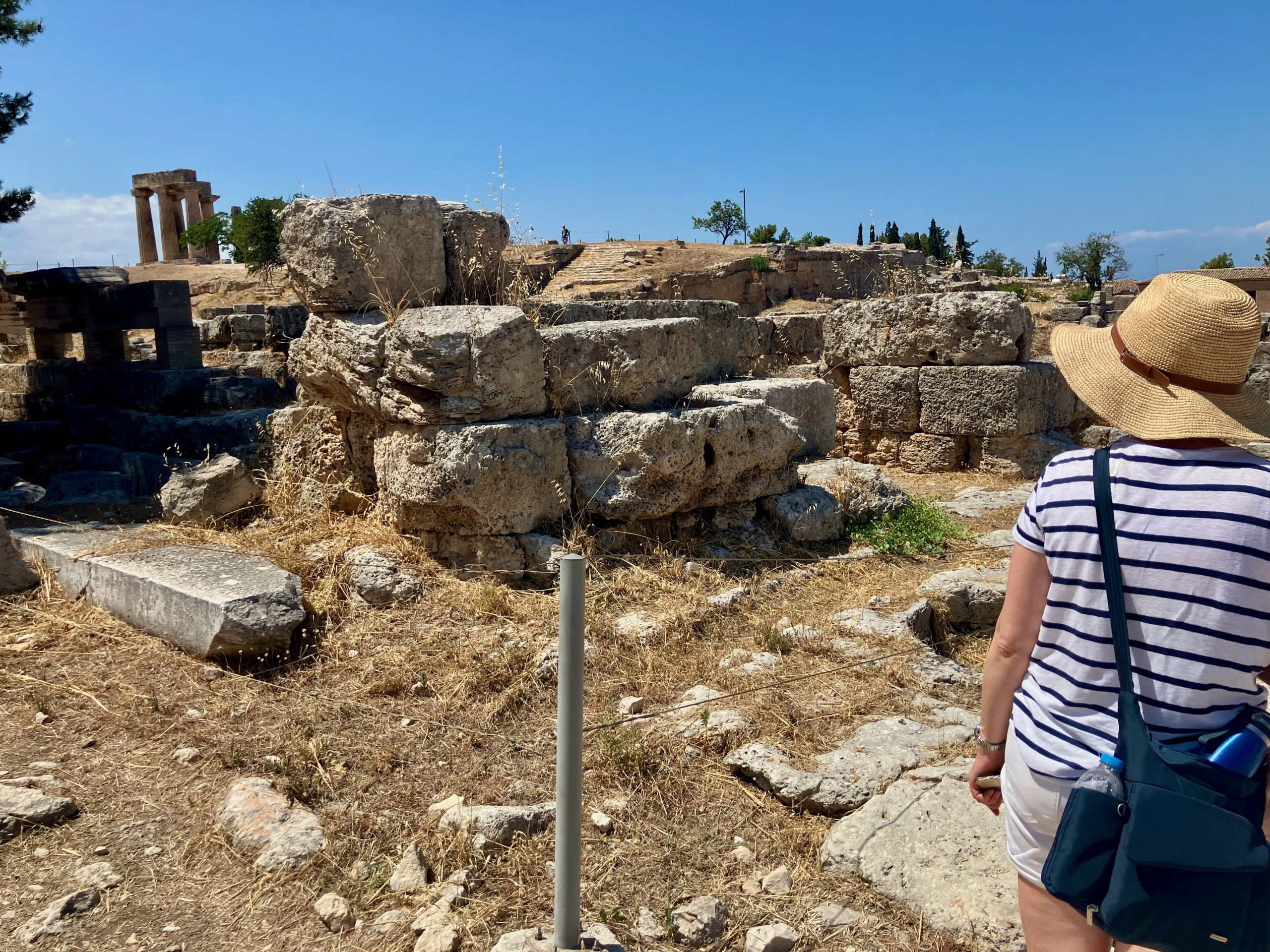
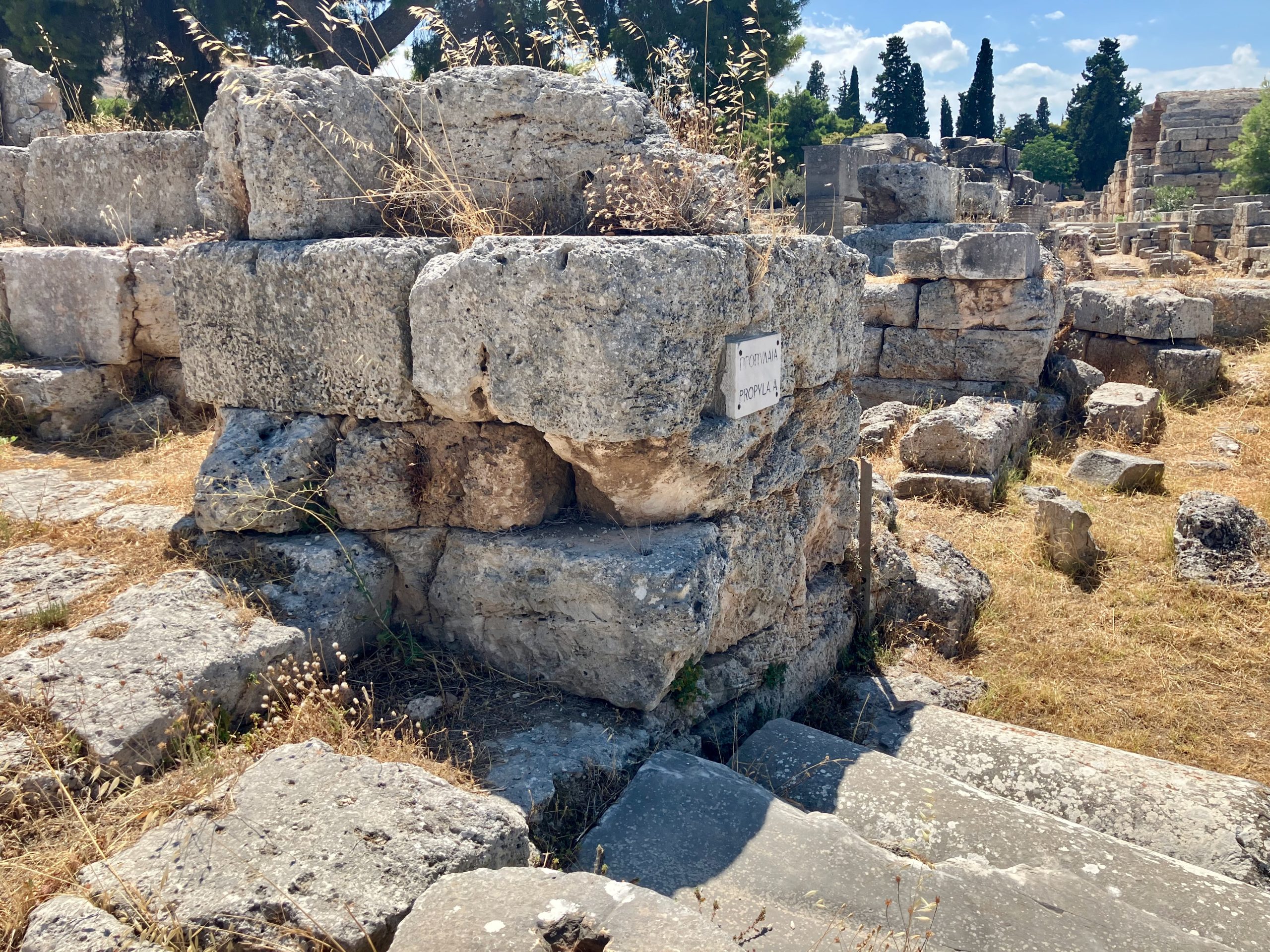
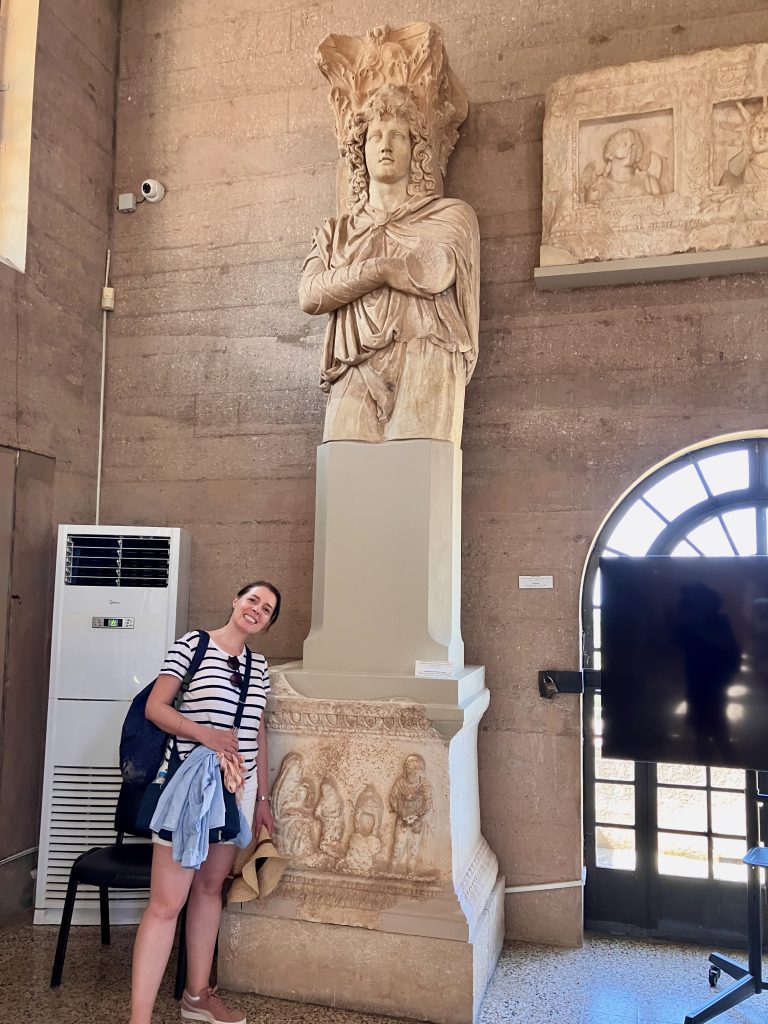
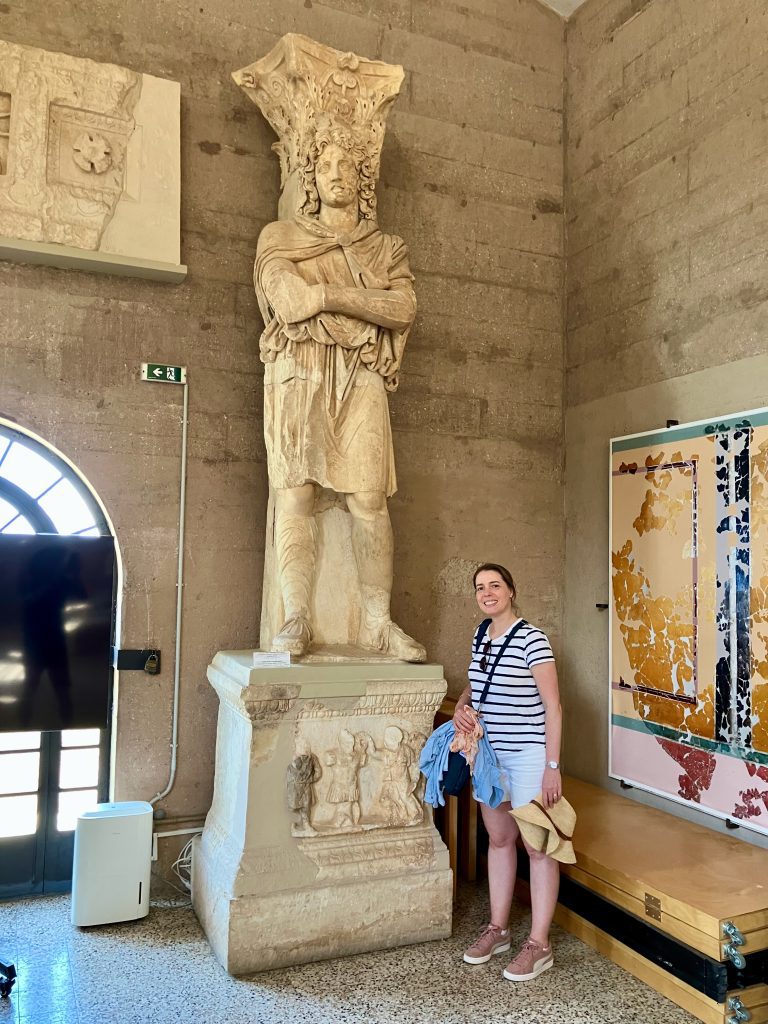
These kinds of depictions of shame and dishonour for the enemies of Rome would have been tangible for the Corinthians. In the North-East ruins, the gate (propylaea) consisted of a Triumphal Arch, erected by the Romans as a replacement of an earlier Greek gate. Next to it was the Captives Façade, a two-story screen with columns supporting monumental figures of barbarian captives as a spectacle to display the power of Rome and the humiliation of those who oppose it. Two of these monumental figures are in the museum. Here are photos:
Sexual immorality in Corinth
Corinth, like most other ancient Greek and Roman cities (and most cities today!) was rife with sexual immorality. Paul writes at some length about the need for Christians to be different:
Flee from sexual immorality. Every other sin a person commits is outside the body, but the sexually immoral person sins against his own body. Or do you not know that your body is a temple of the Holy Spirit within you, whom you have from God? You are not your own, for you were bought with a price. So glorify God in your body.
(1 Corinthians 6:18–20 ESV)
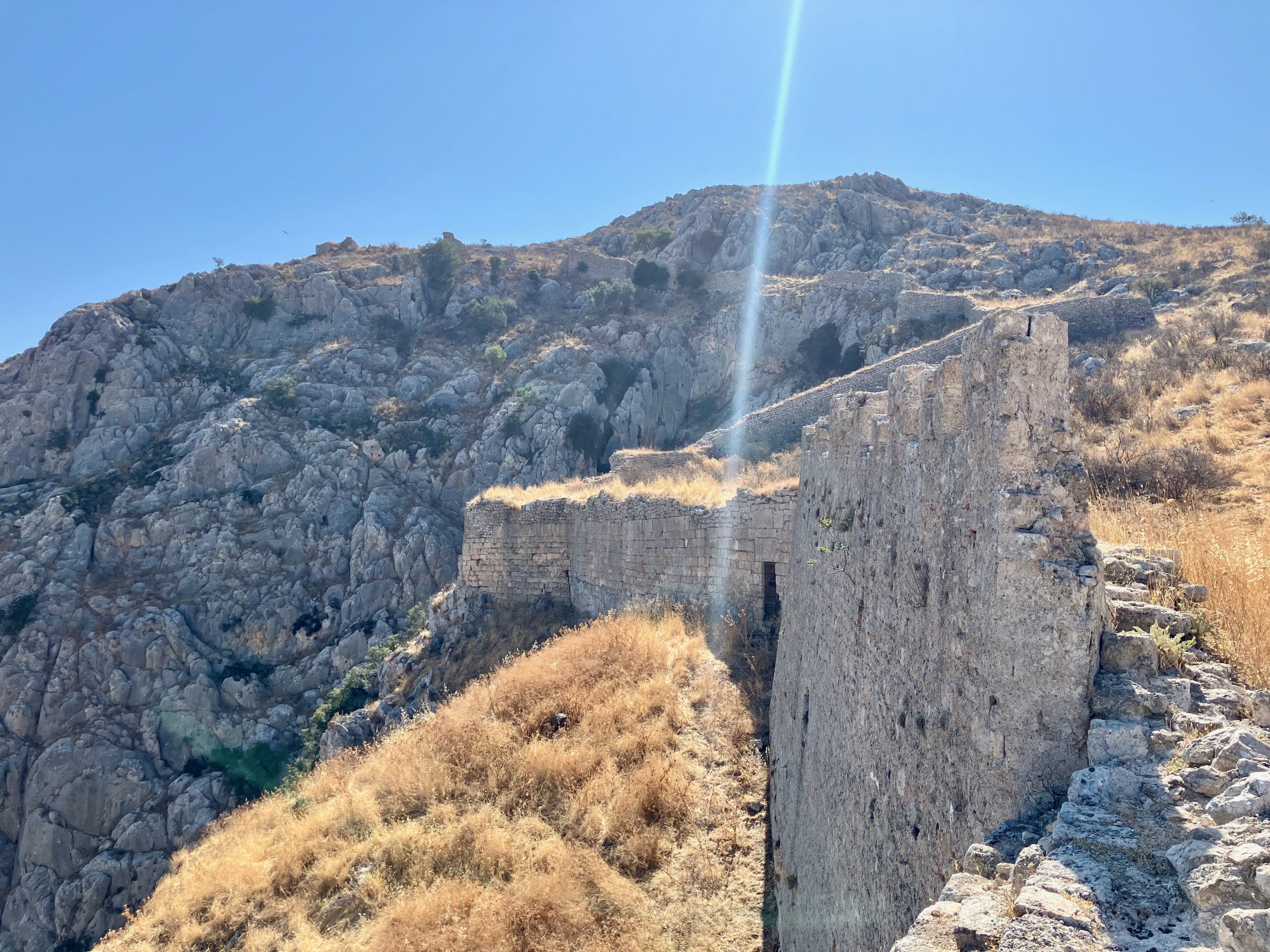
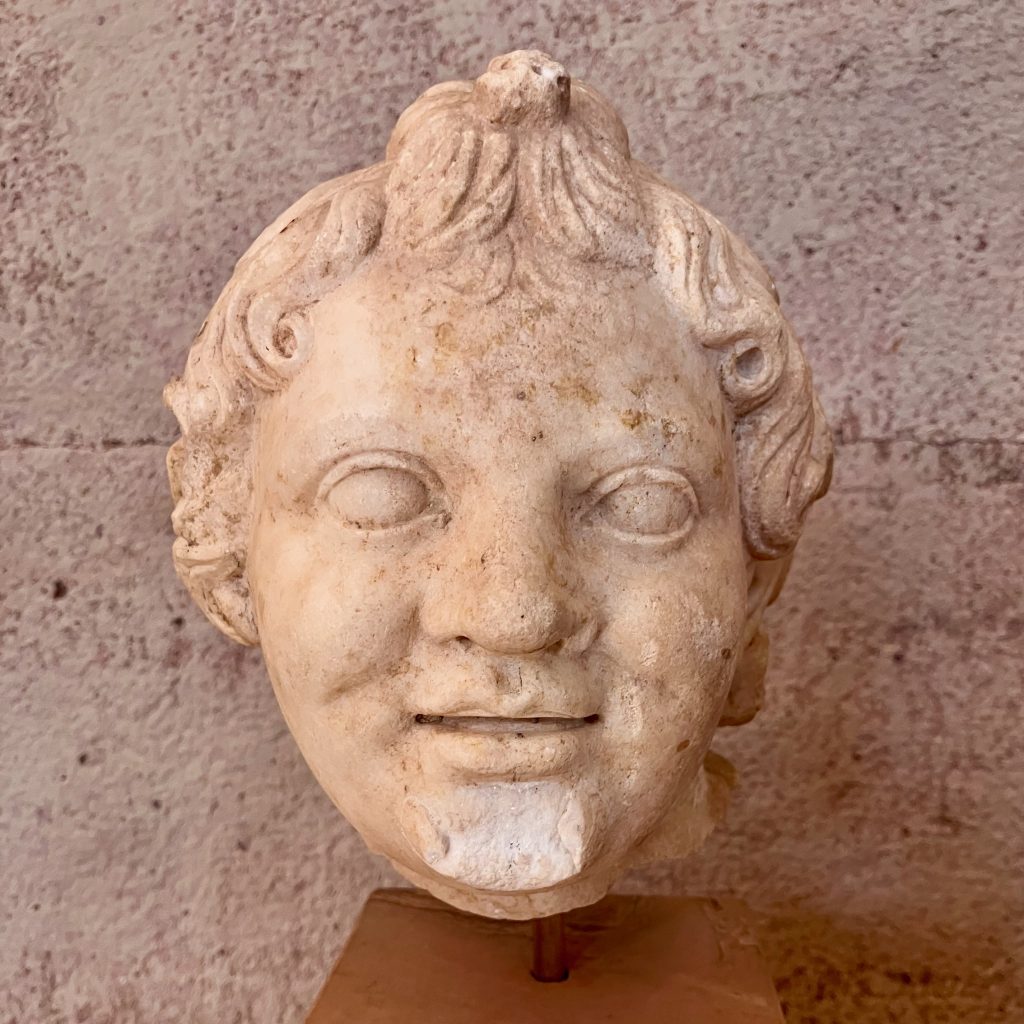
In the Acrocorinth, the hill fortress above Corinth, stood the world-renowned Temple of Aphrodite, goddess of love. Rumours that it was the site of ritual prostitution are probably not true, but at the least it was the site of worship and celebration of sexual excess. Nothing much remains of the temple now, but below is a photo of the hill it stood on. In the museum there is also a marble head of Eros, son of Aphrodite:
Athletics in Corinth
Paul refers to athletic imagery to illustrate the idea of intentionality in ministry:
Do you not know that in a race all the runners run, but only one receives the prize? So run that you may obtain it. Every athlete exercises self-control in all things. They do it to receive a perishable wreath, but we an imperishable. So I do not run aimlessly; I do not box as one beating the air.
(1 Corinthians 9:24–26 ESV)
Sport and athletics was a strong feature of Corinthian life. Corinth was the home of the Isthmean Games, a major event that brought people from all over the Greek world together. The winners’ wreath was originally made of dry wild celery (a perishable wreath!).
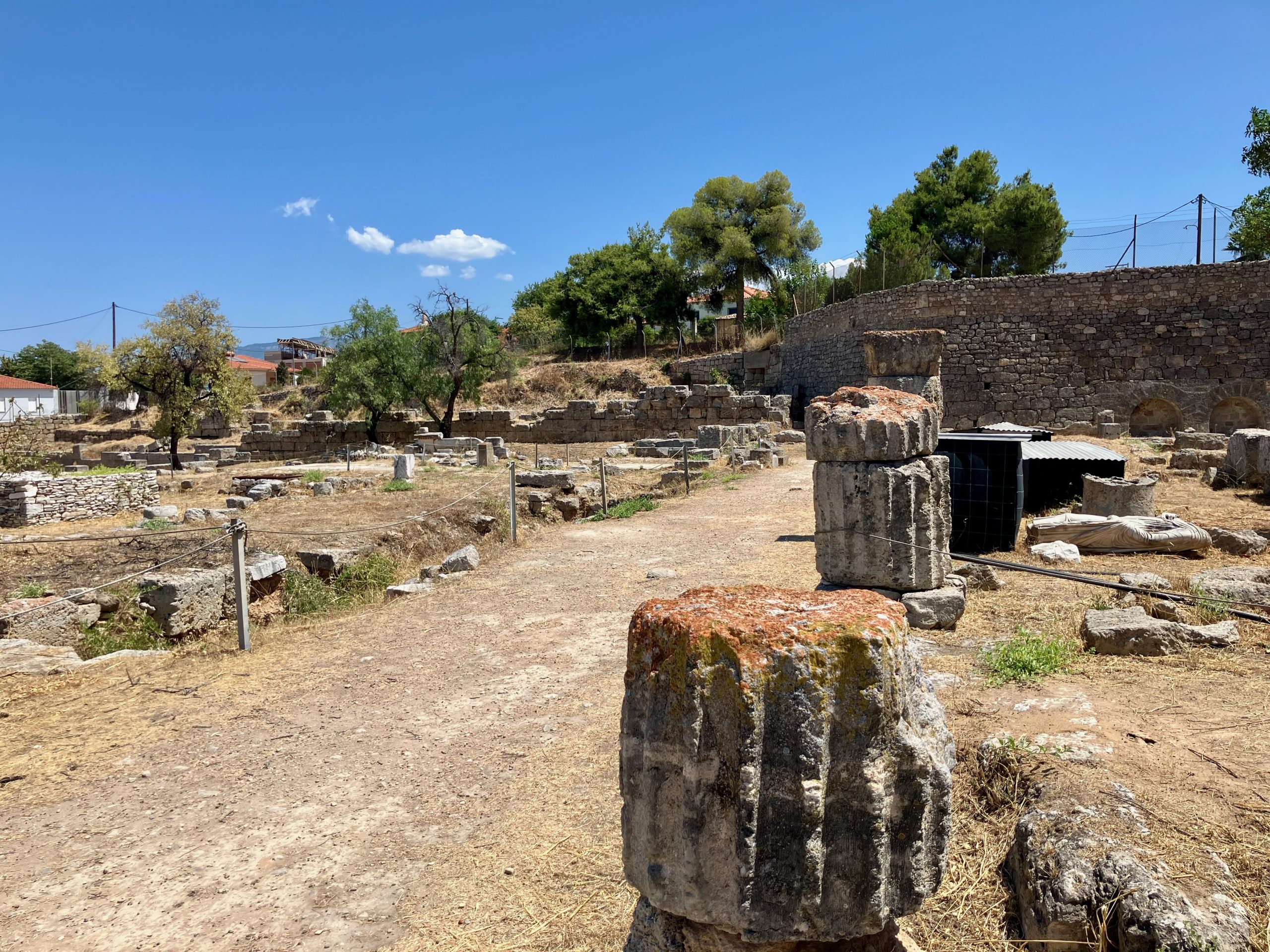
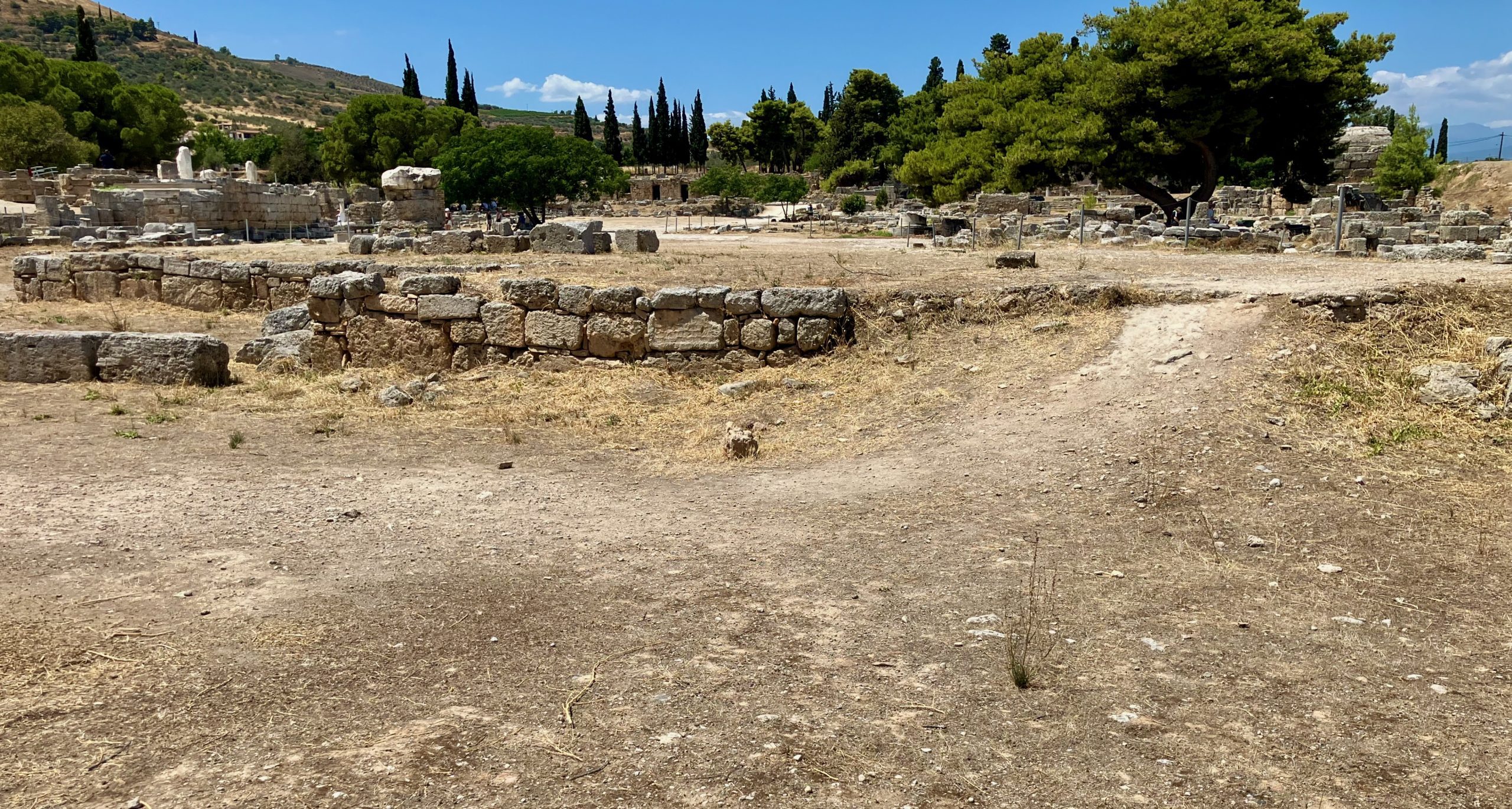
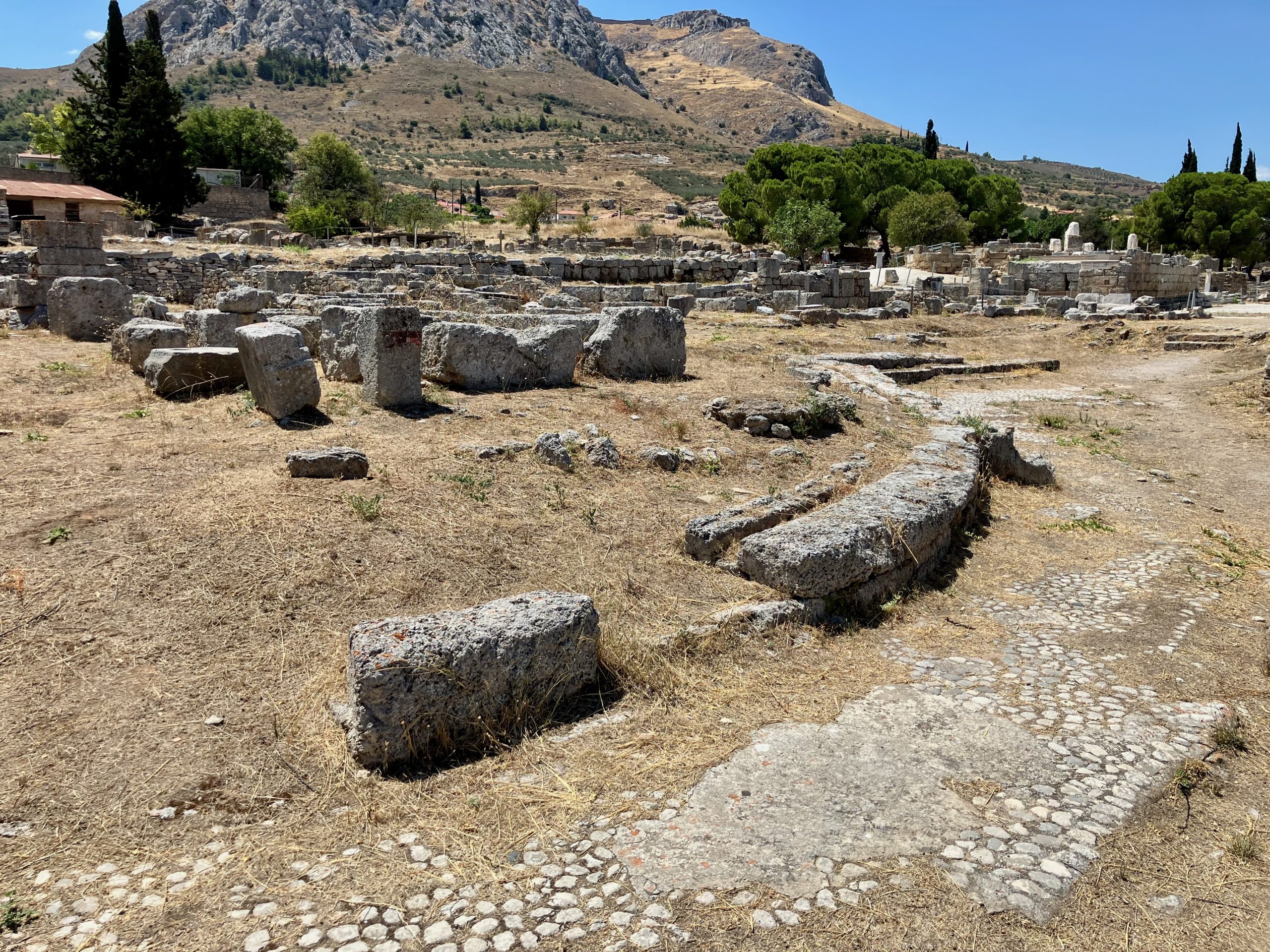
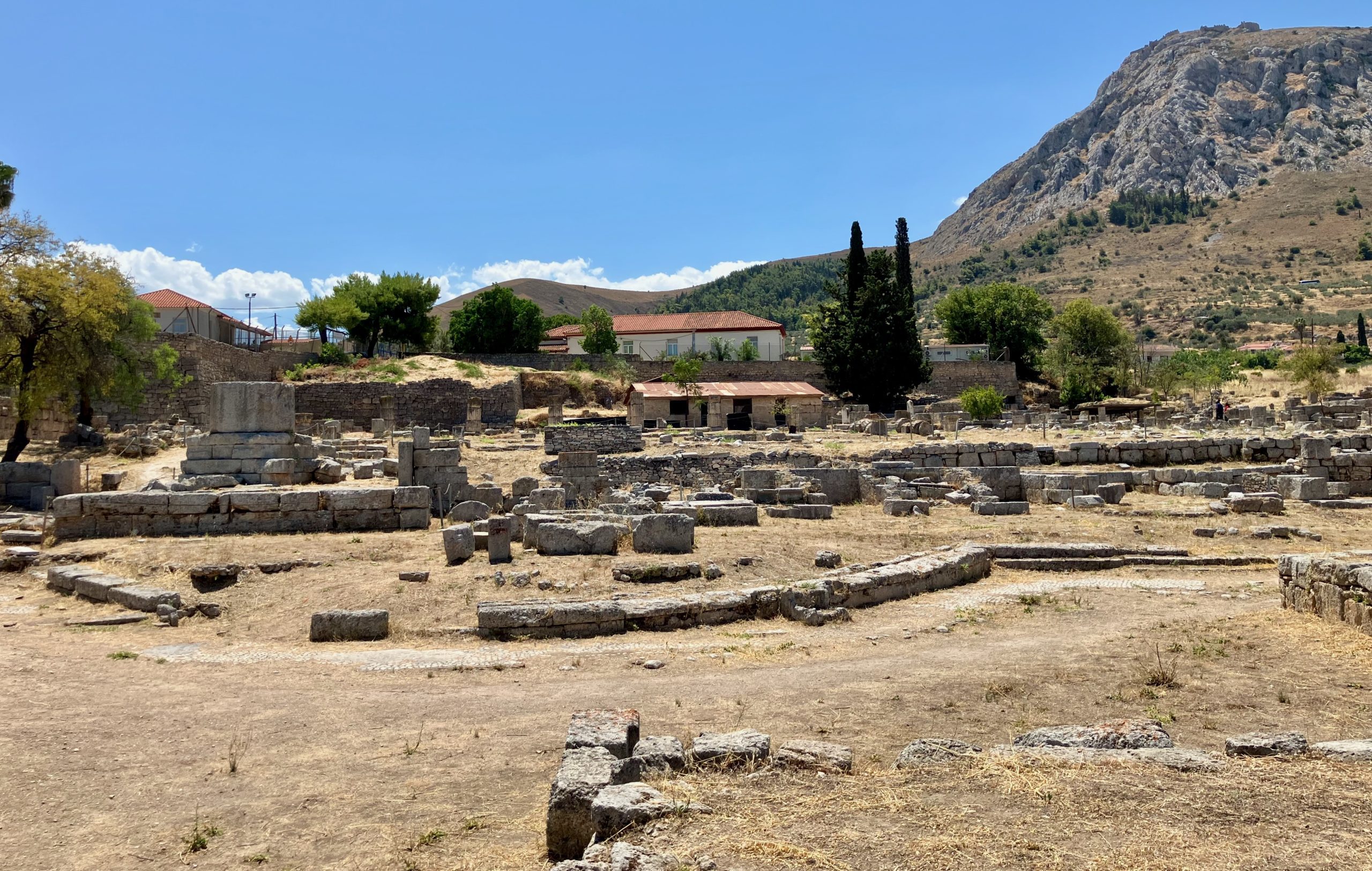
Various features of the ruins of Ancient Corinth highlight the centrality of sport and athletics to Corinthian culture. The offices of the directors and judges of the Isthmean games were in the same vicinity as the office of the governor (on the South side of the Roman marketplace). At the East end of the marketplace was a racing, with what was probably a viewing stand for judges.
Idolatry in Corinth
Again, like most ancient Greek and Roman cities, religious activity was a central feature. Idolatry couldn’t be confined to the private sphere; it was part of civil life. In 1 Corinthians 8–10, Paul helps the Corinthians navigate this situation from the perspective of the gospel, which proclaims that there is only one true God and one Lord, Jesus Christ.
A central imperative is this:
Therefore, my beloved, flee from idolatry.
(1 Corinthians 10:14 ESV)
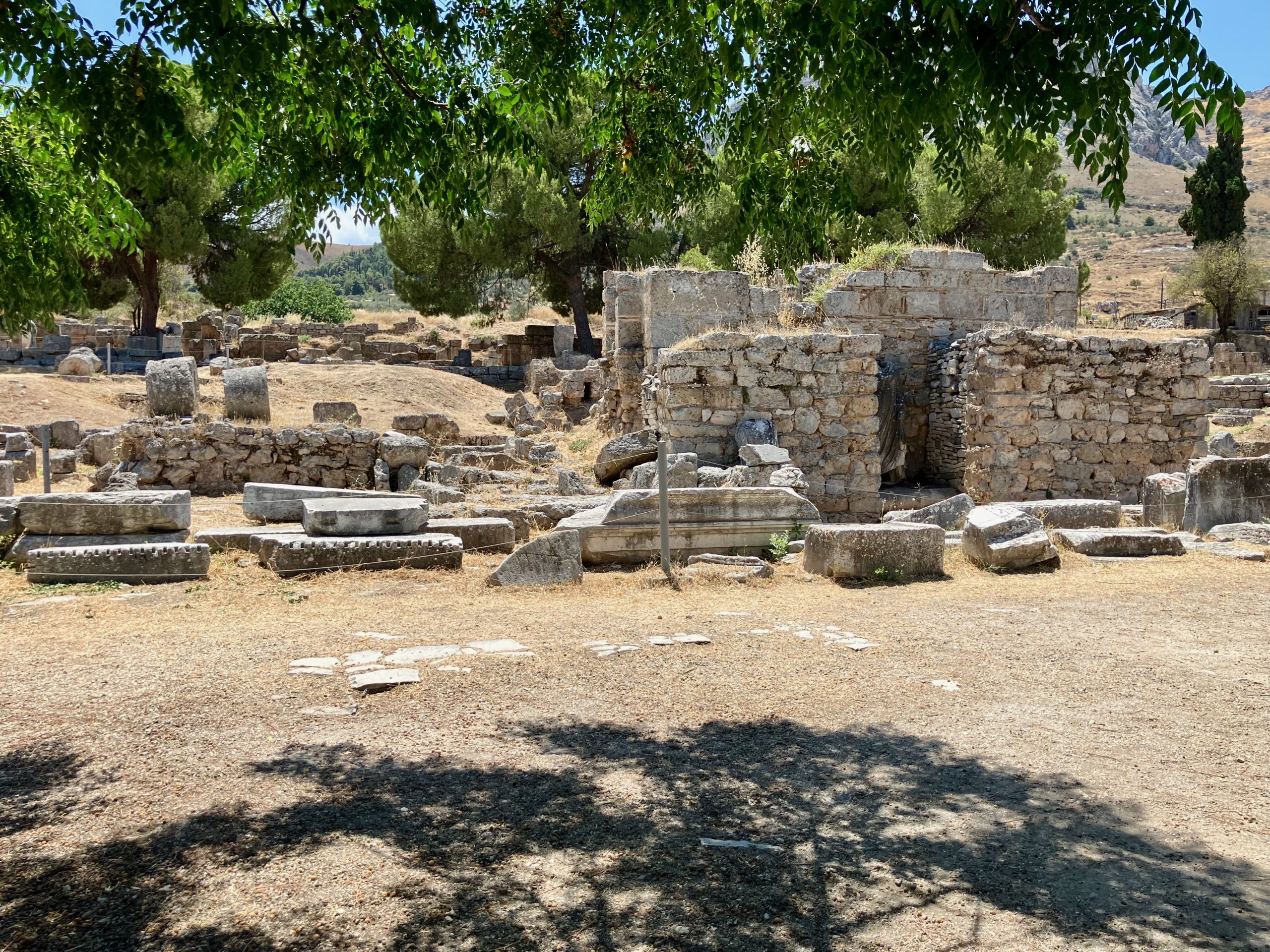
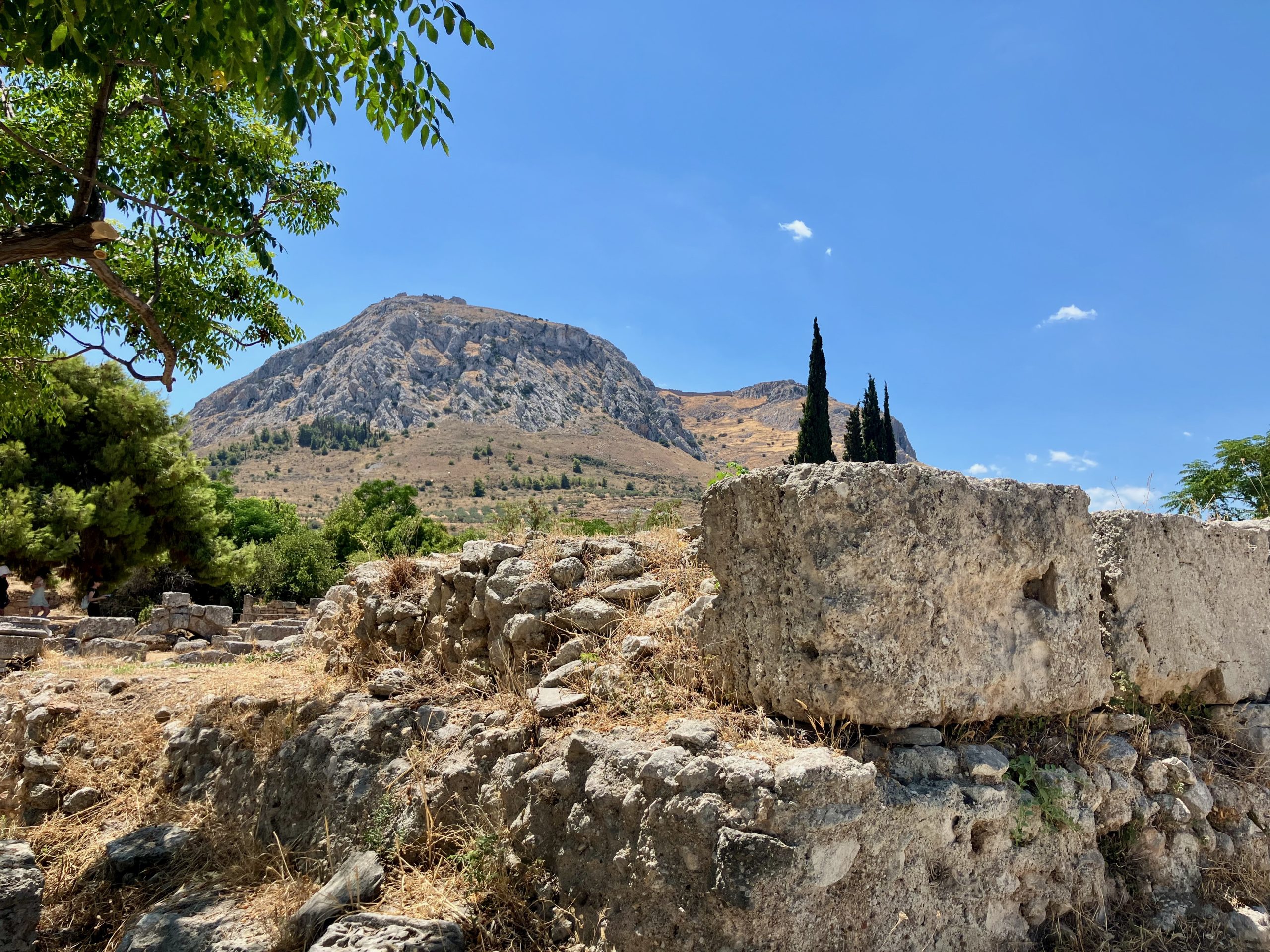
Leftover meat from sacrifices was a very common source of meat. On the question of what Christians should do in this situation, Paul says:
Let no one seek his own good, but the good of his neighbour. Eat whatever is sold in the meat market without raising any question on the ground of conscience. For “the earth is the Lord’s, and the fullness thereof.” If one of the unbelievers invites you to dinner and you are disposed to go, eat whatever is set before you without raising any question on the ground of conscience. But if someone says to you, “This has been offered in sacrifice,” then do not eat it, for the sake of the one who informed you, and for the sake of conscience
(1 Corinthians 10:24–28 ESV)
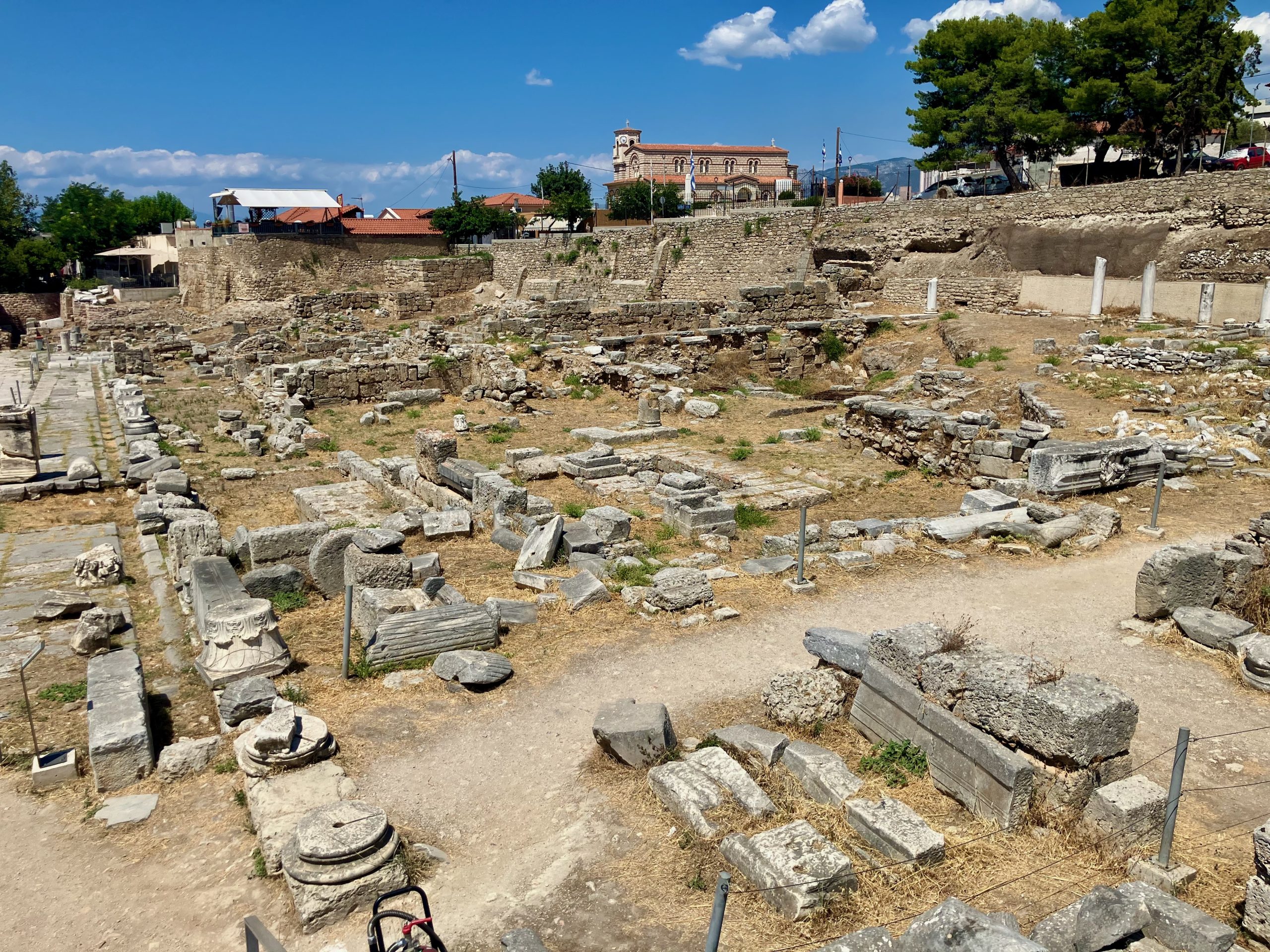
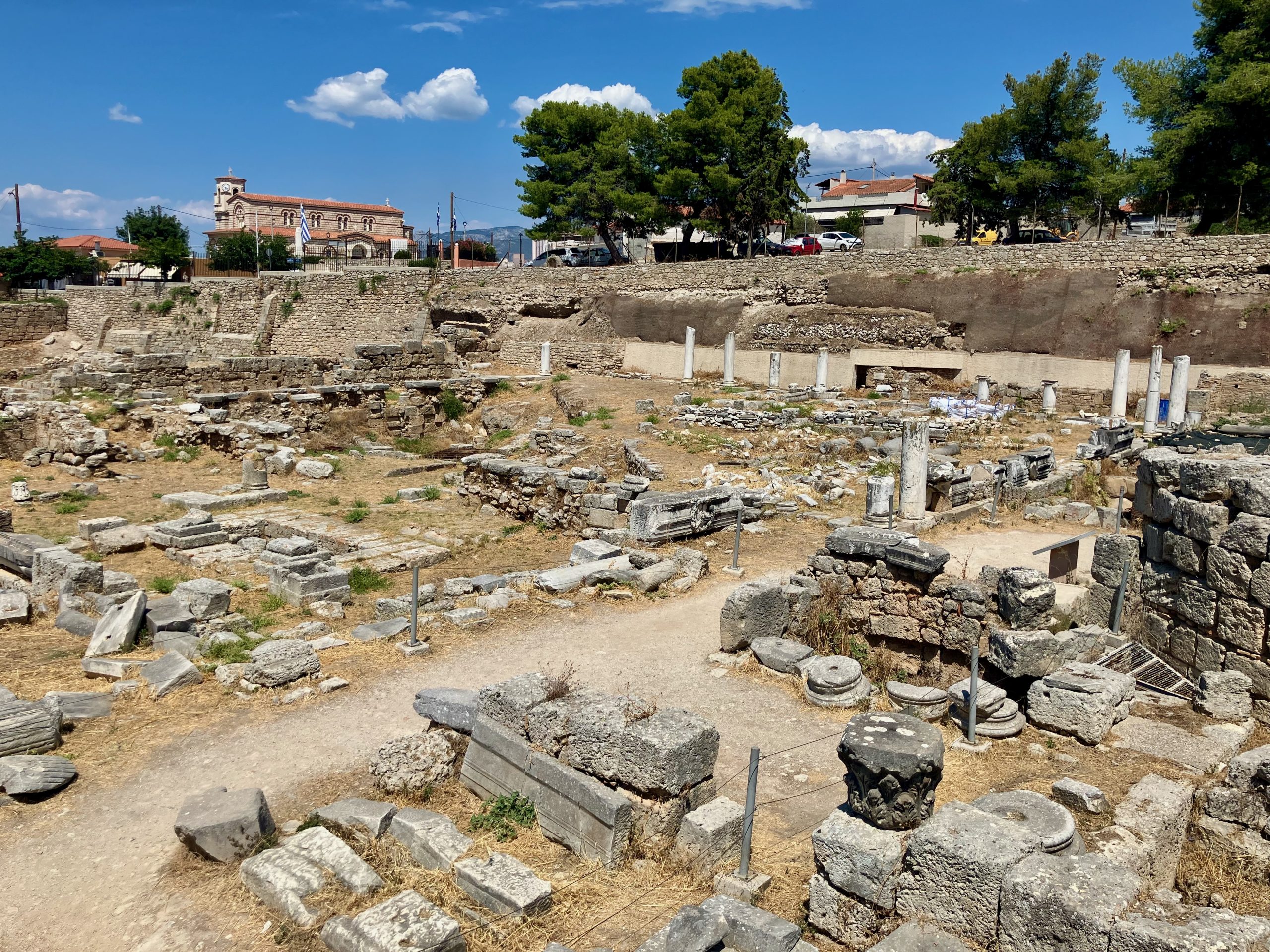
The meat and fish market in question (the macellum) was, in Paul’s day, found in the North-East ruins, just outside the Northern gates. It was later replaced by the Precinct of Apollo, with a bronze statute of Apollo in the centre.
The Erastus inscription
Erastus, a co-worker of Paul, is mentioned by or in association with Paul in three places in the New Testament:
And having sent into Macedonia two of his helpers, Timothy and Erastus, he himself stayed in Asia for a while.
(Acts 19:22 ESV)
Gaius, who is host to me and to the whole church, greets you. Erastus, the city treasurer, and our brother Quartus, greet you.
(Romans 16:23 ESV)
Greet Prisca and Aquila, and the household of Onesiphorus. Erastus remained at Corinth, and I left Trophimus, who was ill, at Miletus.
(2 Timothy 4:19–20 ESV)
Erastus was most likely a freedman who had gained wealth through business dealings. Paul calls him the city treasurer of Corinth, one of the highest city officials.
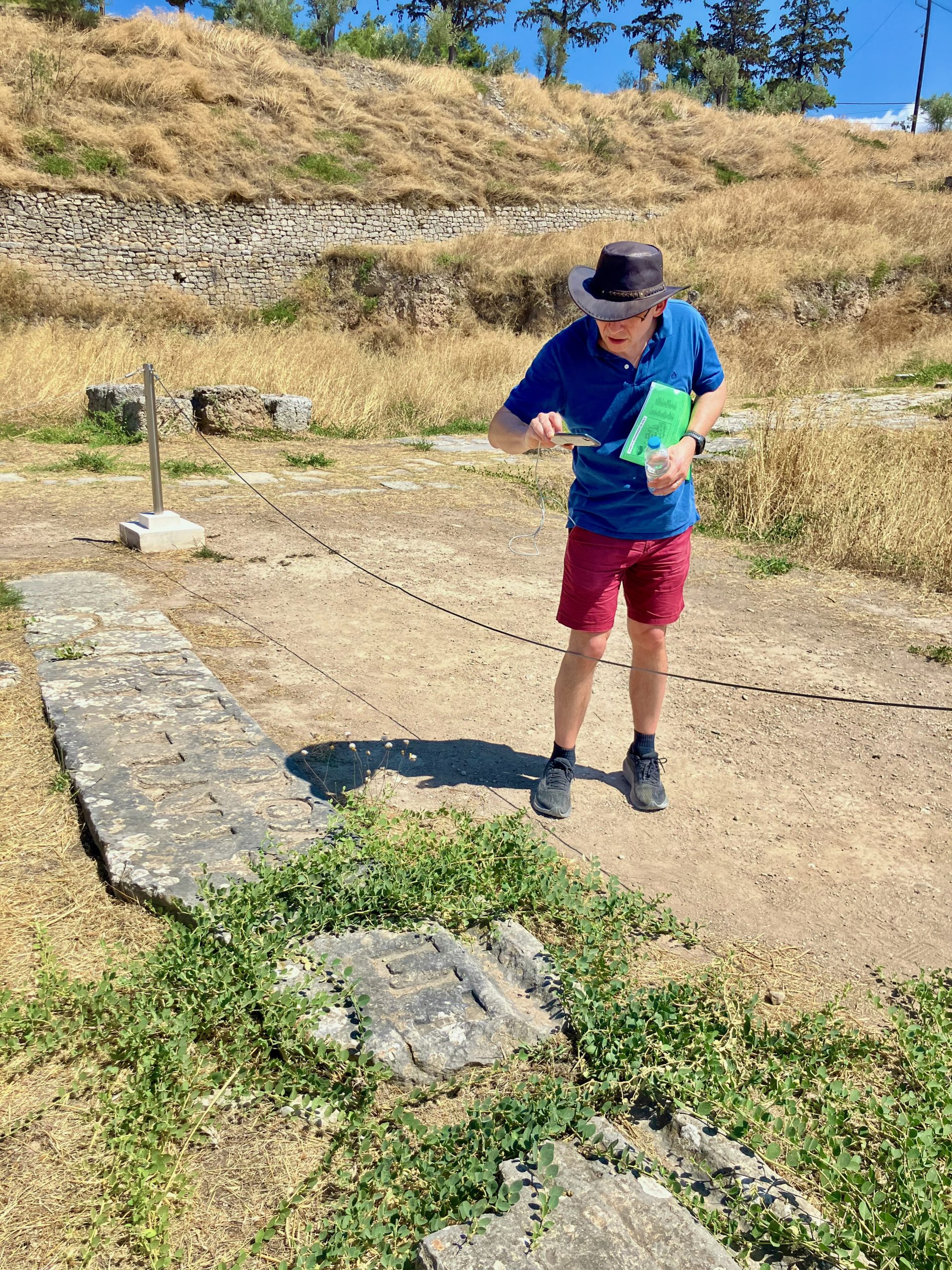
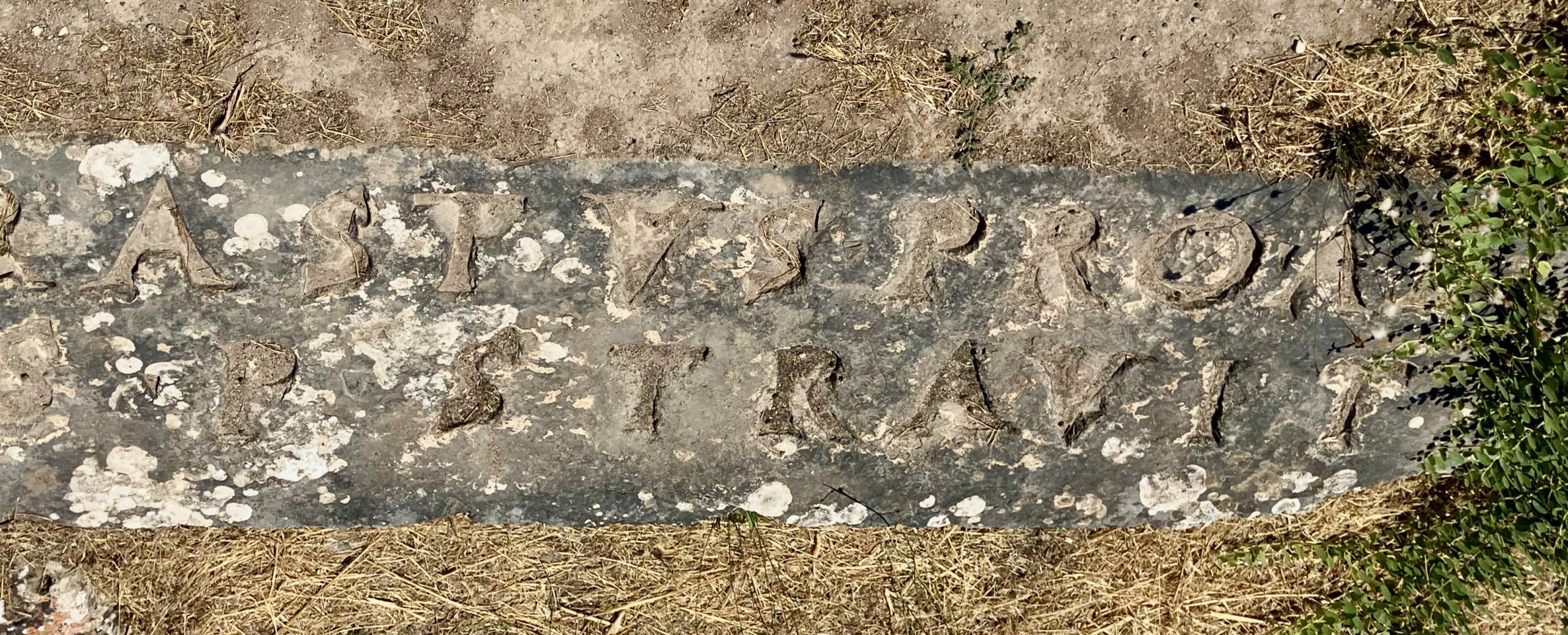
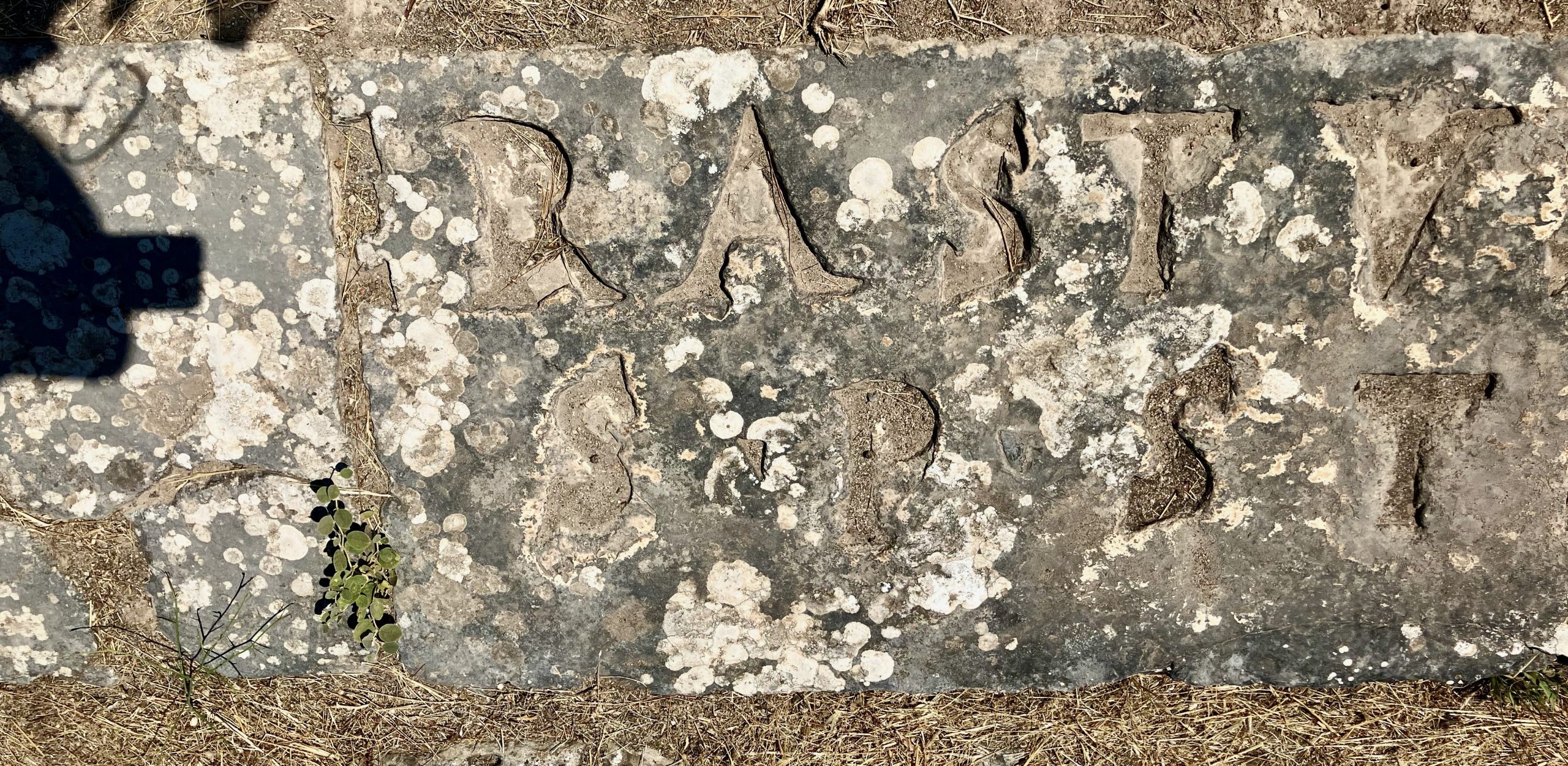
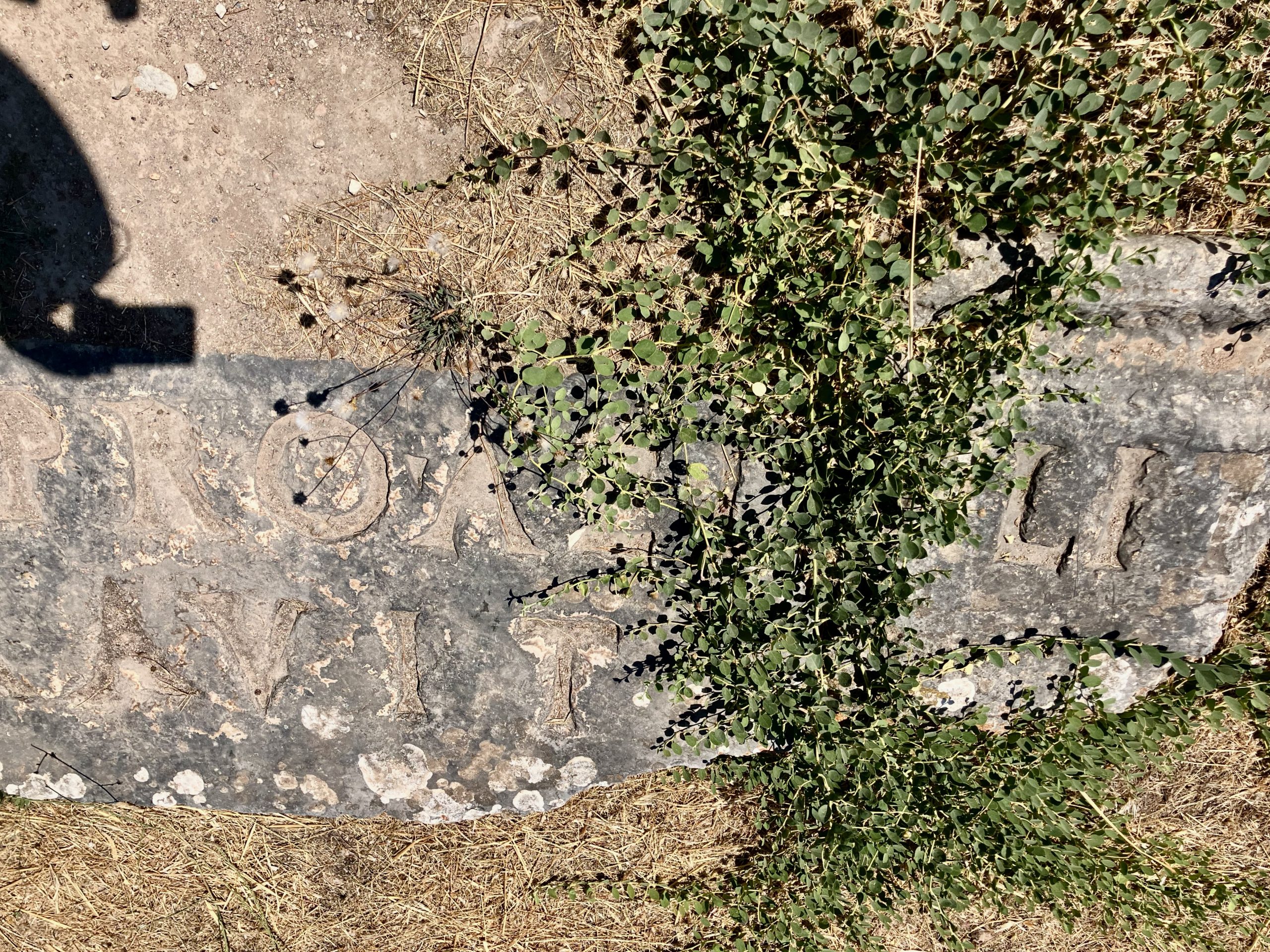
Between the theatre and the North Market, there is an inscription from the first century AD: “Erastus in return for his aedileship [the post of a chief city official] laid [this pavement] at his own expense.” The inscription was formerly in bronze letters, but most of the bronze has been taken by looters. The name Erastus was not common. This makes it quite likely that the person who laid the pavement is the same Erastus who became a believer in Christ and a co-worker of Paul.